

Suso Lasso, Servet doctor who fell ill with covid: "I have the fear that I didn't have in the hospital now"
24 June, 2020
Support service, the backroom of research
24 June, 2020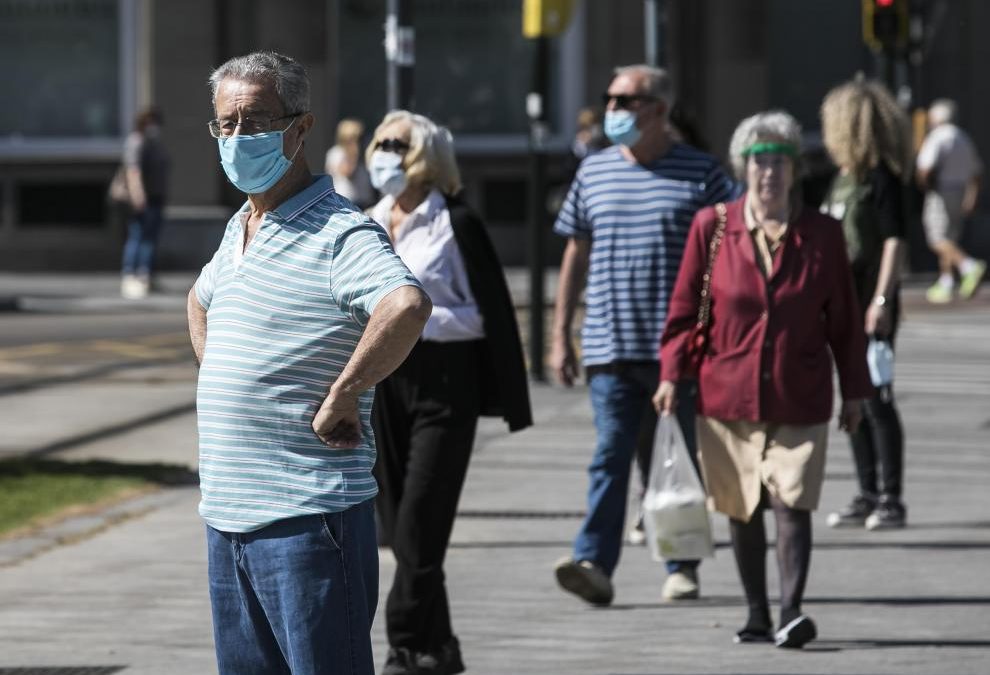
After weeks of sedentary lifestyle, 'capricious' eating and staying away from the sun, the skin continues to be in a state of alarm due to these masks, which irritate it and prevent it from breathing.
"In 30 years I had never faced this," says Jerónimo Ors, pharmacist and director of the well-known Aragonese cosmetics brand Paquita Ors. After these months of confinement, "80% of people have worsened" the condition of their skin, says this expert, who points out several factors that explain it: "Not moving has caused more toxins to be generated, the same as those ' great meals, which have raised fat levels, also in the skin. Mood issues, such as stress, restlessness or uncertainty, have also had an influence.
Circumstances that Ors describes as "an atomic cocktail for the skin." In spring, allergic outbreaks have been added. As if that were not enough, we have been particularly away from the sun. "People start this year with lower levels of vitamin D, plus we are not exposing ourselves to rays gradually. And, be careful, because masks do not protect against radiation, as you might think," he warns. .
Precisely, everything that the mask protects us against the virus it does not do with the skin. The mask has become, and even more so with high temperatures, the main ingredient now in that toxic cocktail for the epidermis.
Surgical or sanitary ones are made with synthetic materials that attack the skin, particularly if they are worn for a long time. "Not even doctors used them for eight hours before, as is currently the case," says Ors.
The mask is not only an aggressive material attached to the face. It also clogs pores and generates sweat. The result: unsightly pimples or irritations. Even more serious ailments such as herpes or fungus.
¿Qué se puede hacer?
From Matarrania cosmetics, another brand 'made in Aragón', they recommend using creams with ingredients that do not further dirty the pores, such as those made with vegetable oils. Also, resort to simple and neutral routines, focused on nourishing the epidermis.
At Paquita Ors they are committed to creams "that raise the defenses" and that act according to each case: "In some cases it will be necessary to degrease, such as in those where acne breakouts appear, and in others it will be necessary to focus, for example, on moisturizing, as in the case, in general, of older people".
Ors also proposes other formulas that are "insulating" or "calming", for those skin that is irritated by the friction of the mask, which, Ors assures, can lead to an "undesired 'peeling' effect. However, this specialist recommends having your skin checked because "skin is like your mood, it can change often."
Izarbe Cuesta, natural beauty expert at Karicia de Luna (Paseo de las Damas, 36, Zaragoza), distinguishes between different skin types. "For oily people, in these times with a mask, it is essential to cleanse the skin with two exfoliations a week followed by a tea tree mask, for example." The goal is to prevent the appearance of pimples or acne breakouts, which arise when the pores open due to the heat generated by a covered mouth and become dirty.
In the case of sensitive skin, the important thing is, says Cuesta, "to cleanse and, above all, hydrate." Also avoid astringent products.





