
They create the Aireamos.org group of researchers to combat the contagion of covid by aerosol
4 December, 2020
Moderna says its coronavirus vaccine could have long-term effectiveness
4 December, 2020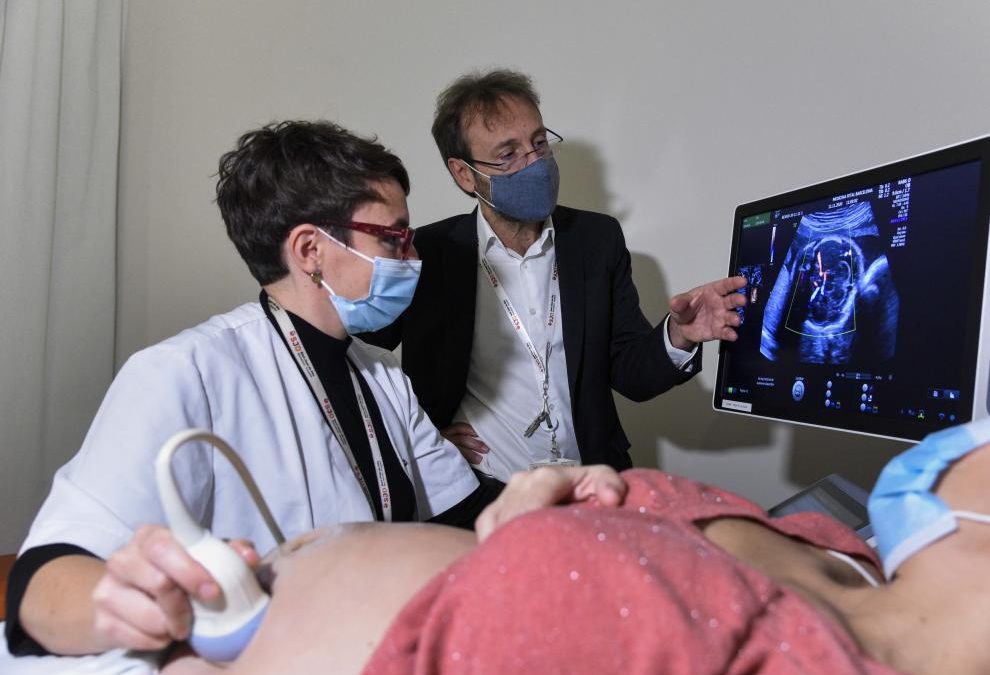
Doctors from the Sant Joan de Déu Hospital (SJD) and the Hospital Clínic of Barcelona, in collaboration with researchers from various areas and institutions in the city, lead the first project. The goal is to "save the lives of extremely premature babies" and plans to be ready in 5 or 6 years.
Doctors from the Sant Joan de Déu Hospital (SJD) and the Hospital Clínic of Barcelona, in collaboration with researchers from various areas and institutions in the city, are leading the first artificial placenta project in Europe to "save the lives of extremely premature babies", although it is expected that this new technique will have benefits in adult life and other diseases.
The project, of which there are only three other similar examples in the world and which has already carried out the first experiments with sheep fetuses, was presented this Thursday at a press conference in Barcelona, and has financing from the La Caixa Foundation for value of 7 million euros --3,35 in the first phase--.
The initiative was presented by the general director of the La Caixa Foundation, Antoni Vila; the director of Research and Health of the entity, Ángel Font; the general director of the Clínic, Josep Maria Campistol; the managing director of SJD, Manel del Castillo, and the director of BCNatal and leader of the project, Eduard Gratacós.
Gratacós has explained that the artificial placenta could be ready in "about 5 or 6 years" and will allow the newborn to be kept in an environment similar to the mother's womb, connected to an artificial umbilical cord and surrounded by amniotic fluid and a biocompatible membrane, reducing the consequences. and costs of a delivery with six months or less of gestation.
According to data from the magazine 'JAMA' provided by BCNatal, more than 25.000 babies are born each year in Europe with less than 6 months of gestation, with a survival rate of 25 to 75% and with the possibility of having serious consequences in 75 o 95% of cases: "This is a project that is going to change the natural history of many people," Campistol stated.
"Prematurity is not only having small children, which is what people see, but many times, if the children are saved, they are left with great consequences," said Del Castillo, who insisted that this is a project with great social impact, complex but feasible, and disruptive worldwide.
A disruptive solution
According to Gratacós, the creation of an artificial placenta will represent a qualitative leap in the treatment of premature children, since the ability to improve the lives of these babies and avoid their consequences has stagnated in the last 20 years: "We have reached the limit of biology," he stated.
"We can defy nature and get the baby out early and, with medical support, help it live; but there is a point that nature tells us that can no longer be passed, because the baby does not have a developed stomach or lungs, and To make it live we have to resort to very aggressive techniques and leave consequences," the doctor added.
For this reason, he explained, it is necessary to replicate abroad the conditions that occur in the mother's womb and replace "an organ of the fetus such as the placenta, which is as important as a kidney", with the added difficulty that The placenta is a very complex environment and the patient usually weighs about 500 grams and is very delicate.
"Having to deceive a system as perfect as human pregnancy, and make the entire biology of the fetus believe that it has not actually come from its mother, is extraordinarily complex," said Gratacós, who insisted that it is not about to make an artificial pregnancy or assisted reproduction, but to save the life of an existing baby.





