
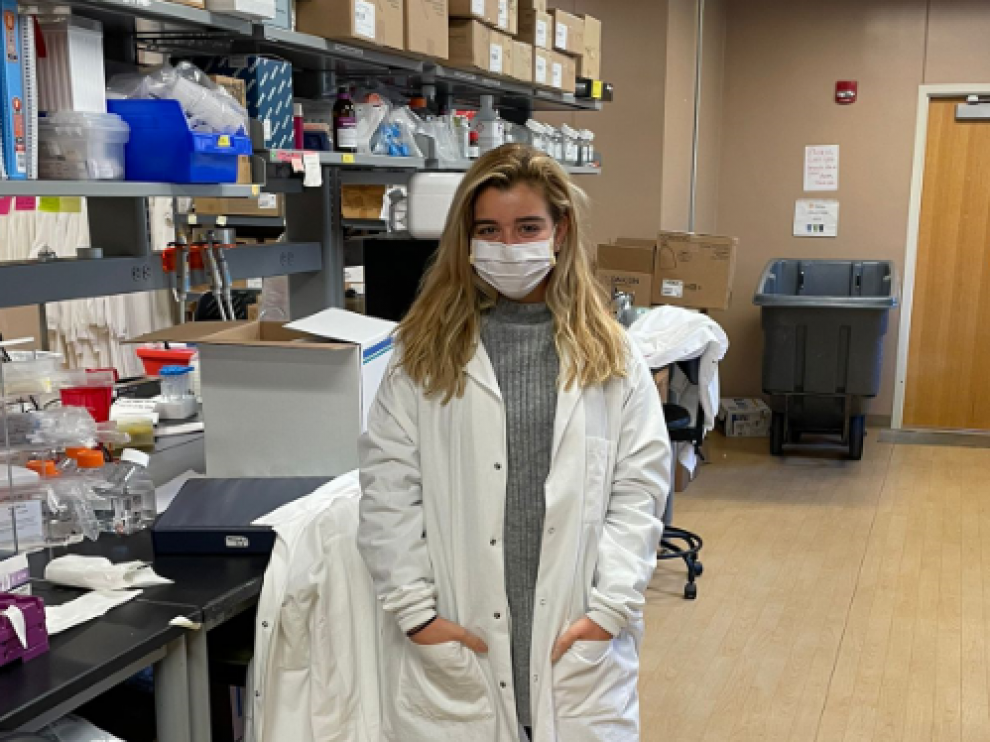
Laura Falceto, brain tumor researcher: "Spain needs to commit to science"
8 February, 2021
The activities of the Week of Women and Girls in Science begin
8 February, 2021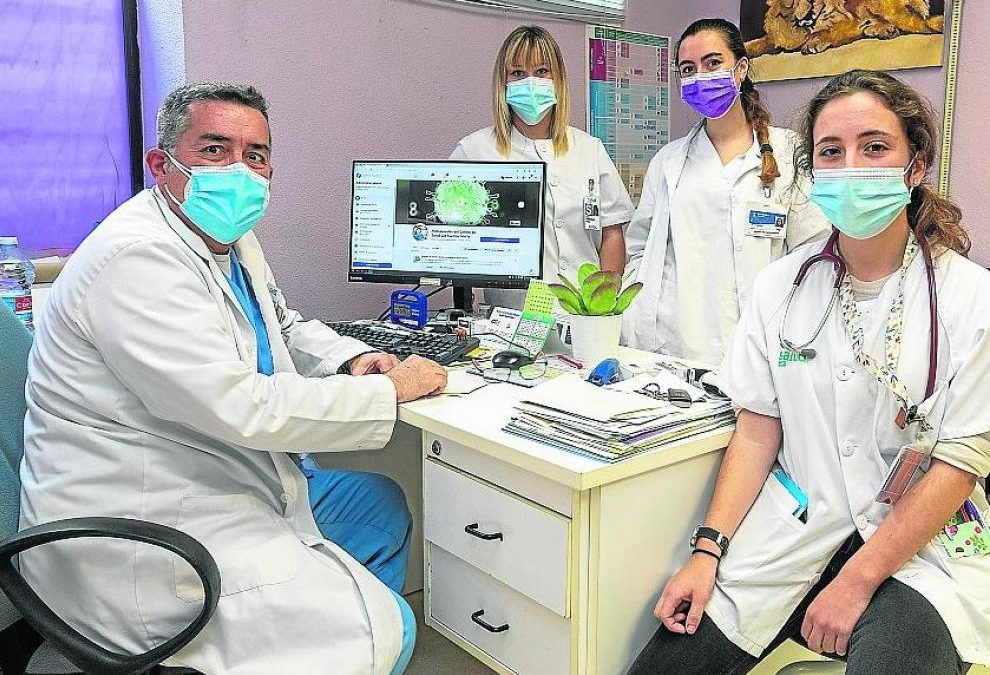
Health professionals use social networks during the pandemic to offer information.
Social networks have taken center stage in this pandemic, and health centers have also jumped on the bandwagon of new technologies to publicize useful information for their patients, communicate relevant aspects in a clear and concrete way, and convey details about the evolution. of the coronavirus crisis. Society demands, more than ever, data on the number of cases, and health professionals have taken up the gauntlet to offer on Facebook, Twitter or Instagram figures on infections, PCR tests or current restrictions.
One of the entries on the Facebook page of Cuarte's office (Cuarte de Huerva Salud) emphasizes, precisely, the limitations imposed on tobacco with the aggravated alert level 3: "Since the restrictions have increased, we encourage all smokers to quit smoking. We know it is complicated, but it is a good challenge to propose at the beginning of the year. It is an example of the use of social networks for healthcare.
Nuria Tundidor, a family doctor, remembers how that page was created: "When Covid started we did not know how to transfer the organization issues of the office, and the easiest way was through social networks, in addition to the City Council." This doctor, with the collaboration of the pediatrician, Sara Laliena, is in charge of providing useful information to patients: "We have seen that it is a very useful tool to convey healthy habits, although initially it was a means to notify people. It is a place where the population knows that the data is provided by professionals and will be truthful. It is not for debate, it is only informative." As she points out, "people like to know the number of infected people each day, and if that later helps them see infographics with recommendations for diabetes or hypertension, it helps us."
Closer to the patient
From Las Fuentes Norte, Antonio Aísa, a family doctor, explains that, as they are a teaching center, they had a blog with a complex address that few people knew about. With the arrival of the pandemic, they detected the need to communicate with the population and launched their Facebook page: "Many people were scared, they could not contact us or receive information. That's why it occurred to us that through social networks it could be easier".
Thus, they began to offer information on the incidence of coronavirus in the neighborhood: "What happens at the national or regional level is one thing, but it is difficult for people to find out what is happening closer to home." One of the entries that has received the most visits was the explanation of the process of a PCR test: it exceeded 100.000.
Through this medium they inform about health education, rules on how to avoid infections, details of how the center works, the organization of consultations, which must first be telephone... "We try to stay up to date with most of the news that the neighborhood population may need and we are in contact with the neighborhood movement," he points out.
"It has been seen that it has to be done, this is the future"
Blanca Giménez, midwife, works at the Actur Norte health center and on Friday, at Amparo Poch (Actur Oeste) and, as a result of the confinement, she launched a program of videoconferences for preparation for childbirth and parenting: "They were their own pregnant women who demanded to maintain contact, so I spoke to the IT people to see what we could do. They installed Skype and gave her a webcam. From there she started everything: "The result was great. It has been seen that it has to be done, this is the future." "It has been based on information and resolving doubts, because there are many during pregnancy," he says.





