
AXA _ Mitigating risk in the wake of the Covid-19 Pandemic
15 April 2020
The University of Zaragoza starts research to search for drugs against covid-19
16 April 2020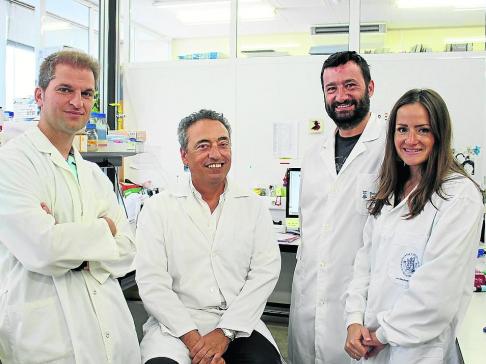
A work begins that, with 318.000 euros of financing from the Covid-19 fund, hopes to obtain results in four months.
Vaccines put the immune system in such shape that they protect against other infections in addition to the one they are aimed at. The group from the University of Zaragoza led by Carlos Martín Montañés has just obtained significant funding to study whether the tuberculosis vaccine that they have been developing for twenty years (MTBVAC) could also protect against the SARS CoV-2 coronavirus.
The project approved by the Carlos III Health Institute (ISCIII), in tough competition with more than a thousand from all over Spain, will study, in macaques, the effectiveness against SARS CoV-2 infection of the current tuberculosis vaccine (BCG) compared to the new MTBVAC.
After the work of the next four months, if the results of MTBVAC were positive, and showed a similar degree of non-specific protection as BCG against SARS CoV-2 infection in rhesus macacus, it would serve as proof of concept to initiate studies in healthcare personnel and Nursing home workers, at particular risk due to their direct contact with patients affected by Covid-19.
The aid granted amounts to 318.000 euros. With it, Aragón is among one of the 15 research projects to combat SARS CoV-2 approved by the Carlos III Health Institute through the Covid-19 Fund. This fund, endowed with 5 million euros and enabled by the Government to face the emergency, is intended to promote projects and programs that seek to generate knowledge about the virus and offer short-term solutions. In total, it has received more than 1.300 applications from all over Spain.
The last four studies approved last Tuesday focus on detection by optical visualization of the virus, diagnostic nanotechnology, supercomputing to find drugs and the study aimed at the development of a possible vaccine proposed by Aragonese researchers. The study will be carried out at the Biomedical Primate Research Center (BPRC) in the Netherlands, which co-finances this proposal at 50%.





