
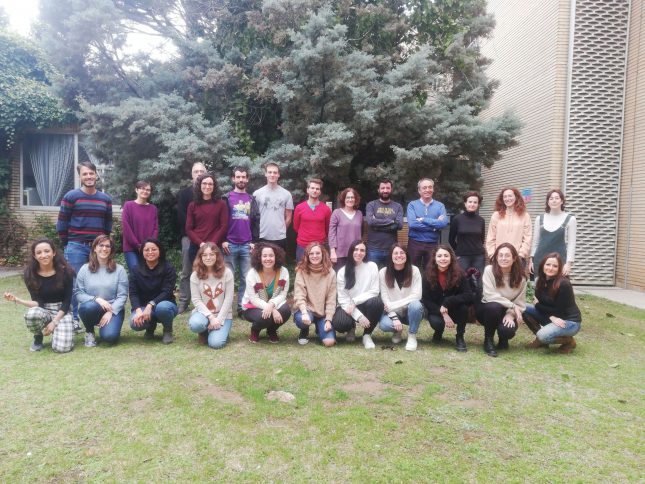
The University of Zaragoza leads an international campaign to celebrate World Tuberculosis Day tomorrow, March 24
24 March, 2022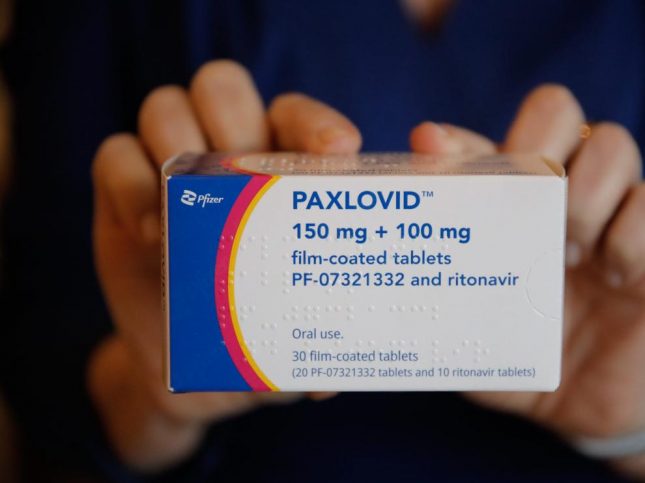
The first anticovid pills will arrive in Spain this Monday
25 March, 2022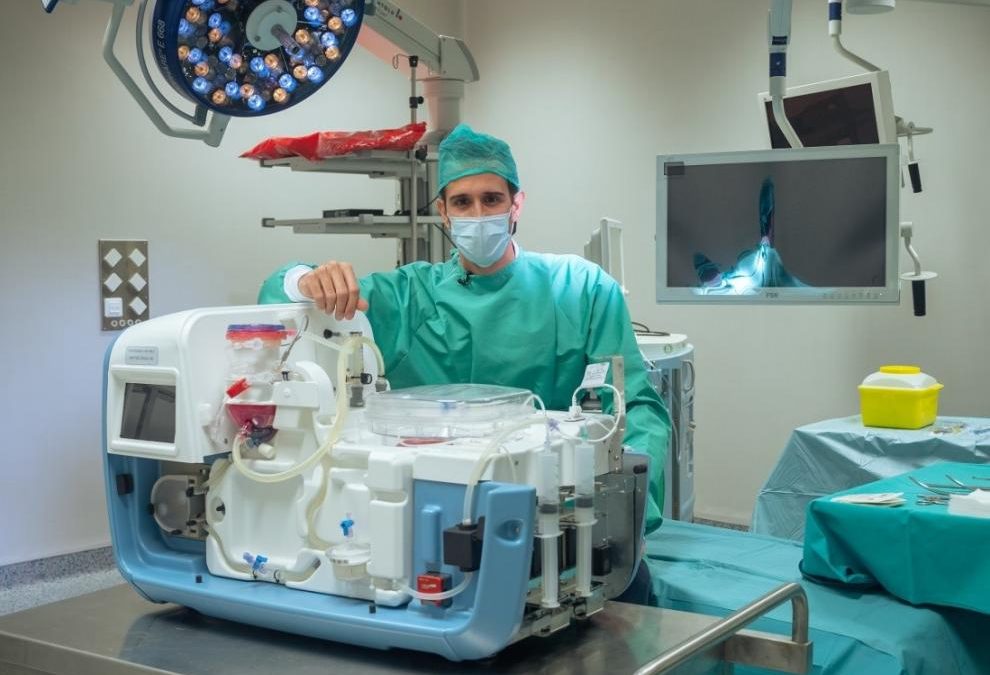
The process of transporting organs for subsequent transplantation was outdated. With European funding, this team of Aragonese has managed to create this device to improve the conditions of the organs.
Medicine continues to evolve by leaps and bounds in recent times. There are many fields of this discipline that are proving beneficial for patients, although This positive trend is not reflected in organ transplantation Similarly.
Organ transportation is still done in the same way as years ago: in a refrigerator with ice. This causes conservation periods to be short, between 2 to 20 hours, which is why all transplants are performed with emergency surgeries.
"With support from the European Union, a group of Aragonese entrepreneurs has developed Normoperf"
Maintain organs in optimal conditions and Preserving the viability of the transplant prior to the operation is a pressing need. For this reason, a group of Aragonese entrepreneurs has developed, with the support of the European Union, Normoperf.
It consists of a tool similar to an incubator for transporting organs, which accurately reproduces body conditions and provides blood to the organ in physiological conditions, in an oxygenated manner and with nutrients.
This device, which has been developed in collaboration with the Miguel Servet and Lozano Blesa Hospitals and the Aragonese Institute of Health Sciences (IACS), allows to extend the life of the organs more than 24 hours.
In this way, the organ reaches the recipient in better condition, its real condition is known before surgery and The transplant can become an operation based on planning and not in urgency. If the use of Normoperf were to become widespread, the number of useful organs available for transplantation would increase to the point of doubling.
A viable project thanks to EU funding
The support of the European Union has been essential for the launch of Normoperf. Along these lines, the general director of Ebers Medical, Pedro Moreo, stated that "when we obtained European funding, both investors, collaborators and hospitals began to be much more interested in the project".
In that sense, the development of this incubator has been framed in the Accelerator program of the European Innovation Council: "The support of the European Union has been crucial because there are very few medical technology development companies capable of carrying out the entire clinical development phase being financially independent. This would have been inconceivable without the resources that this help has provided us."says Moreo.
This type of European aid, in addition to providing an economic "backup", means the recognition of having "a good project", since this aid is "very competitive," he explains.
The general director of Ebers Medical explains that, to obtain this aid, up to three proposals were necessary: "In the first attempt we were very close and in the second they gave us a worse rating. We made a major refocusing of the project, we said we would focus only on kidney and they granted us the financing."
Tips to get this help
Being a beneficiary of this type of aid is an arduous task for innovators. To ensure that your SME or start-up has this financial provision, Ebers Medical offers five tips to present a convincing proposal.
Make a proposal that involves a substantial technological advance It is capital to obtain this help, since this initiative is focused on innovation. In addition, have a powerful team It is essential to demonstrate that you can execute the project successfully.
Demonstrating that there is a market for your technology, as is the case with Normoperf, is essential to receive this aid of several million euros. Seeking external support and submit your application at the right time –that is, when you need that 'last push'– are the latest advice that Ebers Medical offers to entrepreneurs.
The European Research Council (ERC) has a budget of more than €10.000 billion for the period 2021-2027. By 2022, the CEI will place emphasis on CIS accelerator, CIS Explorer, which supports multidisciplinary research teams to conduct research to generate technological advances and CIS transition, which seeks to transform research results into innovation opportunities.
Source: Heraldo de Aragón





