
A new cellular map opens the door to new immunotherapies against cancer
18 March, 2020
The Zaragoza College of Physicians opens a registry of volunteer doctors
18 March, 2020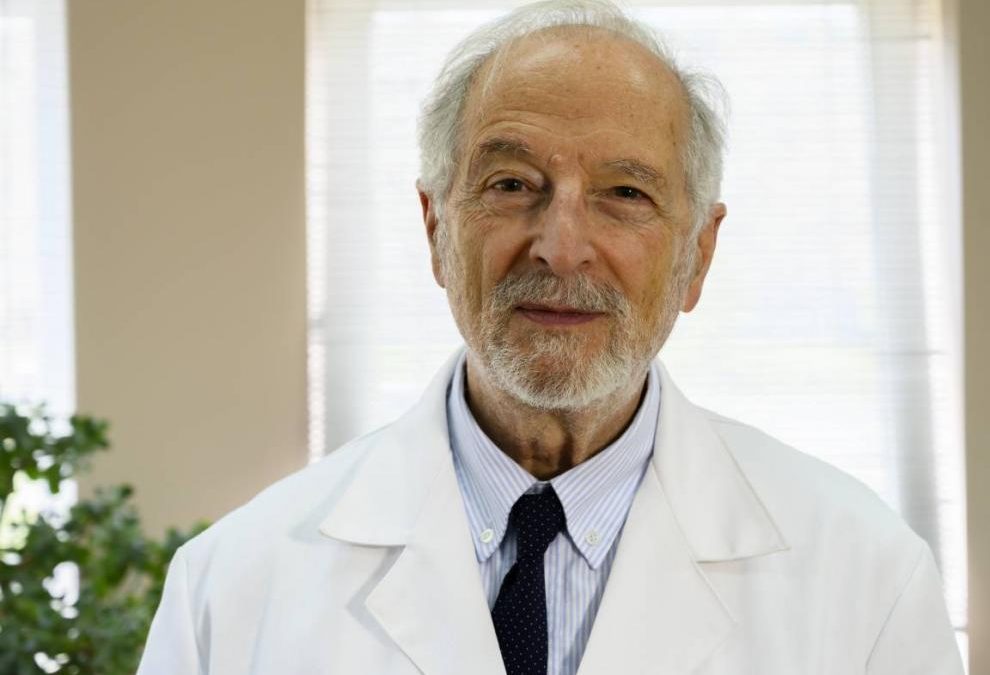
The greatest Spanish expert on coronavirus, the virologist Luis Enjuanes, does not stop. From his laboratory at the National Center for Biotechnology, of the CSIC, he works to achieve, in the shortest possible time, a vaccine that stops the COVID-19 epidemic.
You are working to get a coronavirus vaccine. What are the challenges and times to achieve it?
To obtain the vaccine we worked the same as we did with SARS in 2002 and MERS in 2012. In fact, the one we are designing was previously applied to the MERS virus with 100% protection. It is based on a DNA fragment derived from the virus – from five SARS-COV-2 genes – that has the ability to amplify but cannot spread throughout the body, which makes it very safe.
The time to obtain the first prototype for the new virus is in the range of about 4 months. However, from there you will have to apply to obtain the permit so that it can be administered to people, which can mean 8 to 12 more months for sure.
“According to doctors directly involved with Spanish patients, the strain of the virus we currently have is not very attenuated”
Is the infection mechanism of SARS-COV-2 known?
Yes, the receptor it uses to enter the cell is known. There are already publications with some details of this entry and, therefore, we already know what could be blocked so that it does not infect.
A study that has not yet been reviewed has appeared that talks about another entry point for the virus in addition to the ACE2 protein. How can these results influence?
I have not read it in detail, but it is easy – and it happens with other viruses – for there to be more than one receptor. In fact, the traditional thing is that there is a co-receiver and a receiver. The coreceptor helps viruses attach to the cell, bringing them to it, and the receptor is what activates the entry mechanisms for the virus to invade the cell. But on occasion these coreceptors can also serve as receptors.
So, could having a possible second front door be within the norm?
Yes. But well, the fact that the virus has an easier time entering the cell is not good news because, even if we can block one entrance door, it could use the other. However, this would not be the first case: sometimes viruses use, in addition to perfectly defined proteins, carbohydrates from the cell surface.
“There are many potential explanations for reinfection. The simplest is that the patients who looked negative were not actually negative.
Some research says that a weaker strain has arrived in Europe. That's true?
Right now, the strain we have is not very attenuated. These are the news I have from doctors directly involved with patients in Spanish hospitals.
In any case, I have always said that the usual thing with this type of virus is that those that are more attenuated evolve and those that are more attenuated are very positively selected. This happens for a very simple reason. If a virus is very deadly, it soon kills the patient and is removed from circulation. On the other hand, if a virus is buffered and infects the patient but does not cause clinical symptoms, the patient continues with its normal life and spreads the virus. This makes it easier for this to prevail, of course. That's what usually happens.





