COLLABORATIVE RESEARCH NETWORK: TECHNICAL TRACK OPPORTUNITY 2025
7 April 2025CLIMATE IMPACT AWARDS 2025
7 April 2025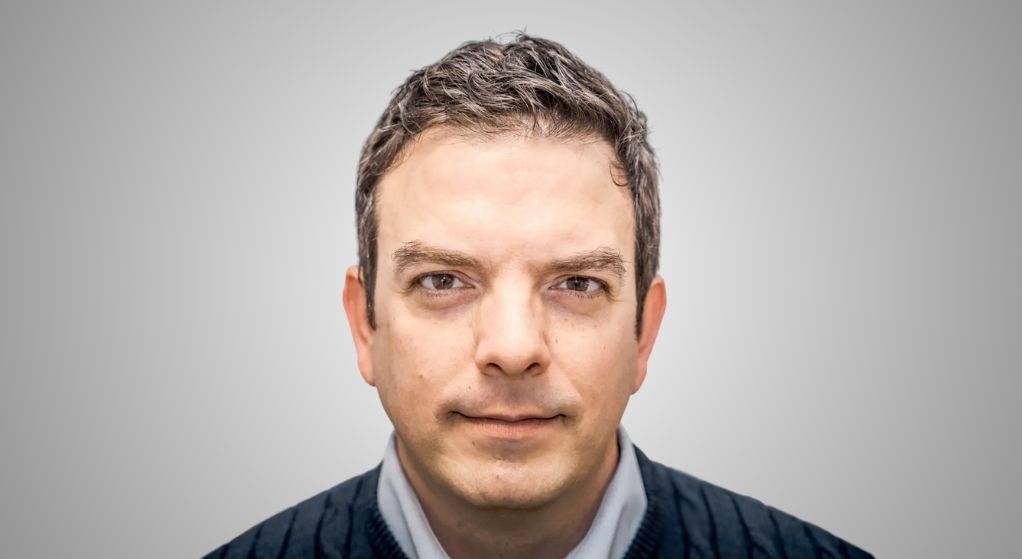
Today, Aragón interviews Alberto Jiménez Schuhmacher, Principal Investigator of the Molecular Oncology Group at the IIS Aragón, where he is developing a cancer diagnostic technique known as "virtual biopsy" and another fluorescence-guided surgery technique. His goal is to achieve more efficient and less invasive diagnosis of the most lethal brain tumors, pancreatic cancer, and certain childhood tumors.
QUESTION: Five years after the pandemic, is there more trust in scientists, or does society believe that science is a game played by elites and governments?
ANSWER: I think science is more understood and valued. But, it's true, this doesn't translate into financial support or a demand from society for more research in support of science.
Science saved us from the pandemic, but public investment in science and research remains minimal. Aren't we learning from our mistakes?
We've been experiencing a period of mirage these past few years. It's true that some European funds are being allocated to research, so there has been a slight increase. For example, many potential contracts have emerged through European funds to hire researchers, but they will expire in the coming months.
Are we more concerned with getting to Mars than with taking care of ourselves and preventing diseases as human beings?
It's not incompatible. Going to Mars could help us improve many aspects of our health. Many space advances have allowed us to have equipment such as magnetic resonance imaging or confocal microscopes, which are essentialFurthermore, we can draw results from any scientific research. We've developed RNA vaccines for cancer from Covid-19; we learned many things from AIDS that have been used as immunotherapy for cancer; and we learned from the missions astronaut Sara García Alonso is trying to promote to use microgravity to better understand how tissues are organized, which is essential for studying cancer.
Are humans a plague on the earth? Are we destroying ourselves beyond our means?
We are experiencing, in addition to our biological evolution, a cultural evolution. Scientific advances have allowed us to live longer lives, with water purification, antibiotics, and vaccines. We have always reached the edge of the precipice, but we have not fallenScience finds solutions, but we shouldn't rush things as human beings.
Artificial intelligence is moving faster than society. Studies point to a shift in the production model and the loss of some professions. How will the arrival of AI affect science?
Artificial intelligence is transforming research at all levels. In drug discovery, for example, what used to take years can now be done in days. But there will always be an element of uncertainty. will require human eyes to interpret results and make decisions.
AI can't solve cancer. When could humans solve it?
It's a powerful tool that's helping to find solutions. AI makes it possible to analyze vast amounts of genomic data and diagnostic images that were previously impossible to process so quickly. However, although it's a key tool, the ultimate solution will come from human research.
Investment funds are investing in data centers, real estate, and outlet malls. Is there a place for science?
There are investment funds investing in research, but many are not located in Spain. This means that promising developments are carried out in other countries, and we can only access them here through licenses or agreements.
Developing new noninvasive tools for diagnosing glioblastoma, the most malignant brain tumor. What's the current state of your research?
Over the years, what we've done is develop antibodies, which are now nanoantibodies generated by camels. And we haven't just made one antibody to detect a brain tumor; we've made hundreds of millions of antibodies.
These specific antibodies are used to detect brain tumors, which we are now also applying to pancreatic cancer and other types of cancer. The results are promising And fluorescence techniques are already being used to guide surgeries more precisely. We're beginning to see a scientific revolution in cancer research, which consists of an inactive chemotherapy attached to an antibody, which is then guided to the tumor, accumulates the antibody within, and activates it to eradicate it.
To what extent is the journey more important than the answers in science?
Both are important. Basic science generates knowledge that has a massive long-term impact. On the other hand, applied or translational science transforms that knowledge into useful tools for society. We cannot neglect either of the two aspects.
Do you feel like you're living in a war against cancer?
I only accept the term war in the laboratory.I don't like the war on cancer being talked about outside of that context because, if we talk in those terms, we're suggesting the existence of warriors and, therefore, of victors and vanquished. In reality, we don't talk about diabetes warriors or heart disease fighters, so that language shouldn't be used in relation to cancer either.
For about a decade now, we've felt we have the knowledge base we need and that we're beginning to win concrete battles against tumors. Each advance is real and is gradually translating into better treatments and diagnoses. It's like a rising tide of knowledge that never stops.
Cancer is, in essence, a disease of our DNA. And as is often said, rich countries don't research because they are rich, but rather they are rich because they research. This is a message we must understand and assimilate if we want to progress as a society. It is true that the return on investment in science is usually long-term, but the fruits obtained are enormous..
And your ambition to research and discover a cure… clashes head-on with bureaucracy.
I believe a profound reorganization of science in Spain is needed. We need to believe in science, provide it with multi-year budgets with sustained funding, and establish a rigorous evaluation system. That is, if a researcher doesn't perform or demonstrate adequate results, they should not remain in the system. But the real problem is the lack of structure and continuity.
In many cases, you start a lab with almost no resources. With great effort, you manage to secure funding and, little by little, build a competent team. But the moment you have that human resource up and running, the next obstacle appears: there are no adequate or ongoing calls to stabilize those people. Science can't operate in fits and starts. For a research team to perform at its best, it needs stability and long-term planning.
Science is often thought of as a factory that consistently produces tangible results. But we don't sell sausages; we work with public grants and private collaborations that arrive irregularly.
Is Spain expelling its most brilliant scientists?
Going abroad to conduct research isn't necessarily a bad thing. In fact, I think it's a positive thing. It allows scientists to broaden their training, learn from other systems, and acquire new perspectives that, ideally, they should be able to apply when they return to their country. Furthermore, it's important to have international role models who act as ambassadors for Spanish science abroad.
The real problem is that the Spanish system does not have an adequate mechanism to reintegrate those scientists who have trained abroad.In science, there are some people who are among the few in the world who know how to do certain specific things. When those people leave, because they don't find support or stability, the knowledge is lost. And not only is their experience lost, but also the investment in their training.
As Luis Oro said, science isn't a road that can be patched. If a group is dismantled, something essential is lost that can't easily be recovered. Building a research team takes years, but destroying one can happen in an instant if the necessary stability isn't provided.
Do scientists believe in God?
I try not to mix faith with science or apply scientific reason to religion. That's my way of understanding both dimensions of life. In my case, I try to separate the two aspects. Religion and faith are personal matters that must be respected. I don't use scientific reasoning to judge matters of faith, nor do I apply religious beliefs to my scientific work. They are distinct spheres that can coexist perfectly as long as that separation is respected. As Severo Ochoa said, scientists tend to look more at the earth than at the sky, but with respect.
Should science prove the existence of God?
Science has to answer scientific questions.
Are we becoming less intelligent, more closed-minded, and intellectually limited by technology?
Technology in itself is neither good nor bad; it all depends on how it is used. Technology offers extraordinary possibilities for knowledge and learning. The Internet has democratized access to information like never before in human history. However, it's true that this technological revolution also forces us to rethink how we use that information. It's no longer so much about accumulating knowledge as it is about learning to filter, manage, and appropriately apply what we find.
Despite these advantages, I also believe that a solid foundation of general knowledge remains essential to understanding the world we live in. Technology can provide access to vast amounts of information, but if we don't have a solid framework upon which to build that knowledge, we can end up becoming more dependent on external tools without developing our own critical capabilities.
There are more and more scientists converted into an influencer or social communicator. Not your style?
To be able to communicate effectively, I first need to fully understand what I want to explain, and that requires me to learn and deepen my knowledge. Communicating is, in part, a way of learning and organizing ideas in a way that makes them understandable to a general audience.
I feel that We are increasingly achieving more responsible disclosureAlthough there are always excesses and certain "hyperventilators" who can distort reality, the fact that there are scientific influencers who explain their work well is positive because it helps society understand the importance of science and the challenges we face.
When I think about the advancement of scientific communication, I'm reminded that when my mother was born, Watson and Crick hadn't yet described the double helix structure of DNA. Imagine now having to explain complex concepts like gene therapy or artificial intelligence to an older person. Science advances at an astonishing pace, and if a conscious effort isn't made to disseminate it, a gap in understanding is created that harms society.
It is true that, Also, we live in an age of information overload, where there is too much information and not all of it is valid. Therefore, it's essential to promote quality references. Not everyone is suited to communicating science. Scientists can't do everything either. Doing good research, managing teams, applying for projects, writing, disseminating information, and, in some cases, even starting companies is a huge undertaking. Each of these tasks requires different skills, and not everyone has to be good at everything.
And one more thing: We cannot blindly trust what we find on the Internet or what "Doctor Google" says. Without proper knowledge, any misinterpreted query can lead to erroneous or even dangerous conclusions.
Source: Today Aragon
Main Image: The Aragonese scientist Alberto Jiménez Schuhmacher / Álvaro Calvo for HOY ARAGÓN