
Psychologists answer 1.400 telephone consultations due to fear or anxiety due to covid
8 June, 2020
The University of Zaragoza invests eleven online doctors in the state of alarm
8 June, 2020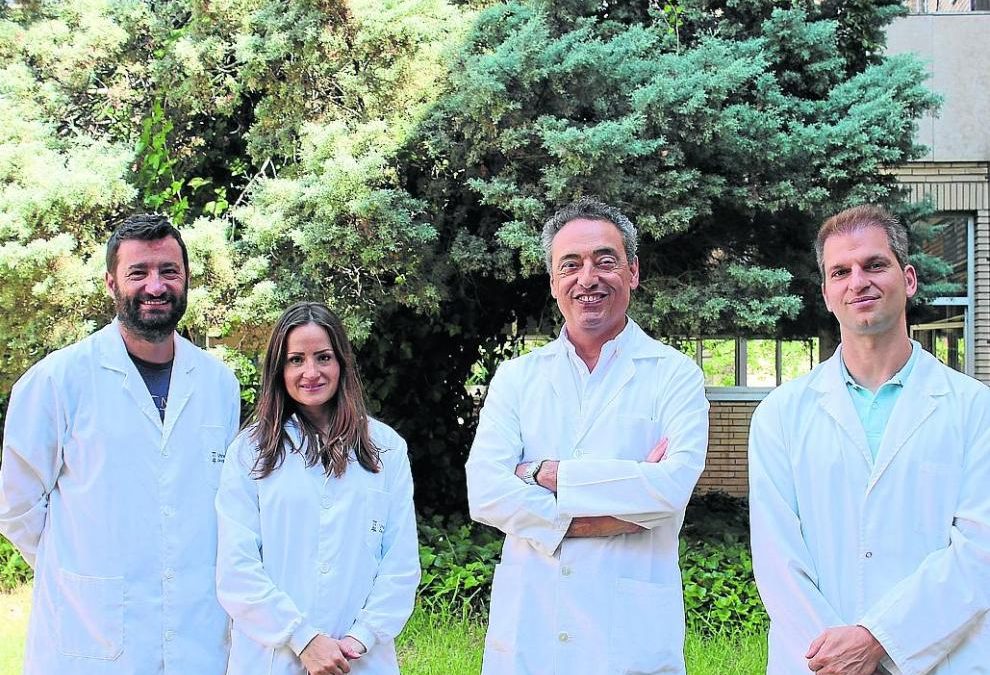
The Biomedical Primate Research Center in Rijswijk is advancing with experiments with macaques, while Unizar is waiting until the first data arrives to analyze.
The experimental part of the research project to find out if the new vaccine developed at the University of Zaragoza against tuberculosis (MTBVAC) can also protect against coronavirus continues in the Netherlands. The collaborators of the Zaragoza team led by Carlos Martín carry out the trial in macaques, with MTBVAC vaccines sent by Biofabri, a company of the Zendal group that is a partner of Unizar for the industrial and clinical development of this vaccine. "They are the same batches that are already used in humans," says Jesús Gonzalo, one of the members of the team along with Martín, Nacho Aguiló, Dessislava Marinova, Santiago Uranga and four research fellows.
The Biomedical Primate Research Center (BPRC) co-finances this proposal along with the 318.000 euros from the Covid-19 Fund, managed by the Carlos III Health Institute. The experimental part of this project is carried out in this Dutch laboratory, since neither the equipment nor the laboratory would be possible to work with primates in Zaragoza.
Located in the town of Rijswijk, the BPRC is already carrying out "vaccinations, blood extractions, organs, etc. for biochemical, immunological and microbiological determination," explains Gonzalo. The project is coordinated from Zaragoza and the interpretation of experimental results will begin as soon as they begin to arrive. At the moment, "there is still no data to analyze, so we are waiting."
Research with macaques
To work with covid-19, Biomedical Primate Research shows on its website that it has taken extreme security measures. The rooms where the animals are housed are under negative pressure so that virus particles cannot escape. Dressed almost like astronauts, the animal caretakers and laboratory technicians protect themselves with special suits and breathe through a mask where clean air flows, which is filtered by HEPA filters. The filter unit hangs from a belt.
This institute is dedicated to biomedical research into serious diseases such as AIDS, multiple sclerosis, Parkinson's or Alzheimer's... and, now, Covid-19. Various investigations are underway in search of vaccines and drugs against the coronavirus, including the one led from Aragon.
The study of the immune response of the macaques that are now being vaccinated in this center specialized in primates will tell us if the MTBVAC vaccine, which we already know protects against tuberculosis, collaterally generates some immunity against the coronavirus. This could also happen with its predecessor, the century-old and current BCG vaccine, which has three clinical trials underway with healthcare personnel in Holland, Australia and Switzerland. In its long development path, spanning more than two decades, MTBVAC has been proving, step by step, that it equals and surpasses the classic vaccine in many aspects. It is very possible that it will be like that in this one too. But you have to test it experimentally.
If it is shown that both stimulate immunity against covid-19 - while a specific vaccine against this disease arrives and with the advantage that we already know that they are safe and that they are in production - "certain population groups could be directly vaccinated." "Less is nothing."
There are no results yet, and there will not be until August, when the four-month duration of this express project concludes, marked by the urgency of responding to a pandemic like this.





