

The IIS Aragón participates in the European Researchers' Night 2025
September 23, 2025
The 1st HumanizAR and CuidAR Awards recognize eight projects and three professionals working toward more humane healthcare.
September 26, 2025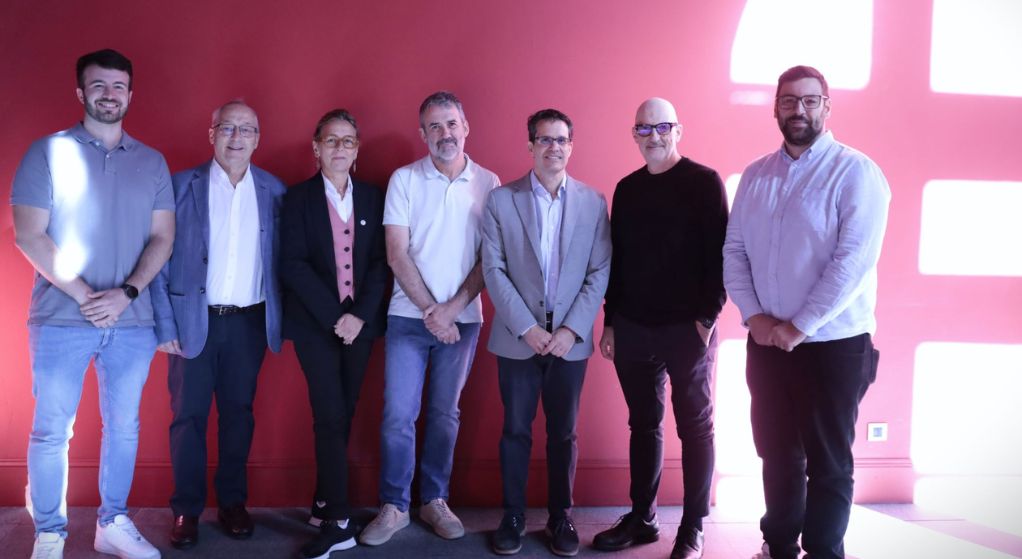
It is led by researcher José María Martínez-Montiel from the Aragón Engineering Research Institute (I3A) of the University of Zaragoza, with the participation of the IIS Aragón and the technology company Odin Vision
The European EIC Transition programme finances the EndoCartoScope project, led by the Aragon Engineering Research Institute (I3A) of the University of Zaragoza, which will help promote A new generation of endoscopes with intelligent spatial visionThis is the first time that the University of Zaragoza has coordinated a project within the EIC Transition. A total of 413 proposals were submitted at the European level, of which 40 were selected for funding. Of these, six are led by Spanish institutions, including EndoCartoScope, which will have 2.5 million euros for the next three years.
El Professor José María Martínez-Montiel, professor at the University of Zaragoza, is the principal investigator of the project EndoCartoScope. The interdisciplinary consortium is coordinated by the I3A–University of Zaragoza and has as partners the Aragón Health Research Institute (IISA) and the technology company Odin Vision, which specializes in artificial intelligence solutions applied to endoscopy.
The project was presented today in the Auditorium by Professor Martínez-Montiel, at an event attended by Ángel Lanas, scientific director of IISA, a project partner; Pilar Pina, the Vice-Rector for Scientific Policy; Manuel González Bedia, the Vice-Rector for Innovation, Transfer, and Training; Jesús Arauzo, the director of I3A; and the project's postdocs, Javier Rodríguez-Puigvert and Javier Morlana.
endoscopy It is the fundamental technique for the early detection, diagnosis, and treatment of diseases in organs such as the colon, bladder, or larynx. However, current medical endoscopes lack an understanding of the cavities they explore, They are limited to displaying images on a screen which the doctor interprets to navigate inside the body and thus complete the examination.
The new project EndoCartoScope, aims to go Beyond the image, creating personalized 3D maps for each patient Using computerized video-based simultaneous localization and mapping (VSLAM) techniques, endoscopes will be able to generate and fully utilize 3D maps of each patient's interior in real time during the scan.
In a first phase, EndoCartoScope will focus on colonoscopy, exploiting 3D maps to ensure a thorough examination of the colon, reducing the risk of missing areas and thus improving the early detection of polyps. The 3D maps will also allow precise measurements, such as the size of a polyp, to be made in real time while the examination is being performed.
Medium term, it is expected equip endoscopes with navigation assistance systems Similar to those used in current cars but adapted to medical examinations, such as collision warnings or automatic guidance to specific areas of the colon require monitoring.
El long-term impact of EndoCartoScope will be especially significant in the field of medical roboticsUnlike current surgical robots, which rely entirely on teleoperation by the surgeon, VSLAM's 3D maps pave the way for the development of autonomous medical robots capable of navigating and operating with a high degree of autonomy inside the human body.
This project is the natural continuation of EndoMapper, also led by the University of Zaragoza, which laid the groundwork for the use of VSLAM technology in medical endoscopy. Now, with EndoCartoScope, a decisive step has been taken toward its real-world clinical application.
Assumes a New support for the I3A robotics group, internationally recognized for its more than two decades of experience at the forefront of VSLAM research, which includes the ORB-SLAM software library and inverse depth parameterization, benchmark systems in the discipline.
About the European Innovation Council (EIC)
The EndoCartoScope project has been selected in the EiC Transition 2024 call, designed to validate innovative technologies that have already passed the proof-of-concept phase in the laboratory, as well as to develop business plans focused on their future commercialization.
The selected proposals should be based on previous results from projects funded through specific European calls. In the case of EndoCartoScope, the proposal is based on the results of the EndoMapper project (H2020-FET-OPEN), coordinated by the I3A.
The EIC has selected 6 projects coordinated by Spanish entities among the 40 financed, positioning Spain as the second country with the highest return in EIC Transition 2024, with over €14 million raised. The success rate for this call was 9,7%, reflecting the program's high competitiveness.
Source: I3A





