
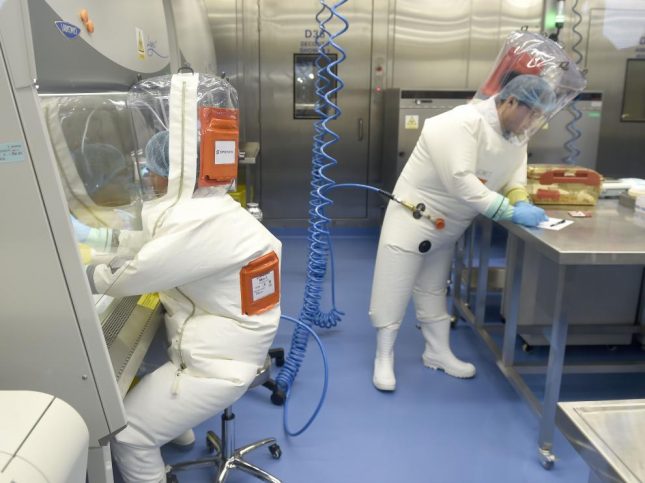
The WHO insists that "all evidence" points to an animal origin of the virus
5 May 2020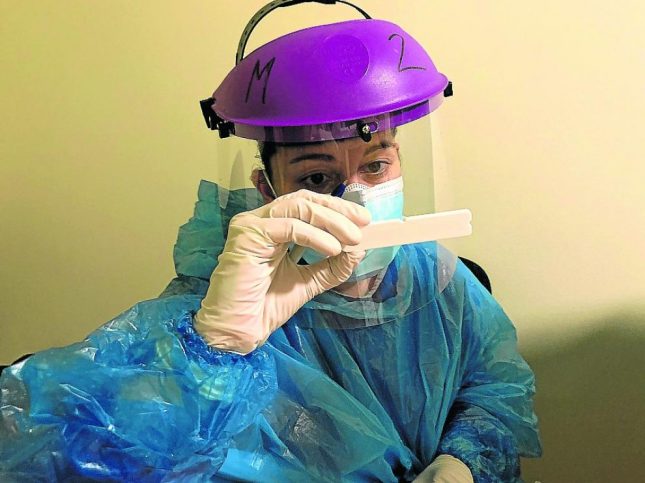
40% of the participants in Aragón in the seroprevalence study have been called and 15% attended
5 May 2020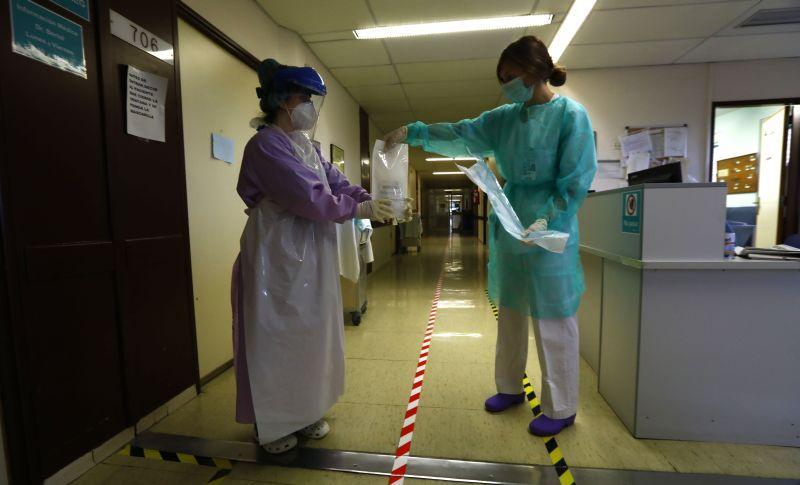
EL PERIÓDICO knows how the Miguel Servet University Hospital works during the covid-19 pandemic, in its neurology plant and the facilities of its microbiology service
In a newly awakened city of Zaragoza, the Miguel Servet university hospital opened its doors to EL PERIÓDICO. While the workers from the city council of the Aragonese capital were disinfecting its entrance outside, inside its neurology plant, the passage is divided into two (see the first image).
In the "clean" area, personnel who are not dressed in PPE circulate and in the area next to the rooms, the personnel who do wear PPE and who access the rooms to care for covid patients are located. 19. On the other side of the door, a companion is always waiting for whatever the doctor or nursing staff may need, such as medication or if a problem arises. «We entered with PPE and with double gloves. Once we examine the patient, we take off the first glove and go out trying to clean the common areas that we have touched, especially the doorknobs or, for example, the stethoscopes," details Francisco de Pablo, pulmonologist specializing in lung disease and healthcare doctor during the pandemic. .
The avalanche of cases has passed and the pace has decreased, but the work continues, especially for patients leaving the ICU who must undergo their rehabilitation and recovery process on the ward. “Patients are the true survivors of the pandemic,” de Pablo emphasizes.
Another area with a section dedicated to the virus is the emergency room. «Although no new cases arrive from the emergency room, there are still patients in the hospital. We must continue with the work, with enthusiasm we are trying to move it forward together, although the fatigue of the staff is logical," he comments. There are various plants of various services that care for Covid-19 patients and their staff has joined the circumstances, as well as from other sectors. "It is our job, an effort that we must all make, not just the doctors, we must thank all the staff, both nursing, assistants and cleaning, who often spend more hours than us and are not valued," he points out.
In recent days, the hallways are filled with family members who go, once a week, to see patients who have been hospitalized for a long time.
The hospital's microbiology service performs PCR tests, whose technique measures the virus in activity and makes the diagnosis, detecting the genetic content of the virus.
Ana Milagro, head of molecular biology, remembers that they started doing tests 6 at a time or 6 at a time, and managed to obtain 12 results a day, "without stopping." Now they use different equipment and get between 12 and 300, which "corresponds to what we receive, we always work on demand," she says. Although there are fewer patients and the number of samples for other pathologies has decreased, they continue with their work because they are now testing the population that is not hospitalized. "We work as a team, with a lot of involvement, and with staff from other services and facets," she commented.





