
Rocío Mateo: “The role of nutrition is key to the treatment of diabetes”
17 January 2022
How long can someone infected with covid be contagious?
17 January 2022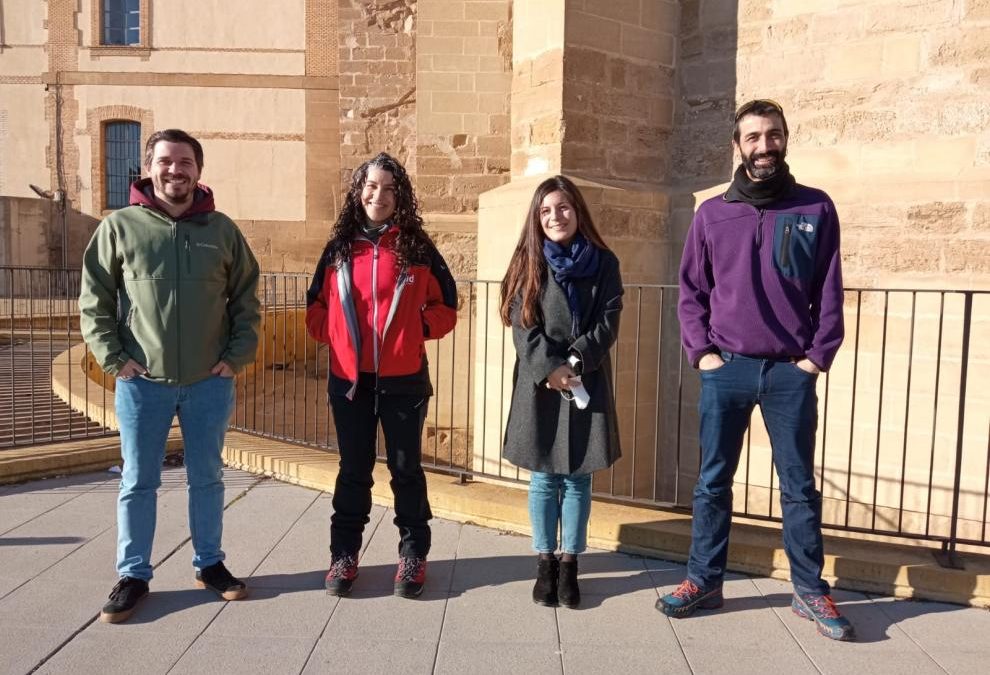
The master's degree in Mountain Rescue Medicine at the Huesca campus opened its fourth edition this Friday after already graduating a total of 45 doctors and nurses from all over Spain, as well as France and Argentina.
"It is a job that entails risks and what you have to do is try to minimize them and do things well, no recklessness, no recklessness, no heroism". This is how the Zaragoza native describes Alberto Diez your experience as mountain rescue doctor, a function that he combines with the 061 ambulance guards since July, shortly after finishing the master's degree in Emergency Medicine and Mountain Rescue from the campus of Huesca.
As the, 45 doctors and nurses from all over Spain, in addition to France and Argentina, have already taken this degree specific to the University of Zaragoza that relaunched in 2017.
The master's degree opened this Friday new edition, the fourth now, with 15 students selected from the 50 applications arrivals not only from Spain but also from other countries in Europe and Latin America. "Interest is growing"He stressed German Vicente, director of the postgraduate course and dean of the Faculty of Health and Sports Sciences of Huesca.
Although not all students have the objective of entering a medical rescue group - they also receive training for 061, ambulances... - "several have already worked with the teams of the Civil Guard (Guardia Civil)", he values. He considers that the title has many professional opportunities "because although the rescue models of each community are different, specialists trained in something so exclusive are always needed".
Alberto Díez had already set his sights on the master's degree while doing his residency as a family doctor. "I wanted to unify my mountain interests, especially alpine skiing, with the work I was already doing as a doctor", Explain. And he believes that Huesca is the ideal place due to the large number of rescues. From his experience so far he remembers a complex help in the Coronas hill, in the Dill, "because with the bad weather that there was we were considering staying the night, but in the end we were able to leave by helicopter."
Also Núria Gago He has already been able to act as a rescue doctor. This Valencian internist decided to move to Aragon "for the possibility of combining my hobby and my work." Since July she has been on duty and she claims to be "very happy." "At first it gives you respect because theory is one thing and real practice another, but I am very satisfied to have come". In his case, he remembers the difficulty of rescuing a crashed plane in Benasque and another rescue of two climbers in Balaitus.
Meanwhile, Jose Antonio Aguilera y Marina Castro They are also already graduated but have not yet been able to put it into practice. The first is a epidemiologist who works in Lion but also a lover of the mountains and looking for training that would unite both things He opted for the master's degree in Huesca "because in the end it allowed you to do it in the Pyrenees and with the best". He admits to feeling "healthy envy" for his colleagues and misses a unification of criteria between communities to be able to exercise this function "because each one is a world".
While the Marina Castro from Cordoba He was "very clear" when he finished Nursing He wanted to do this master's degree so he came to work in Aragon. "It would be fantastic to combine my profession with something that I like as much as the mountains, even if it is a hostile environment where you take risks".
Source: Heraldo de Aragón





