The CSIC devises an ultrasonic test to evaluate the effectiveness of masks
October 19, 2021
Oncological aesthetics: the importance of looking beautiful to feel better
October 19, 2021
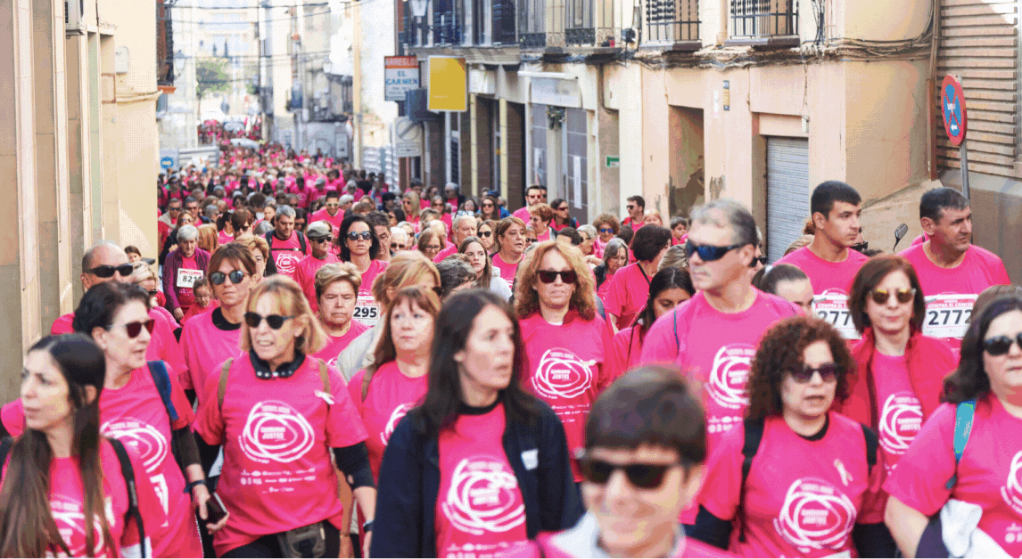
The associations of those affected by this disease ask, on International Breast Cancer Day, for "more research" and allude to the importance of early detection of the tumor in an early stage.
Mercedes Mas is 64 years old and a little over a month ago she was confirmed with the diagnosis that she never wanted to have heard: breast cancer in phase 4 with metastasis in the ganglia. To María José Rivas, 55 years old and president of AMAC-GEMA, the Association of Aragonese Women with Genital and Breast Cancer, confirmed it just three months after her sister died, after years of fighting this same disease.
They are just two of the around thousand women that every year are diagnosed with breast cancer in Aragon. Women with different stories of struggle and "long roads" to travel who raise their voices this October 19 to demand more resources and more research for this ailment. "Detecting the tumor in an early stage is key and the probabilities of survival at five years are 90%," says the president of AMAC-GEMA.
You never know, but maybe if I had had a mammogram earlier, I wouldn't be so far along," says Mercedes Mas, who for "some years" had had a Benign tumor on the chest every six months. The coronavirus crisis, however, delayed mammogram, which should have been done in January. "When I made an appointment to get vaccinated against Covid, I realized that it had been a while since I had been vaccinated." no proof"Mercedes confesses.
It was last September 9 and a biopsy confirmed, a week later, its worst omens: diagnosis was malignant cancer. "Coincidences of life, they told me the same day I found out that she was going to be a grandmother," recalls Mercedes, who after having started with the chemotherapy sessions, confesses to being "surprised" by how she copes with the disease.
I recognize that the metastasis broke me, But I feel stronger than I believed," Mas says confidently, while planning with María José Rivas to celebrate the International Day against Breast Cancer. "We have to contribute more resources for Public Health because this disease, like many others, was before, during and will be when the covid disappears", claims who has presided for three years AMAC-GEMA, an association that has 1.500 members in the Aragonese community
"My sister passed away three months before I was diagnosed."
In his case, the diagnosis was confirmed at one of the worst moments of his life. "Breast cancer came into my family 10 years ago. My sister died then and just three months later they told me that she suffered from the same disease and was quite advanced." "I had lived two and a half very hard years with her and I embarked on this journey otherwise, with a lot of strength and with a lot of desire to live. I didn't want the same thing to happen to me," says Rivas.
After undergoing the corresponding treatments radiation therapy and chemotherapy They had to intervene and do a mutilating radical mastectomy. "She has a very ugly name and when they remove your breast it seems like they take something away from you as a woman," says María José, while, smiling, she remembers that "she can rebuild herself."
"The important thing is to be able to say that ten years later we are still here", says María José Rivas. A message of optimism and hope that she shares with Mercedes Mas: "I have a lot of desire to live and, as my mother said, 'I'm too lazy to die now,' concludes the woman from Zaragoza.