
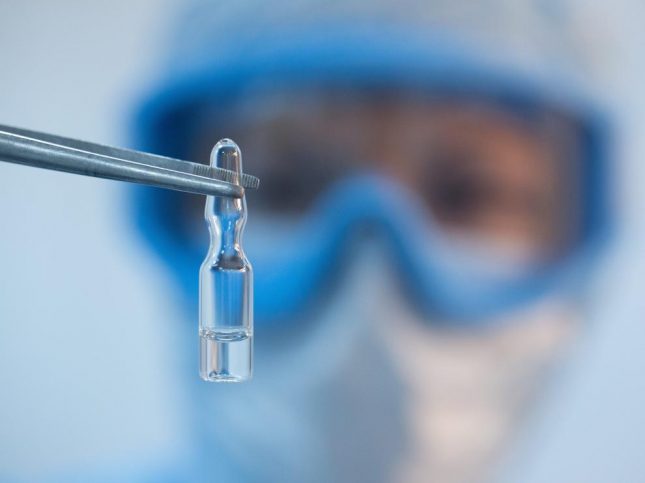
30% of Spaniards doubt whether or not to get vaccinated against the coronavirus according to a Health survey
August 26, 2020
Half of Europeans between 18 and 24 years old do not exercise
August 26, 2020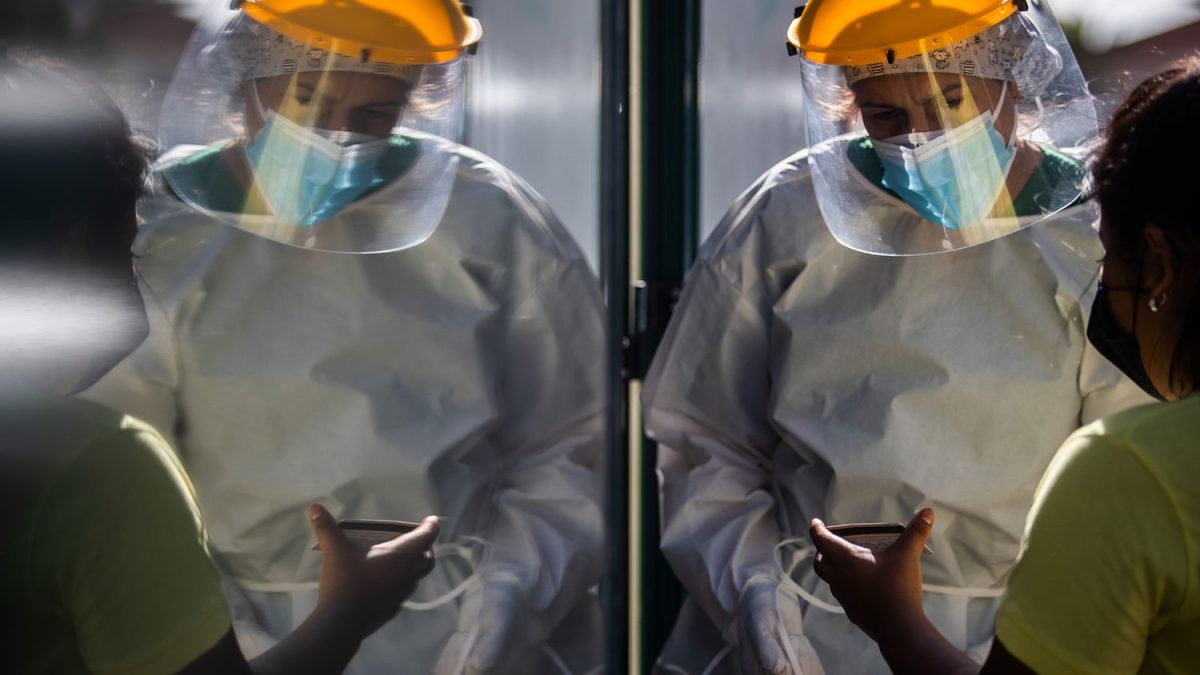
Covid mass screening point for the population between 18 and 40 years old, random to detect asymptomatic people in the area of A Coruña, in the Ventorrillo area, where an outbreak with uncontrolled community contagion has been detected. Young people are summoned by Sergas (Galician Health Service) to carry out PRC screening tests to detect positive COVID-19. Oscar Corral 21/08/20
11 experts consulted by EL PAÍS point to a hasty de-escalation as the cause of the outbreaks and insist that the solution involves tracing contacts and improving data management
The coronavirus has already defeated Spain twice. If the pandemic caught the country off guard in March, without materials in hospitals or resources in residences, it is now by far the State in the European Union with the worst records in this second wave. According to the European Center for Disease Control and Prevention (ECDC), the cumulative incidence in the previous 14 days now amounts to 152 cases per 100.000 inhabitants, far ahead of Malta (119), Romania ( 88) and France (54). A month ago, the positive cases were mostly young and asymptomatic people, but the spread of the virus has already caused hospitalizations and deaths to increase. The concern among health officials is maximum. “Fernando Simón [Health emergencies director] made it clear: the ministry did not think that we would reach these levels of incidence until well into the fall,” explains an attendee at the Interterritorial Health Council held last Wednesday.
EL PAÍS has consulted 11 experts from different fields about the reasons for the problem and possible ways out of the impasse. The responses point to poor management of the de-escalation, the lack of trackers and the population's failure to comply with prevention measures. If we want to avoid a new confinement, they add, we must improve data management, intervene earlier in any outbreak and accelerate diagnosis and contact tracing. A formula repeated in recent months but that the Administrations fail to apply.
These are the three questions we ask you:
- What situation do you think Spain is in at the moment in relation to the coronavirus?
- What reasons explain why Spain is the European country with the highest incidence?
- What should be done now with the upcoming opening of schools and the beginning of autumn?
“There is a lack of strategic capacity to manage the pandemic.” Miguel Hernán, professor of Epidemiology at Harvard University
1. The situation is regrettable, as we have been observing with dismay in recent weeks, but even more worrying is the lack of strategic capabilities for managing the pandemic. The rapid opening in May and June was only justifiable if it was accompanied by the construction of those capacities. It is not surprising that increased mobility and tourism has resulted in more coronavirus cases, but it is surprising that many areas still lack adequate case isolation and contact tracing and quarantine systems, or that it is unknown whether current diagnostic capabilities will be adequate. Suitable for autumn/winter. A fundamental problem is that this epidemic resurgence once again threatens the health system and may force a slowdown in economic activity. We have to understand that there are no shortcuts: economy and public health go hand in hand. There will be no sustained economic growth without effective management of the epidemic.
2. Partly the unpredictability I referred to above and partly cultural reasons. Epidemics are like fires: they can re-emerge from a spark, although not all sparks produce a fire. The number of sparks is probably greater in Spain than in other European countries due to the spontaneity and closeness of our personal relationships under normal conditions. The majority of the population is exhibiting exemplary behavior in terms of mask wearing and social distancing but, unfortunately, others have quickly reverted to the usual cultural patterns that involve kisses, hugs and conversations at arm's length with friends and acquaintances, sometimes in bottle-type meetings or in closed spaces without good ventilation and where people talk loudly. Anyone who chooses to revert to pre-pandemic behavior should commit to not interacting, and certainly not living together, with older people or people with previous illnesses.
3. We have time to avoid a new confinement and closure of schools if we undertake coordinated epidemic management. In particular, we need to develop quantitative indicators - public and with transparent methodology - to harmonize decisions on phase changes. This will not be possible while the bulk of technical supervision continues to fall on small groups of the Ministry of Health and the Autonomous Communities that are consistently being overwhelmed. Spain deserves a powerful national agency, with greater response capacity, that articulates functions now dispersed by the administration, that attracts the excellent public health professionals in the country, that works side by side with the autonomous communities and that is an example of communication with citizens. The government's recent commitment to create a Spanish public health agency, similar to those existing in other countries around us, is tremendously exciting and the best tool for the next health crisis.
“We wanted to get back to normal too quickly.” Magda Campins, head of Preventive Medicine at Vall d'Hebron Hospital (Barcelona)
1. The situation is worrying due to the marked increase in incidence in recent weeks. The spread is increasingly faster and the containment capacity achieved is insufficient.
2. The de-escalation was probably done too quickly, moving from one phase to another without leaving enough time. A second reason was that in the face of the first outbreaks there was not enough tracking capacity. Third, the population has not respected prevention measures in some cases. We have wanted to return to normal too quickly. And finally, we have not done mass testing until now.
3. Tracking capacity must be expanded. We must also do more massive tests where the incidence is skyrocketing. And last but not least, we must influence the young population, which respects prevention measures to avoid the transmission of the virus to the older and more vulnerable population.
“Part of the cases are due to the relaxation of individual protection measures.” Antoni Trilla, head of Preventive Medicine at Hospital Clínic (Barcelona)
1. We find ourselves in an uncertain situation. Outbreaks continue to be detected and cases and hospitalizations continue to increase. The epidemic travels at different speeds and with different impacts throughout the country, but the situation in Madrid, Aragon and the Basque Country is more worrying today. There is no sustained or widespread community transmission, so we must insist on strengthening the containment and attack strategy: case detection, rapid study of contacts, isolation and effective quarantines, as well as strict compliance with protective measures.
2. There are several EU countries (Spain, France, United Kingdom, Germany...) in which cases are increasing, most of them mild or asymptomatic. The capacity to carry out PCR tests has also increased, although we must improve in this aspect. At the end of July, Spain carried out 582 PCR tests per 100.000 inhabitants. France and Germany 680 and the United Kingdom 1.378. A good part of this increase in cases is likely due to a relaxation in individual protection measures. Several recorded outbreaks point to outdoor activities (parties, drinking parties...) and indoors (nightlife venues) in which distances are not respected, people talk loudly and consume alcohol, risk factors for contagion. 20% of cases are less than 20 years old.
3. We must strive to start the course in the best possible epidemiological conditions. This means few and controlled cases. If not, the situation will be more complicated. The risk of contagion will never be zero, not even for children, families, teachers... But we must accept it and minimize it. Individual protection measures, reducing the number of students per class, ventilating classrooms and other measures can be carried out with good will, patience, understanding and solidarity. The Administration must make a great effort to guarantee the best security conditions.





