Neurologists aim to prevent 20% of strokes and warn of the increase in cases in those under 70 years of age
October 26, 2021
Margarita del Val: "We must prioritize doses in the third world instead of vaccinating children"
October 28, 2021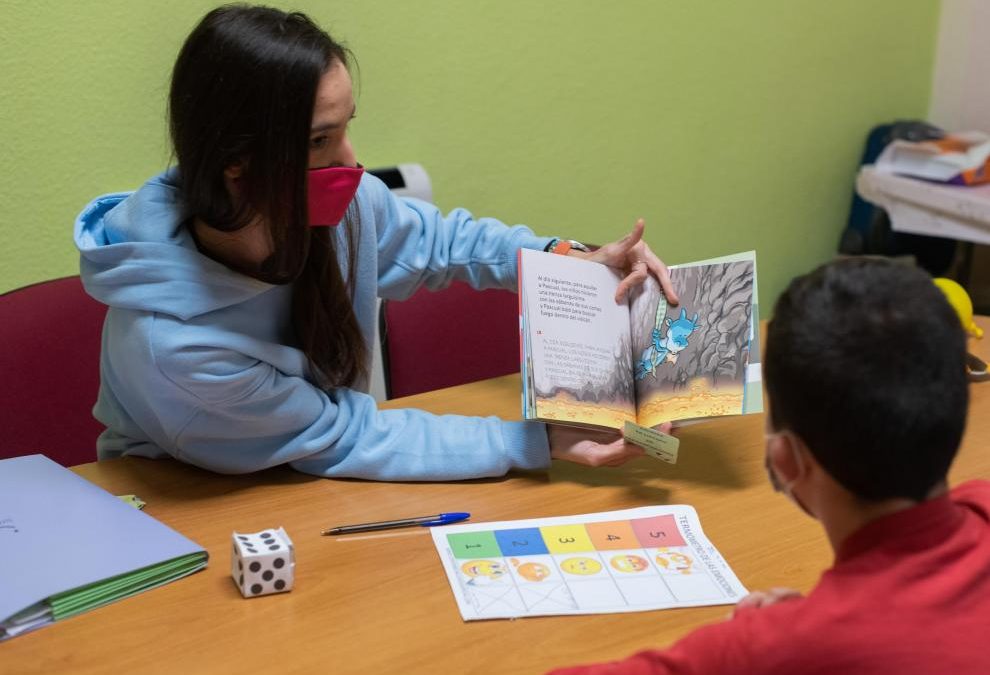
Despite its high prevalence in the educational system, Aragonese families complain about the lack of aid from the Administration and the high emotional and resource cost it entails for the majority.
There are two great workhorses in the detection and treatment of ADHD, which celebrates its World Day this Wednesday. One of them, which has not changed with the pandemic, is the "problem" of underdiagnosis in girls with attention deficit and the overdiagnosis in children with hyperactivity. They, experts explain, most of the time go "unnoticed", while in children the opposite happens and simply due to certain behaviors associated with this syndrome, the "label" is often attached to them without there having been a diagnosis.
ADHD has followed the same trend as before the pandemic. It is permanently there as a neurodevelopmental disorder and we move with data that indicates that 40% of suspected cases are confirmed to be ADHD"explains the doctor Pedro Manuel Ruiz, head of the Children's and Youth Unit of the Clinic. In the outpatient consultations carried out by this psychiatrist at the Inocencio Jiménez Specialty Center, where the Aragonese Unit with the most experience in this topic is located, assures that half of the patients you see on a normal day are ADHD. "This pathology, except in the initial months of strict confinement, when there were fewer possibilities of detection as there were not so many in-person visits and there were many telephone visits, has now returned to the pre-pandemic status," he indicates.
The most difficult thing, in the opinion of this specialist, is detect cases of attention deficit in girls, who often go unnoticed by both the teaching team and the families due to their good behavior. Doctors warn of this "paradox" that they often see in consultation. "In general, Families refer boys more than girls. But the profile that we see the most is that of a responsible, anxious girl, who spends many hours studying and takes a long time to fail... (normally he does it when he arrives at ESO). We are left with only that the child is impulsive, gets into fights or does not stop in class.…and we must not only focus on the symptoms of hyperactivity, but also on the attention deficit, because the stress and level of psychological suffering of these patients who have to work much harder than their peers to obtain the same performance as in class They can't help it and they get distracted, they lose school supplies, clothes or their cell phone when they have it... This causes a lot of suffering for these girls, and Fortunately, we have very effective pharmacological treatments and psychotherapies.", defends this specialist.
False myths about ADHD: the rejection of medications
In this regard, Dr. Pedro Manuel Ruiz regrets that There are still many "myths" which should be clarified, since there is a range of research and clinical experience spanning decades around this topic. Specific, In Spain, the first drug that psychiatrists had available was in the 80s. There is also writings by Spanish authors and educational psychologists XNUMXth century Château that perfectly describe the ADHD. "One in particular, a Catalan author who was mayor of Huesca, has a beautiful text that perfectly details his evolution throughout his life. It is curious that despite all this there is still a lot of myth and belief influences instead of science", criticizes this specialist.
The rejection that families often feel towards pharmacological treatments is combated, in their opinion, through clinical practice itself. "All these Myths, when cases with many symptoms finally come and families agree to take it, the medicine works very well and takes them all"Adds Ruiz, who helps clear up some doubts. Among them, those that many parents attribute in relation to side effects that these drugs do not have. "There is a tremendous reluctance to this type of medications and yet we give corticosteroids without any problem, which are super useful, but with more adverse effects and long-term consequences," says this doctor, who also withdrew the importance of psychotherapy and educational support for these patients when they are still children. "The pedagogical recommendations Adaptive measures are useful for those who do not meet all the criteria for ADHD. That a student is put closer to the teacher, in the front row, you have more control calendar or teach him strategies to organize These are measures that any student can benefit from and in these cases they greatly improve their quality of life," he says.
The other great workhorse in the treatment of ADHD is the transition to adult life and the loss of patients along the way, although experts point out that it has improved a lot thanks to the collaboration between pediatrics, specialized care and educational centers. "We must use all instruments to improve the quality of life of these patients, and what cannot be done is medicate the entire population, but we are talking about We pharmacologically treat 2% of the school population under 18 years of age with indication for ADHD, when there is a 5% prevalence. That is, we do not treat 3% of patients with ADHD with medications. We try to make it a complete treatment, but if there is a family or patient with a frontal rejection of the pharmacological issue, we try to work with fewer weapons, but we work," points out this psychiatrist.
"Girls with attention deficit and hyperactivity go unnoticed. We are at the good will of the teacher on duty"
Families who have to deal with this disorder report that there is no registration of cases in Aragon so that the Administration has a "still photograph" of this pathology and can dedicate resources to these children. "Unfortunately there is no aid and the Administration looks the other way. We met with the Minister of Education, Mayte Perez, and only one thing was asked: that a study be carried out, as in Navarra, on the situation of ADHD in which all parties were involved to see what resources could be allocated to this disorder. It is a situation that has always made me desperate. ¿If I don't know the impact of attention deficit in classrooms, how can I know what resources to dedicate to this problem? They cover their backs by publishing a brochure from time to time so that the families can manage, and the network of counselors reaches as far as it goes...", laments Luis Torres, father of two girls with ADHD, 18 and 14 years old who were diagnosed with this disorder in primary school. This Zaragoza native, who has also been a high school teacher, highlights the emotional and economic cost that ADHD has for families. "My oldest daughter in 1st year of ESO spent between 5 and 6 hours doing her homework, it was terrifying, and that meant that when she finished Primary, the extracurricular activities she did - and she was very good at karate - she had to leave, because she couldn't do everything. These children leave school, come home, eat, and in our case With a lot of effort since 4th grade we have had one or more teachers at home. Although I was qualified to teach them, it requires so much continuous effort that in the end they stop seeing the father as a father and see him as just another cog in the educational chain, and that is dramatic," he adds.
For this man from Zaragoza, the "saddest" thing about attention deficit is that it leaves those who suffer from it in the hands of the "good will" of the teacher on duty. "The problem of attention deficit is an adaptive problem. They are children who are not capable of adapting to the disastrous system we have, which above all favors memorization, which does not take into account the different abilities of minors... and in the few centers that adapt when they see this problem, the boy or girl stands out"says this archaeologist who has found so much in the Avempace institute as in the Aragonese Association of Attention Deficit Disorder with or without Hyperactivity, two fundamental supports for its girls. One of them, he proudly points out, has just finished high school with an average of seven. "The effort it has taken has been his life. When the pandemic started and we had to confine ourselves, I explained to them what was happening and the oldest, who was in high school at that time, told me: 'If this doesn't change anything for me, I'll never go out.' I went to cry and asked myself what life we have given him...", confesses this father, who criticizes the excessive workload and duties that these minors often face, even more so if they do not find sufficient educational support.
Currently with my daughter in school we are very happy, especially because of the methodology. Faced with the anxiety of seeing yourself helpless and having no one help you, in this center and in Aateda they really help us," Torres acknowledges, when talking about the lack of knowledge and the little educational training that there is in this regard. Throughout the educational stage of his daughters, this family has gone through different centers. As a father and also as a teacher, this Zaragoza native explains some issues that should not be applied in the classroom with these children, as he assures that there are always "strategies" that can be taken into account at the time. "Time to prepare for exams."The questions must be questions in which the statement itself is not a hieroglyph or a trap. because one of the deficits that these children usually have is reading comprehension, which requires continuous, high-quality attention, and it is more difficult for them. I remember a mathematics exam in Modern Times from a teacher who boasted that she had had many students with my daughter's disorder. When I saw the exam I almost had a panic attack. It was a Din A4 with all the questions crammed on one page, which they had to answer on another sheet. That for these children is a stab. They need questions to be spaced out and typography to be clean., not that it encourages errors in reading," he warns. He also advises that the most difficult questions are asked at the end of the exam, so that these students do not get frustrated as soon as they start this type of tests. "If the teacher himself identifies them and puts them at the end, they do not lose control of time or get stuck trying to solve the first one until the time has passed... These are things that are good for students with attention deficit and anyone else.", points out this father, who has also been a high school teacher.
"At school, so to speak, they have been looking the other way, but this year when the tutor changed, a difference has been noticed"
Erik Morán Blázquez, 12 years old, is another of the children who receive psychological help and educational support at the Aateda headquarters, in the Actur. His father, Sergio Morán, says that In these two years that he has been going to the association he has improved "a lot", and also talks about the importance that it has had in his case to find teachers who are involved with these kids. "We are still very attentive to him, but he has improved a lot. At the time the teachers didn't tell us anything at all. At school, so to speak, they have been looking the other way, but This year, when the tutor changed, the difference has been noticed. When they gave us the evaluation at the association, we took the papers and the teacher took the interest of talking to the counselor. We continue coming to the association one day a week. We notice that it is getting better and it is comfortable"says this father.
For María Jesús, the mother of Miguel Burriel, another hyperactive 14-year-old boy, the treatment of ADHD involves a long process of adaptation and learning that should not depend solely on the efforts of families or the will of teachers. "This is a long path that requires many resources. There are always schools that are more inclined than others, because fortunately education is inclusive, and it is very good. But more help is needed, Many times teachers find themselves with a fairly large group of children, the teacher has a lot of commitment and vocation, or they end up becoming a hindrance to them," concludes this mother.