

On March 3, International Hearing Day was celebrated, a day that aims to raise awareness about the importance of early detection and intervention to solve hearing problems. One of the main demands of people who suffer from hearing loss or disability is the elimination of communication barriers that make their daily lives difficult. An example of this mission are transparent masks, approved in Spain but without presence in the market, which constitute a fundamental element so that they can interact, by allowing lip reading.
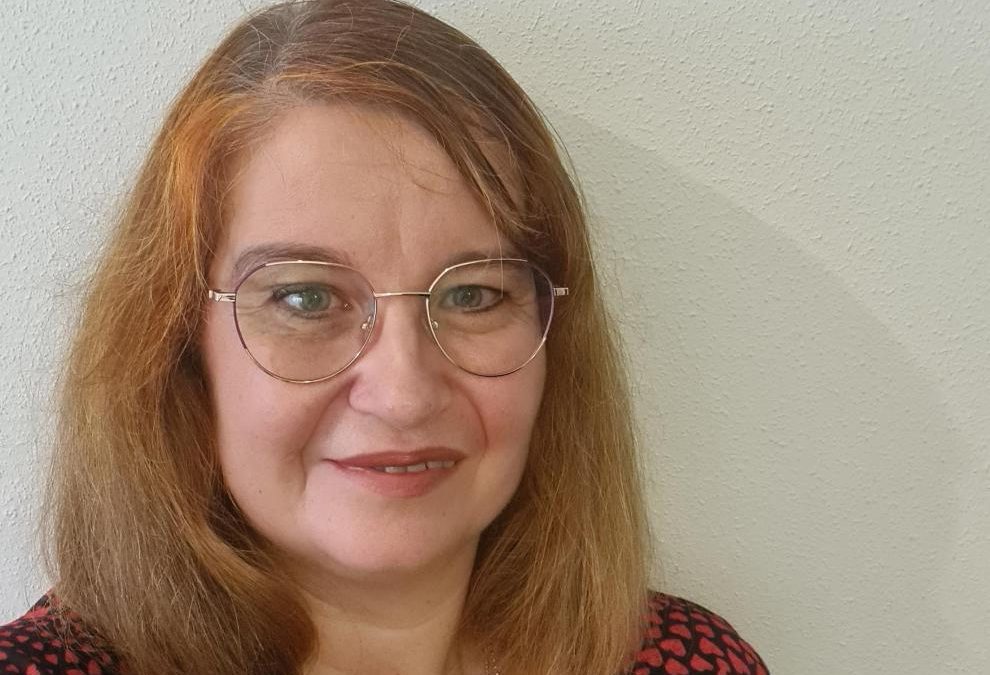
Likewise, and although sensitivity towards the group has increased in recent years, both its members and the social entities dedicated to their care indicate that there is still some way to go. "I don't say it right away because people are predisposed. Many tell me that it doesn't show. And I tell them: but do we have to carry a sign?" explains Luisa Fernanda Barón, a 46-year-old native of Huesca who suffers from hearing loss. : partial loss of hearing capacity – 40 decibels or more. "One of the biggest difficulties I have occurs in outdoor spaces. When there is background noise I have to make an extra effort to maintain a conversation. And, speaking on the phone, although I generally have no problem, sometimes it is difficult for me depending on the tone and the person's vocalization," explains Barón, who is a user of the Association of Deaf People of Zaragoza and Aragón (ASZA).
In his case, the hearing loss is due to a genetic issue and it appeared a decade ago. "I need headphones with which I can function normally," says Barón, who works as a receptionist and has previously had jobs in the hospitality sector. "In the jobs I have tried to find those in which I think I feel most comfortable. In one where I worked as a telemarketer, I did have difficulties, because there were certain accents, tones and speeds that I found difficult to understand. I think that empathy is often lacking. People are not aware of what it entails and that they have to try to adapt to your difficulty," she says, adding that for her it has been important to enhance the "boldness" of always asking to speak louder or to repeat things.
Finally, he indicates that it would be very important to support awareness campaigns and educate in this regard from schools. "It would be very interesting and enriching to raise awareness and make known the difficulties of the group. There are people who find it very difficult to accept them, even if they then try to lead as normal a life as possible," concludes Barón, who demands greater involvement from the institutions. on issues such as aid for the purchase of hearing aids or the promotion of training in sign language so that its price is reduced and there are more interpreters.
Training and employment
"We need the figure of the sign language interpreter to be accessible to serve as a bridge of communication between hearing people and deaf people, something key in issues as important as judicial or medical matters. And we believe that it would be important to promote video interpretation, both in media such as television and telephone calls," says Jesús Carlos Laiglesia, vice president of ASZA, an entity whose functions include training in sign language, job intermediation, and social and educational care for these people.





