
Support action for collaboration projects between researchers from the IIS Aragón and the Institute of Nanoscience and Materials (INMA) related to Covid-19
28 April 2021
Pfizer wants to have its pill against covid ready by the end of the year
29 April 2021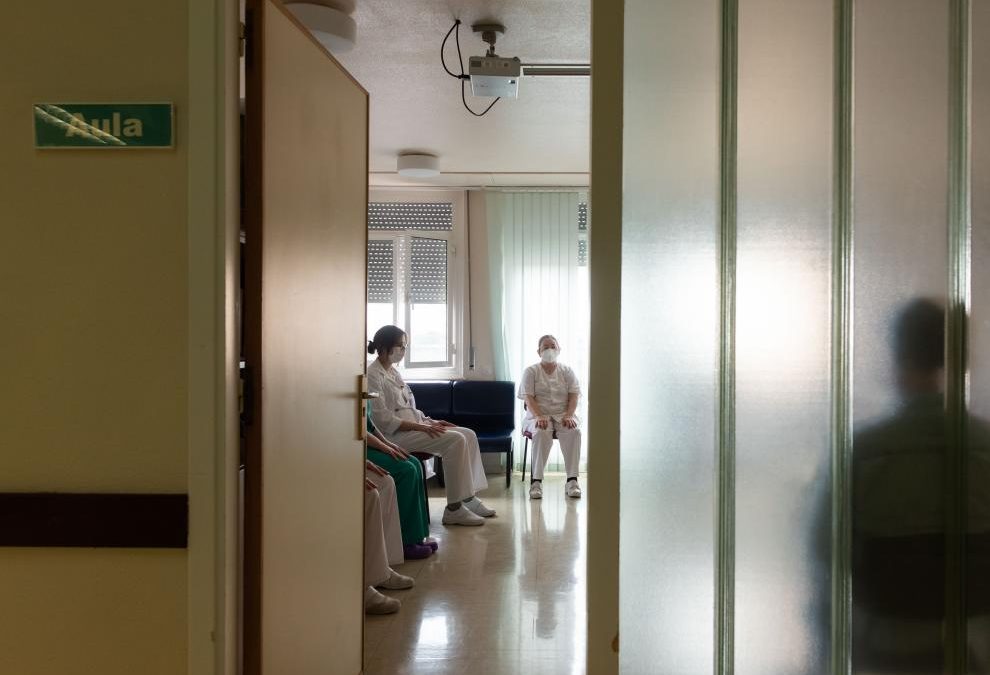
At the Miguel Servet hospital, a classroom becomes a refuge for ten minutes a day. Through meditation and relaxation, the staff tries to reset and gain energy to continue the hard fight against covid.
At 11.30:XNUMX, always punctual, psychologist Pilar Paul activates a relaxing piano and violin melody on her cell phone. In the maelstrom of the tenth floor of the Miguel Servet hospital in Zaragoza, heavenly music sounds. At that moment, a small refuge for workers opens in this covid plant, an oasis of peace in which doctors, nurses, assistants or cleaners find a peaceful break to relax and gain energy.
“We close our eyes, put our hands on our legs and connect with our breathing,” Paul tells the seven participants in today's session. These “pills,” as she calls them, began to be put into action last February, about to mark one year of a pandemic that saturates any citizen, but perhaps more so health personnel.
They are ten minutes in which workers can reset and find a quiet space so that they can then give the best of themselves,” says this psychologist from the hospital center. The sessions are varied, but the objective is always “to clear the mind” and then improve concentration and face problems “with serenity.”.
This week, the 'pills' arrive at a crucial time for plant 10. After almost a year as a covid plant, They had been 'clean' of the virus for almost two months, but this weekend positive patients were admitted again. “Mentally it is very hard, it is very difficult to accept that they are here again,” says nurse Montse Vallés, who attends today's session. In her opinion, these relaxation sessions “should be incorporated into everyone's life, regardless of the activity they do,” as it allows them to “gain strength and face the rest of the day.”
Arancha Caudevilla, an internal medicine doctor, says that after more than a year of the pandemic, the staff is “exhausted” and “disheartened” by the new increase in cases. "This is not over. The applause was very good, but the best thing people can do for us is not to let their guard down.”, he points.
In this context, the daily 11.30:XNUMX pills serve to feel “calmer,” “more confident,” and “more motivated.” “For me it is already something important, I come in here and leave more rested”, he points out. Plus, it's also good for the group, since now “we understand and respect each other more,” she says.
Since February, nine groups have been organized in different parts of the Miguel Servet hospital, but the one that has stabilized is the one on the 10th floor. “Now that they have covid patients again, I am amazed by the vitality and energy they continue to have,” Pilar Paul points out about the healthcare workers who participate in this group, which she launched with the collaboration of Cristina Collados, head of the plant.
This psychologist says that “of course they have moments of depression,” but that is what their help is for “and what they provide to each other.” “Sometimes feelings of sadness arise, as if they had forgotten to be happy.”. There are people who tell you that they haven't painted their face, or that they don't go to the shops... They are small unimportant things, but they make us feel good, they give you pleasure, like going out for tapas or hugging a person," he reflects. Paul. Furthermore, he adds, "we must keep in mind that they see patients who are suffering, who are alone, who ask them to hold their hand when they die... They connect with experiences and emotions that people on the street do not see on a daily basis. ", Explain.





