
Rosa Magallón: “For an irresponsible person, we pay twenty”
October 9, 2020
New therapeutic vaccine developed to treat leukemia
October 15, 2020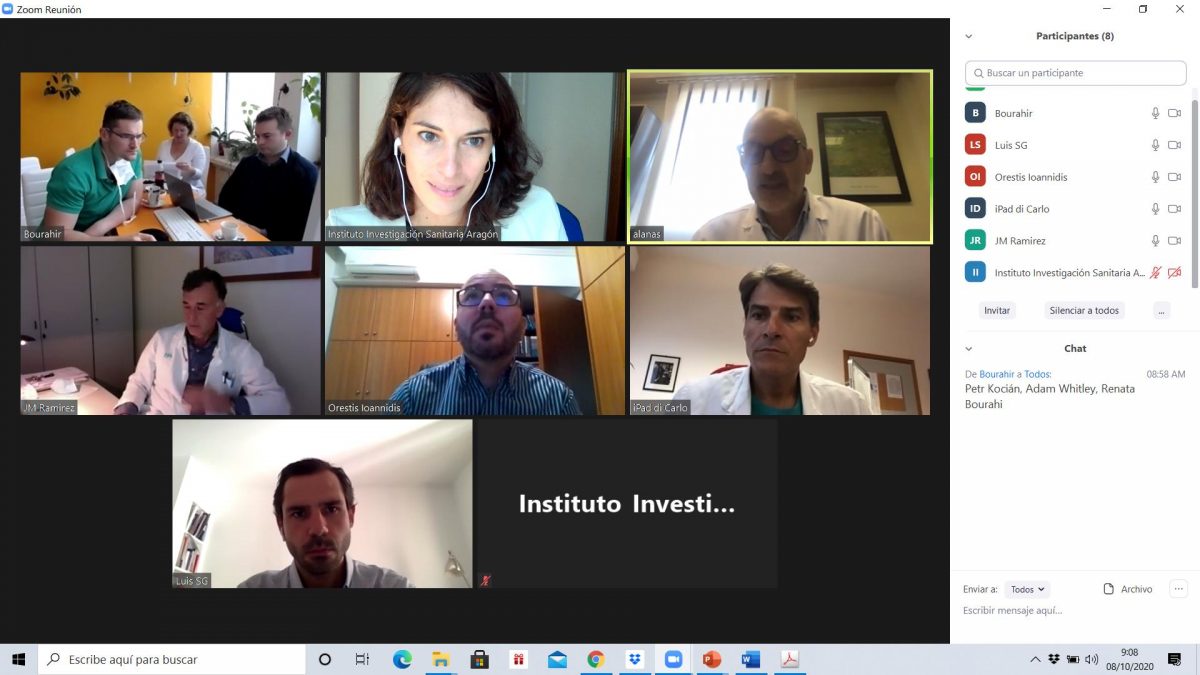
The surgery and perioperative medicine and muscle relaxation and residual neuromuscular block study groups lead the project
The plan includes the participation of five partners from four countries, who will develop the protocols that will be applied in the hospitals
The Aragón Health Research Institute (IIS Aragón) will coordinate a project for the first time Erasmus + in the field of higher education called European perioperative medical networking (Eupemen Project), financed by the European Union. This is a program to train multidisciplinary professionals directly involved in the perioperative procedure, in addition to creating a network of teachers with the capacity to teach these groups in hospitals and audit the correct application of the protocols in a standardized and homogeneous manner. The budget amounts to almost 192.000 euros and the duration is 26 months, until October 31, 2022. This Thursday the first virtual meeting was held that served as the start of the project, with the attendance of all the partners and in which the Dr. Ángel Lanas, scientific director of IIS Aragón, welcomed the participants.
Two research teams from IIS Aragón lead the project: the surgery and perioperative medicine group, led by José Manuel Ramírez, and the study of muscle relaxation and residual neuromuscular blockade, with Javier Martínez Ubieto as principal investigator. Dr. Ana María Pascual Bellosta also participates in the project. The objective of the project is to collect and share the experience of applying multimodal rehabilitation with various professionals from European hospitals and facilitate its dissemination.
Five partners from Spain, Italy, the Czech Republic and Greece participate in the plan, who are developing the necessary protocols in order to implement the recovery program in at least five hospitals in Europe. In the long term, the aim is to reduce side effects after surgery for patients and, consequently, achieve faster improvement; reduce mortality after surgeries; and reduce the length of hospital stay, with the consequent economic savings for the health system and the increase in availability of beds for other patients.
Recipients include not only health professionals who are directly in charge of caring for surgical patients (surgeons, anesthetists and nurses), but also all those professionals who, in one way or another, are related to the treatment. interdisciplinary care of these patients: nutritionists, physiotherapists, rehabilitators, digestive specialists, radiotherapists, oncologists or pathologists. Given that efficiency (reduction of hospital stays and optimization of the use of other resources) is one of the advantages of these programs, health center managers, clinical managers and quality coordinators will also benefit from the project. Likewise, primary care doctors and patients also have a very active role.
About the Aragón Health Research Institute
The IIS Aragón is the Health Research Institute of the hospital complex formed by the Teaching and University Hospitals “Hospital Clínico Universitario Lozano Blesa” and “Hospital Universitario Miguel Servet” and Primary Health Care. The University of Zaragoza and the Aragonese Institute of Health Sciences are associated with this hospital complex through different legal instruments.
The objectives of the IIS Aragón are to bring together basic and applied, clinical and health services research; create a quality research, care and teaching environment to which health professionals, training specialists and postgraduate and undergraduate students are exposed, as well as constitute the ideal place for attracting talent and the location of large scientific facilities. technological.
About Erasmus+
Erasmus+ (2014-2020) is the integrated program of the European Union (EU) in the fields of education and training, youth and sport, which offers opportunities for all people and in all educational sectors (School Education, Vocational Training , Higher Education and Adult Education). In Spain, the Erasmus+ program is managed by the Spanish Service for the Internationalization of Education (SEPIE), which acts as the National Agency for the program in the fields of education and training and is attached to the Ministry of Universities. The Eupemen project is part of Key Action 203 Strategic Partnerships, where transnational institutions linked to Higher Education cooperate in the development of innovative intellectual products that imply an improvement in the systems and structures of Higher Education.





