

Rare diseases: "We have been searching for a diagnosis all our lives"
1 March, 2021
'Pink epilepsy' seeks drugs and researchers
1 March, 2021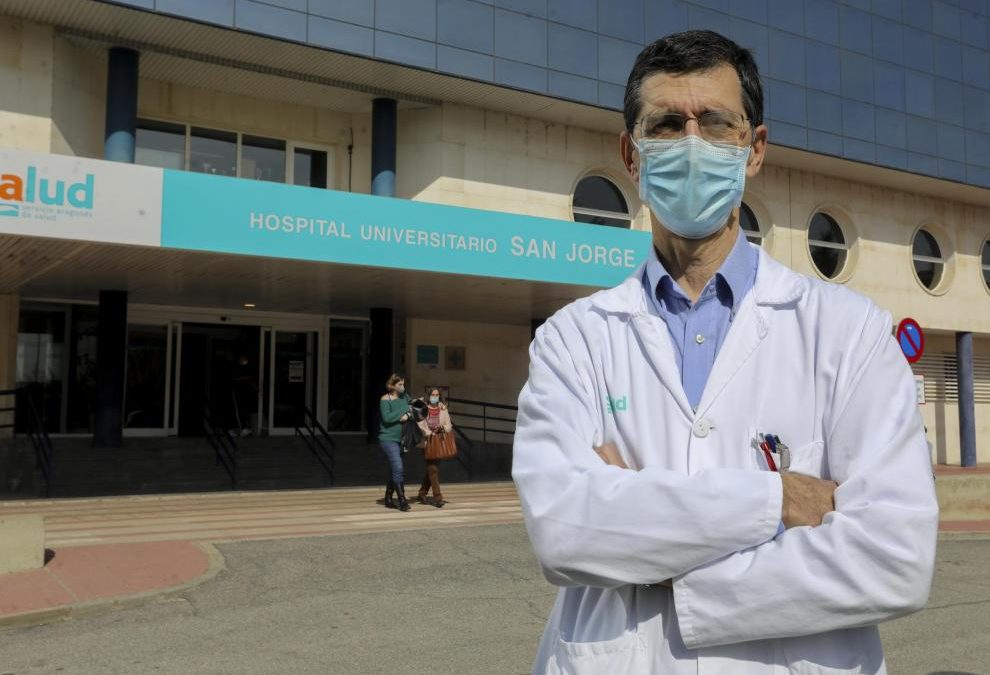
José Puzo, head of the center's Biochemistry service, has just obtained a position and there is another call for Digestive. Until now, this figure only existed in the Clínico and the Servet in Zaragoza.
The declaration of San Jorge de Huesca as a university hospital already has its first practical effect five months after receiving accreditation. And the first position of full professor linked to the center and dependent on the Faculty of Health and Sports Sciences has just been awarded. It belongs to the specialty of Clinical Biochemistry and there is another call for Digestive System. A teaching figure that in Aragon only the Clínic and the Servet of Zaragoza had.
José Puzo, head of the hospital's Biochemistry service, has obtained the position after passing the selection process. For 32 years he had been combining his healthcare work in the morning with General Pathology or Pathophysiology classes in the afternoons in the degrees of Medicine, Nutrition and Dentistry as an associate professor. And now, as he is already a starter, he will be able to make both tasks compatible. "This allows you to better serve students, improve the teaching that is done in the hospital and increase research," he explains. To do this, he has had to obtain certification from the National Agency for Quality Assessment and Accreditation of Spain (Aneca), "which is very demanding," he highlights.
The managing director of the health sectors of Huesca and Barbastro, José Ignacio Castaño, values the importance of the conversion of San Jorge into a university, which culminated a historic demand. "By definition, every hospital has three functions: care, teaching and research. And with this link to the University, these professionals will continue to maintain their care work but from now on they will put the emphasis on the teaching and research part," he says.
The possibility of having linked university professors has "several positive effects," according to Castaño. The first, which encourages the rest of the professionals "because they know that if they put effort into research and publish in high-impact journals, it is feasible that they can combine their care work with teaching." In addition, the role of the hospital within the university environment is enhanced with the more active participation of professors. And the teaching line of the health center itself is also reinforced since in the province training in 14 specialties MIR (Medicine), EIR (Nursing) and PIR (Psychology) is provided to around 100 professionals.





