

Miguel Ángel Martínez-González: «In the long term, obesity is more dangerous than the coronavirus»
September 29, 2020
Is life improbable or inevitable?
September 30, 2020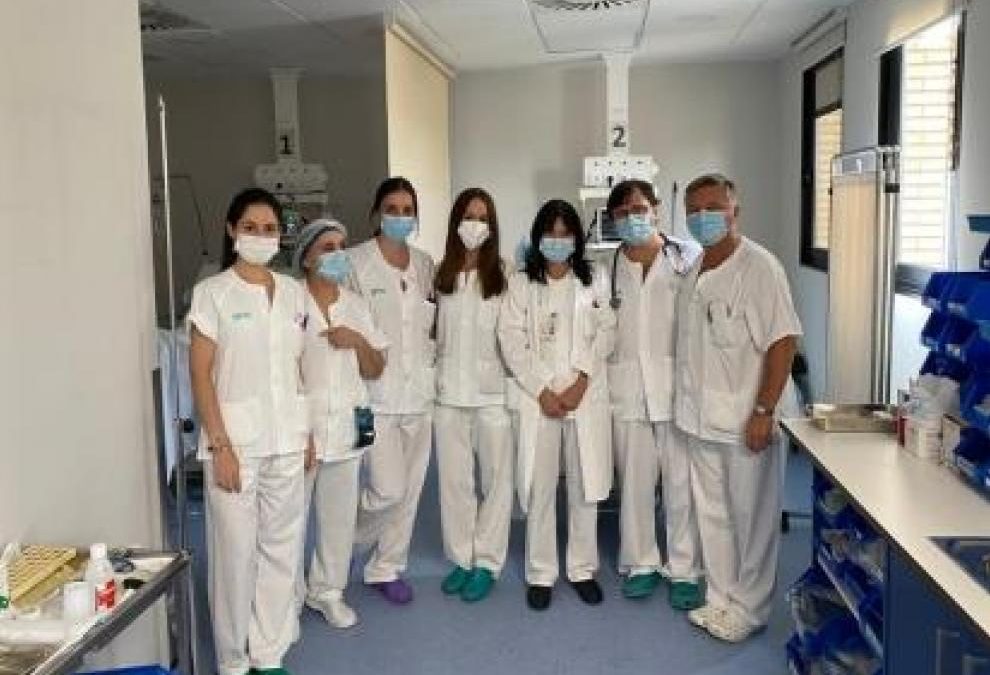
It is equipped with six beds and is located on the seventh floor of this hospital in Zaragoza, dedicated to Neurology. The works for its adaptation have required an investment of 150.000 euros.
The Lozano Blesa University Clinical Hospital in Zaragoza now has a new Stroke Unit, equipped with six beds that will allow an average occupancy of 400 patients per year. This new area is located on the seventh floor of the center, dedicated to Neurology, and the works to adapt it have involved an investment of 150.000 euros.
Each patient will have a monitoring system under the direct and continuous supervision of the nursing staff who will not only have specific training, but also clinical action protocols that seek to anticipate the patient's needs to minimize possible complications and promote recovery. early clinical and functional recovery.
Until now, patients who came to the University Clinical Hospital with this pathology already received multidisciplinary care in differentiated beds with a function similar to a Stroke Unit, a pioneering initiative at that time that has allowed all available therapeutic measures to be applied without delay.
However, as reported by the Government of Aragon in a press release, it was necessary to adapt its care and structural design to more optimally incorporate all the new advances in the care of these patients.
Stroke units
Stroke Units are non-intensive acute care units intended exclusively for the care of patients with this pathology. They are characterized by a systematization of patient care, with trained personnel, pre-established admission criteria, precise diagnostic and therapeutic action, special attention to acute treatment and early functional and social rehabilitation of the patient, in addition to effective multidisciplinary coordination.
At this time, they are the most effective resource for the treatment of the acute phase of stroke. Its operation is based on multidisciplinary care with defined objectives that seek to achieve the best health results for patients, as well as greater comfort for both the patient and their companions and the staff.
In this sense, the head of the Clinic's Neurology service, Cristina Íñiguez, explained that with the operation of the Stroke Units "it is possible to reduce stroke mortality by 20 percent and, what is more important, and the risk of dependency is reduced by up to 30 percent."
What is stroke?
Stroke is a sudden disorder in the blood circulation of the brain that can be caused by occlusion of a blood vessel (85% of cases) or by rupture of the vessel, with consequent hemorrhage (15%).
More than 90% of cases are directly related to one of the ten risk factors: high blood pressure, diabetes, dyslipidemia (elevated cholesterol), sleep apnea, obesity and harmful lifestyle habits: smoking, alcohol abuse, sedentary lifestyle and stress. Also heart diseases, especially an arrhythmia we know as atrial fibrillation. With the appropriate correction and treatment of these risk factors, more than 90% of strokes could be reduced. In Aragon there are between 2.800 and 3.000 new cases of stroke per year.
The symptoms generally occur suddenly and unexpectedly and the main ones are:
- Sudden alteration in language, with difficulties speaking or understanding.
- Sudden loss of strength or sensitivity in a part of the body. It generally affects one half of the body and manifests itself mainly on the face and/or extremities.
- Sudden alteration of vision, such as loss of vision in one eye or inability to appreciate objects somewhere in our visual field.
- Sudden loss of coordination or balance.
- Very intense headache and different from other common headaches.
It is worth remembering that to address care for this pathology, in 2009 the Stroke Care Plan in Aragon (PAIA) was implemented, a strategy that is reviewed annually. One of the keys to success in treating this pathology is the speed with which its initial symptoms are detected and the emergency system is contacted. That is why in the care chain for this pathology, the precise interconnection and coordination between extra-hospital and in-hospital emergency services is essential with the so-called Stroke Code, designed for the purpose of rapid identification, notification and transfer of patients to the hospitals. emergency services.





