
L'Oréal-UNESCO “For Women in Science” awards 2025
November 6, 2025
Is there really a cancer epidemic in younger adults?
November 7, 2025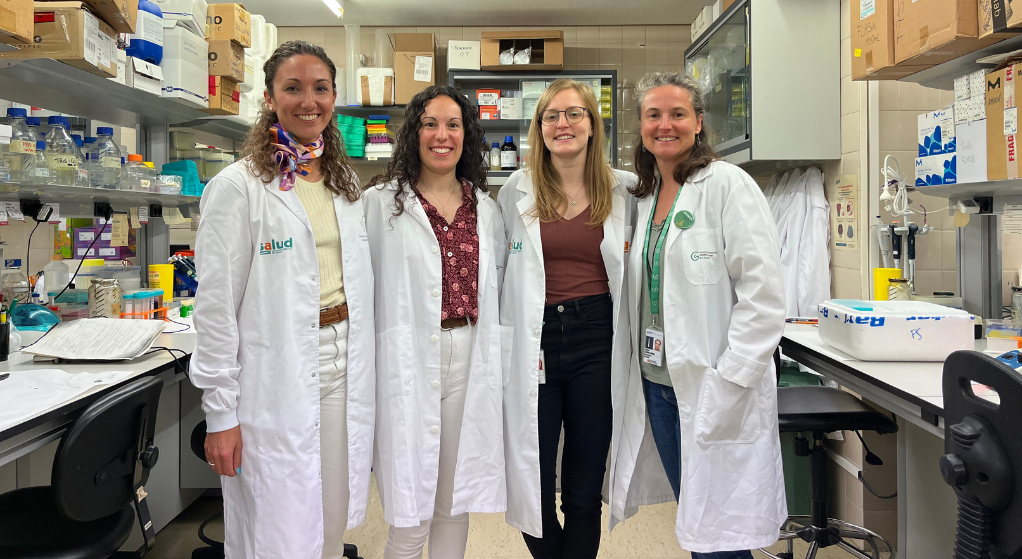
The article analyzes how peroxisome proliferator-activated receptors (PPARs) influence key properties of tumor stem cells, such as resistance to treatments, the ability to initiate tumors, or evasion of the immune system.
This review takes on special relevance following the publication, last July, of a study by the same group in the journal Cancer Research where a key component for cancer cells' adaptation to adverse conditions was discovered: the PPAR-delta protein, which functions as a stress sensor, signaling cells to adapt. The new publication suggests its potential as a therapeutic target in oncology, especially against relapse and disease progression.
The research groupThe Metabolism and Tumor Stem Cells' study from the Aragon Health Research Institute has been published in the journal Cells. Cells. A scientific review on the emerging role of peroxisome proliferator-activated receptors (PPARs) in cancer, with special attention to its function in tumor stem cellsThe work, signed by researchers Beatriz Parejo-Alonso, Marta Mascaraque, Alba Royo-García and Patricia Sancho, reviews the most recent scientific evidence on this family of regulatory proteins.
The PPAR (PPAR-α, PPAR-δ and PPAR-γ) These are transcription factors that are activated in the presence of certain lipids and regulate the expression of genes related to energy metabolism. Although they have traditionally been linked to lipid metabolism and physiological functions such as energy homeostasis or cell differentiation, Several studies have shown that they also play a role in key processes of tumor development..
This review takes on special relevance after the publication, last July, of a study by the same group in the journal Cancer Research, the official publication of the American Association for Cancer Research (AACR), in which It identified the key role of the PPAR-delta protein as a metabolic sensor that allows tumor cells to adapt to a shortage of oxygen and nutrients., common conditions in the tumor environment. This protein activates a program that reconfigures cellular metabolism and promotes more invasive and metastatic behavior.
In that work, led by Dr. Patricia Sancho and with Dr. Beatriz Parejo-Alonso as first author, the team demonstrated that, when Inhibiting PPAR-delta in animal models reverses this adaptation, reduces the invasive capacity of tumor cells, and blocks the development of metastasis.The research thus established PPAR-delta as a therapeutic target of great interest to combat the progression of pancreatic ductal adenocarcinoma, the most common type of pancreatic cancer.
Specifically, This review, now published in the journal Cells, delves deeper into its role in tumor stem cells.PPARs are a subpopulation of cells with a high capacity for self-renewal, resistance to treatments, and high metastatic potential. The article describes how PPARs can modulate these processes in a context- and cancer-type-dependent manner, showing effects that can promote or inhibit tumor development.
Furthermore, the study discusses the possibilities of using PPAR modulators, agonists or antagonists, such as therapeutic strategy to combat tumor relapse or resistance to treatments. Although some of these drugs are already used in the treatment of metabolic diseases, their clinical use in oncology requires careful evaluation due to possible systemic side effects.
The article, published in open access, can be consulted in the journal Cells. Cells.: https://www.mdpi.com/2073-4409/14/20/1610