
The Zaragoza College of Physicians opens a registry of volunteer doctors
18 March, 2020
A time trial for the vaccine against the new coronavirus…and for the patent
19 March, 2020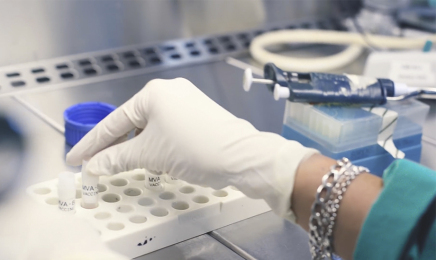
- The Carlos III Health Institute will receive 25,2 million euros, the majority for research projects and programs related to the coronavirus
- The CSIC National Biotechnology Center will obtain 4,5 million to study the new coronavirus and work on the development of vaccines
- The Royal Decree-Law includes measures to guarantee research and innovation tasks
- The conditions of the Cervera program fund are modified, which allows launching a line of direct aid for business R&D&I
This Tuesday, the Council of Ministers approved the granting of 29,65 million euros for scientific research against the SARS-CoV2 coronavirus. The Ministry of Science and Innovation will allocate these resources for the development of projects and programs of the Carlos III Health Institute (ISCIII) and the Higher Scientific Research Council (CSIC), which already have several projects related to the new coronavirus underway.
The almost 30 million for research are part of the Royal Decree-Law on Extraordinary Measures to address the economic and social impact of COVID-19, approved by the Council of Ministers. With this measure, the Government promotes the development of the work that is already being carried out by public research and critical infrastructure organizations - which work in coordination with the Ministry on the resources that are needed -, and supports the opening of new lines of research to confront SARS-CoV2.
Specifically, 25,2 million euros will be for the Carlos III Health Institute. Of this amount, 24 million euros are allocated to direct grant subsidies for new coronavirus research projects and programs. With this item, the ISCIII, as a research funding body in the field of health, will develop an urgent aid program for projects and programs that aim to generate knowledge about the infection: analyze and understand the biology of the virus; develop new therapeutic and prophylactic options, including vaccines; develop an epidemiological surveillance system and analyze its impact from the point of view of health services.
The Carlos III Health Institute (ISCIII) – dependent on the Ministry of Science and Innovation – will also receive 1,2 million euros to cover exceptional needs caused by the new coronavirus crisis, such as the acquisition of material or the payment of guards for the increase in services.
This organization, in addition to carrying out outstanding work in public health and detection of the virus, through the National Centers for Epidemiology (CNE) and Microbiology (CNM), has several of its own research projects on COVID-19 underway. It is also part of a European project selected in the latest express call of the European Commission, to create a multidisciplinary European network for research, prevention and control of this disease.
For its part, the National Center for Biotechnology (CNB) of the Higher Council for Scientific Research will receive 4,45 million euros for coronavirus research expenses. With this item, the CSIC will promote the development of its current research and advance protection strategies against SARS-CoV2.
The project designed by the CNB has six objectives: generate basic tools and experimental models essential for the development of protection strategies; identification and testing of antiviral compounds for the treatment of SARS-CoV2; development of specific monoclonal antibodies for protection against infection; development of the next generation of vaccine candidates; molecular, structural and functional characterization, and computational modeling to understand the spread of the new coronavirus.
The National Biotechnology Center of the CSIC is a world pioneer in a method of cloning viruses that allows them to be genetically manipulated to attenuate their virulence and create a vaccine. The team led by professors Luis Enjuanes and Isabel Sola is already working on a project to study the pathogenesis mechanisms of the new coronavirus.
This CNB team was also selected in the recent EU urgent call for a project that seeks to develop protective monoclonal antibodies against the new coronavirus.
The ISCIII, the CNB and other research centers have been declared critical health infrastructures, so they remain fully operational for COVID-19 research.





