

A grief support group to overcome losses from the health crisis
11 June, 2020
They discover a possible Achilles heel in an enzyme of the virus that causes covid-19
11 June, 2020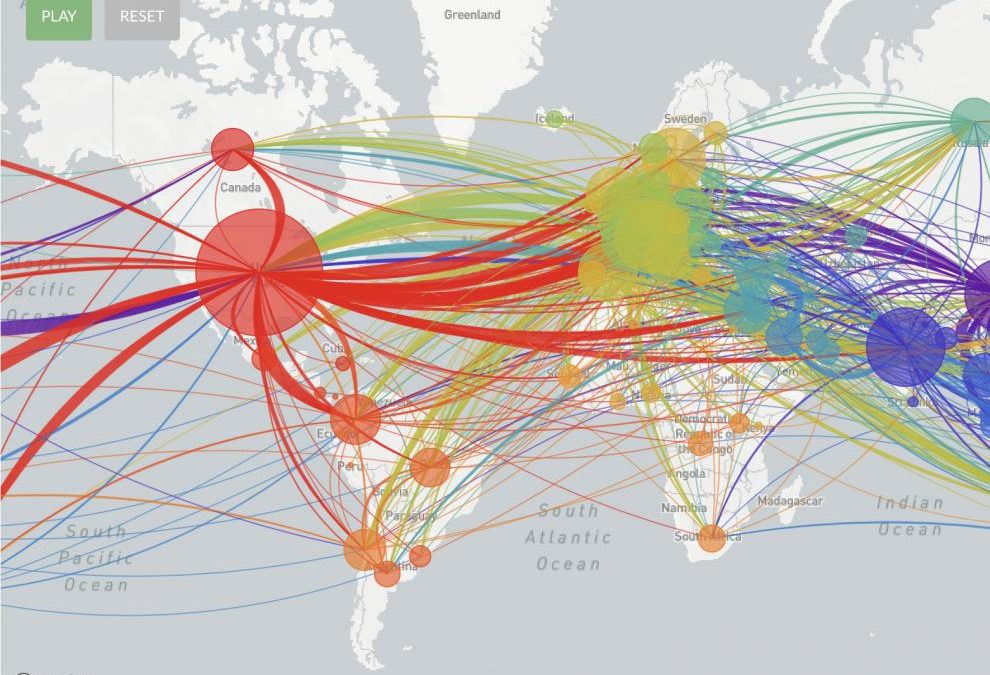
Different countries, including Spain, are in the process of de-escalating the strict confinement measures that were implemented in mid-March to face the first wave of the covid-19 pandemic. In the current phase, the study of the genome of this new coronavirus is a valuable epidemiological surveillance tool that allows scientists to follow the spread of the virus around the world in real time. What information can we obtain from the analysis of the SARS-CoV-2 genome?
In a pandemic like the current one, caused by an emerging virus, reading the genome of the virus can give us information about its origin, how it passed from its animal reservoir to humans, and help scientists infer how it has spread throughout the world. and wide of the world. At a local level, it can be used to investigate whether the virus has entered a country more than once, where it came from, how many Covid-19 outbreaks there have been and how they are related to each other.
Throughout the epidemic, a pathogen like the SARS-CoV-2 coronavirus accumulates mutations in its genome randomly. Inside the host's cells, the virus replicates its genome in an error-prone copying process. Analogous to the game of broken telephone, changes introduced in the genome sequence are transmitted to the next generation of viruses and constitute the raw material for their evolution.
By comparing the virus genomes obtained from hundreds or thousands of patients, it is possible to analyze how quickly the virus mutates and whether there are genes that incorporate more mutations than others. Also if any mutation can have an impact on the virulence or transmissibility of the virus, although nothing so far indicates that this has occurred in the case of the coronavirus. This information can be very useful for the development of antiviral drugs and vaccines, and even molecular diagnostic methods. If the molecular targets of drugs and vaccines mutate excessively, they could cease to be effective. The same thing happens with diagnostic methods, which are designed to detect highly conserved regions of the genome; If these mutate, their sensitivity and specificity may be affected.
Data seem to indicate that SARS-CoV-2 mutates more slowly than the seasonal flu virus
In the case of SARS-CoV-2, the data seem to indicate that it mutates more slowly than the seasonal flu virus. The GISAID database has estimated that it incorporates 0,45 changes per week (less than 25 mutations per year); On the contrary, seasonal flu incorporates about 50 mutations per year. Because the SARS-CoV-2 genome is almost twice as large as that of the flu, its mutation rate would be four times lower. Good news that may be key to the successful development of vaccines, unlike what happens in the case of other viruses such as HIV.
Comparing thousands of genomes of the virus shows how it evolves on its journey around the world
The comparison of thousands of SARS-CoV-2 genomes with each other also serves to analyze how the virus evolves on its journey across the five continents, passing from person to person, and to try to anticipate its next movements. Mutations in the virus genome tell us how the different sequenced viruses are related to each other; They would act analogously to stamps in a passport, telling us which countries the virus has been in previously.
The open access project Nextstrain, which among other pathogens tracks the spread and evolution of influenza, Ebola or tuberculosis in real time, has also been following SARS-CoV-2 since the beginning of the year. Nextstrain uses public genomic data shared by researchers around the world in GISAID and provides a constantly updated view of the epidemic, along with powerful analytical and data visualization tools made available to the scientific and medical community. All of this with the aim of increasing epidemiological knowledge about covid-19 and thus improving responses to future outbreaks.





