The problems with masks in their removal: "For some teenagers it is a kind of nudity"
12 April 2022
An Aragon project studies how to suppress Parkinson's tremors
12 April 2022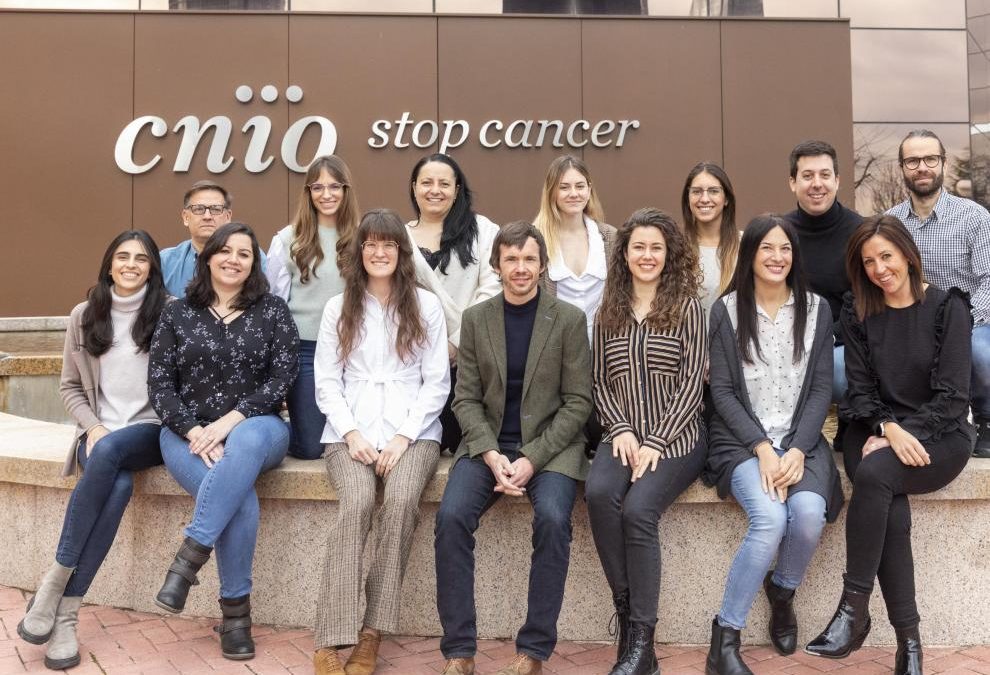
This new approach to personalize radiotherapy and combat resistance to this treatment is published in the journal 'Nature Medicine'.
Why me? It is one of the questions that cancer patients cannot help but ask themselves. Sometimes, they do not do it just once, but rather repeat it throughout the course of their treatment if the disease does not respond as expected. Because in certain patients, a therapy works and in others, it does not. And science also asks Why is it not effective for this specific person? Understanding it opens some doors, including the path to making a treatment work.
An investigation led by the Aragonese Manuel Valiente has just decipher the mechanism that causes resistance to radiotherapy in patients with brain metastases, but they have not stopped there, but their team at the National Cancer Research Center (CNIO) has found a drug that eliminates it, ensuring that those patients for whom radiotherapy did not work can also benefit from it. The work has just been published in 'Nature Medicine'.
“We are very happy because we have, in a way, a triple bottom line: we begin to understand the molecular mechanisms of resistance to radiotherapy; we stratify patients, so we can personalize therapy; and we found a drug that eliminates resistance,” says the CNIO researcher.
"This type of radiotherapy that we have studied was generally applied to all patients in the same way, there was no marker, no molecular signature, which would allow us to predict in which patients it would not work," explains Valiente.
Brain metastases mostly come from primary lung, breast, and melanoma tumors. It is estimated that between 20% and 40% of patients with solid tumors develop them. And it is not easy to address them with drugs; The brain is a highly protected organ and the blood-brain barrier acts as an obstacle to the entry of medications. That is why radiotherapy is one of the most used tools to treat them. But the side effects can be significant, and it is also common for new tumors to appear in the irradiated area of brain tissue. Something that suggests “the emergence of a profound resistance to irradiation,” the authors write.
A biomarker
The phenomenon of the emergence of resistance to radiotherapy applied to metastatic brain tumors has, however, been little studied until now. The CNIO Brain Metastasis Group, led by Valiente, set out to investigate it. Manuel Valiente is convinced that, Although brain metastasis has a poor prognosis, the only way to change it is with research, seeing what works and what doesn't." Therefore, "little by little, for a few years we have been seeing if the personalization of medicine can be expanded to metastasis." They used animal models and three-dimensional cell cultures of brain metastases from patients, that simulate tumor tissue. They also analyzed numerous data from cohorts of lung, breast and melanoma cancer patients with brain metastasis. managed to identify a protein, S100A9, that functions as an indicator of sensitivity to radiotherapy: the greater the presence of S100A9, the greater the resistance to radiotherapy.
But a surprise awaited the researchers, in this case a positive one: this protein can be detected in blood: “I didn't expect it to be so simple. –says Valiente–, the amount of S100A9 in the blood correlates with resistance to radiotherapy.”
The researcher recognizes that "90% of what happens to us in the laboratory has some luck, simply because we try to understand things that are not known. In the end what we have are hypotheses." In this case, "I did not expect at all that we would find this biomarker in the blood". For now, "we believe that the blood reflects something that is happening in the brain, although we do not have definitive evidence in this regard." They knew that, of course, what happens in the brain is better reflected in the cerebrospinal fluid that protects the brain than in blood, but they decided to start by exploiting the least invasive for the patient, almost just "to look, thinking that it wouldn't work... and it worked".
That detecting this biomarker is so simple - "we only need blood samples from patients" - greatly facilitates clinical study, whose design they are about to finish and hope to start in the coming months; There are already several hospitals interested in entering it, some from Aragon and also others from outside Spain: Zurich, Turin, Amsterdam...
Another encouraging result is that there is already a drug that can be used to make resistant patients respond to radiotherapy. Researchers have demonstrated this in animal models and in cultures made from patient samples., by using the METPlatform. This is a known drug that inhibits the protein to which S100A9 binds to activate resistance. In clinical trials against Alzheimer's it has been shown to be safe and capable of crossing the blood-brain barrier and reaching the brain.
Manuel Valiente explains that "we wanted to see if from a molecular point of view we could help use radiotherapy in a more sophisticated way and we have seen that if the patient has high levels of this marker, he will respond worse than if he has low levels or does not have this marker. This will lead us, after the clinical study, to see if we can predict which patient will respond or not and, therefore, be able to decide not to apply the therapy, because they will not respond, or to give it, but with an extra, which It would be this drug that allows the resistance mechanism to be blocked. In this way, we would make that patient who would be resistant to radiotherapy, with this drug, already be sensitive to the treatment."
One of the possibilities offered by the new METPlatform platform is to work on patient tissue. Once samples of fresh brain tissue affected by metastasis are received from hospitals, they are processed with a simple methodology that allows them to be cultured in the laboratory for a few days.
"Normally in laboratories you validate your results in patient samples, but they are fixed tissues," he highlights. "With this system we make a functional validation: I can give the drug to a metastasis from a patient who comes from the hospital because they are fresh, live samples, we cut them and we can incubate them for a few days in the laboratory, and we treat a small piece with the inhibitor drug, another with radiotherapy and another with the combination of the two."
About 300 samples were handled in this study, which ultimately focused on samples from seven radioresistant patients, who had been treated with radiotherapy and did not respond. But, "by adding the drug, in the seven samples, we have made these seven patients sensitive to radiotherapy (as we had seen in mice). Obviously, it is not like treating the patient, because it is an organotypic culture of the metastasis, but gives a plus of confidence, it's a more sophisticated step than simply seeing the marker in human samples."
Now, with such a promising result, in the following studies "We will follow patients from the beginning to see if we reproduce this data, if what we predict really happens," says Valiente.
A comprehensive strategy
"In summary - write the authors of the article published in 'Nature Medicine' -, we report a comprehensive strategy that not only identifies patients who could benefit from holocranial radiotherapy, but also provides a combination therapy to overcome radioresistance".
“Our findings present a new approach to personalizing radiotherapy", they add. The expression of the S100A9 protein in blood would allow “selecting patients who would benefit from radiotherapy, avoiding neurocognitive deterioration in patients with high resistance.
Furthermore, the use of S100A9 receptor inhibitors could be used to reduce radiation dose necessary to eliminate tumor cells, thus minimizing the effects of irradiation on normal brain tissue and increasing the benefits for patients.”
This work has had from the Ministry of Science and Innovation, the Portuguese Foundation for Science and Technology, the Fundació La Marató de TV3, the Ramón Areces Foundation, the Worldwide Cancer Research, the Cancer Research Institute, Loterías y Apuestas del Estado and the Telefónica Foundation through the Spanish Association Against Cancer, the European Research Council, the Boehringer-Ingelheim Fonds and the La Caixa Foundation, among others.
Source: Heraldo de Aragón