
SAMCA Chair of Technological Development of Aragon _ Multidisciplinary Innovation Award
6 July 2020
The transmission of the coronavirus through the air, under debate and study
9 July 2020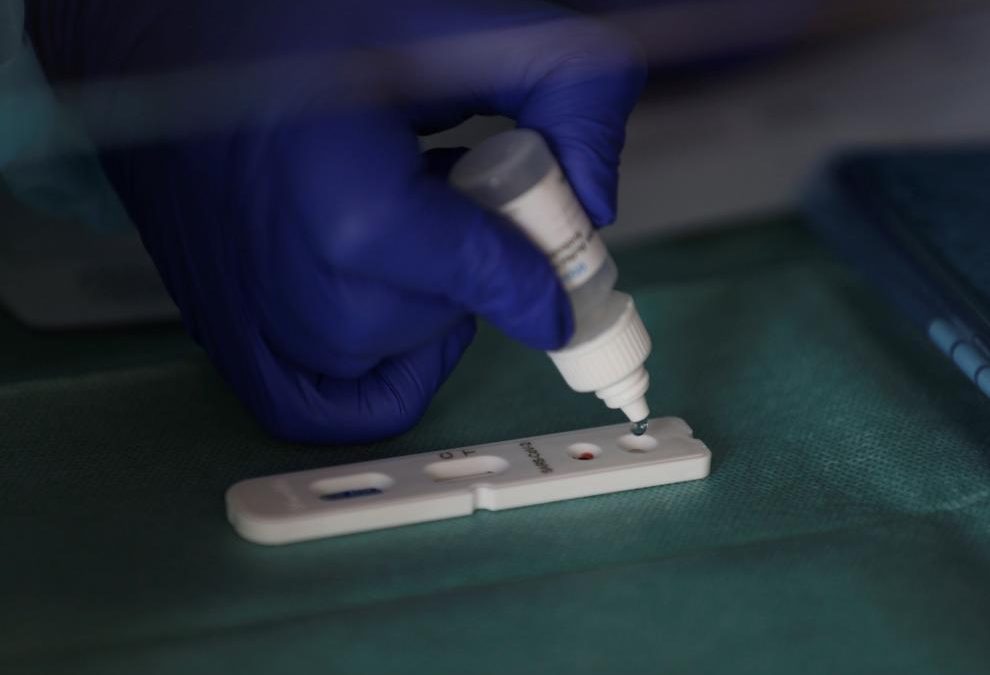
Dubbed 'ELISA Kit', the antibody test to detect immunity against covid-19 will be available to hospitals in approximately a month and a half.
Baptized as 'ELISA Kit', the antibody test to detect immunity against covid-19 that has been designed by several groups from the Higher Council for Scientific Research already has a reliability close to 100 percent (exceeds 98%) and will be available availability of hospitals in approximately a month and a half.
The new serological test detects these antibodies and allows us to know if a person has been in contact with the SARS-CoV-2 coronavirus and if their immune system has reacted.
The technology, which was presented at a press conference at the CSIC headquarters, has already been validated by the Immunology services of several hospitals (La Princesa and La Paz, both in Madrid), and will be manufactured by a company Spanish (Immunostep from Salamanca).
Serological tests, those responsible for the CSIC recalled at a press conference, are essential to determine who has contracted the virus and whether they are immunized against it.
The "ELISA Kit" is going to become, according to the scientists who have participated in its development, one of the most reliable technologies for carrying out serological tests on the population, and is based on procedures that are already carried out in a regular way. in many hospitals and specialized laboratories.
During confinement, four research groups from the National Center for Biotechnology worked against time to have this type of serological test that allows us to know who contracted the virus and if they are immunized.
This analysis, the researchers and those responsible for the CSIC and the hospitals have stressed, is crucial in the management of the pandemic, since a large part of those infected by the virus have the disease without symptoms or in a very mild way.
The groups of CSIC researchers Hugh Reyburn, Mar Valés, José María Casasnovas and José Miguel Rodríguez Frade were involved in this endeavor, who managed to identify a new protein that functions as an antigen and combine it with other viral antigens to complete this serological test.
"We were not looking for a quick test; we wanted one that was reliable and that would provide us with a lot of information," said Mar Valés during the hearing.
There are two types of diagnosis: "PCR", which allows us to know if a patient is infected with the coronavirus at the time it is performed, and serological tests, which detect antibodies and determine if an individual has been infected with SARS-CoV. -2 and if your immune system has reacted to it.
Serological tests are performed with blood samples and detect different types of antibodies (immunoglobulins): IgM (immunoglobulin M), the first that is generated after infection and indicates that the person is initiating the response to the disease; IgG (immunoglobulin G) is produced at a more advanced stage of the infection and informs for months that an individual has suffered from the disease; and immunoglobulin A (IgA), which is produced in early stages, but can also be detected in late stages.
Unlike PCR, the main problem with serological tests - until now - is their lack of reliability, a problem that has been solved by CSIC researchers, who have already protected the new technology with a patent and made it available to the tissue. Spanish industrial, to avoid dependence on third countries and ensure that it reaches society as soon as possible.
In addition to the "ELISA Kit", the new technology can be produced in a format of "immunochromatographic strips" (a technique similar to that used in pregnancy tests), which are also known as rapid antibody tests, since they The result is generated in just 15 minutes, and the CSIC is already negotiating with several Spanish companies to license these tests in this format to cover all demand and at an affordable price.
The head of the Immunostep company, Ricardo Jara, has referred to this as an example of what public-private collaboration should be and has highlighted that behind the public research work carried out by scientists there is an industrial fabric that eliminates dependence on third countries to have these diagnostic tests.
Although he has not specified what the final price of the test will be, Jara has anticipated that it will be a matter of "a few euros."
Before starting the press conference, the president of the CSIC, Rosa Menéndez, intervened at the event to express her satisfaction with the results that are beginning to come to light after the intense work that the researchers have carried out in recent months.
Rosa Menéndez has corroborated the responsibility that the CSIC had as the main Spanish public research organization to dedicate itself to the search for solutions that would contribute to overcoming this crisis, she has thanked the extraordinary financing of the Government and the private donations that they have received to carry out the projects and has concluded that "today" the fruits of the excellence of Spanish science emerge.





