
A drug uses glucose to slow the spread of cancer in mice
August 19, 2026
Campaign at the Servet Hospital to increase blood donations in the summer
August 24, 2026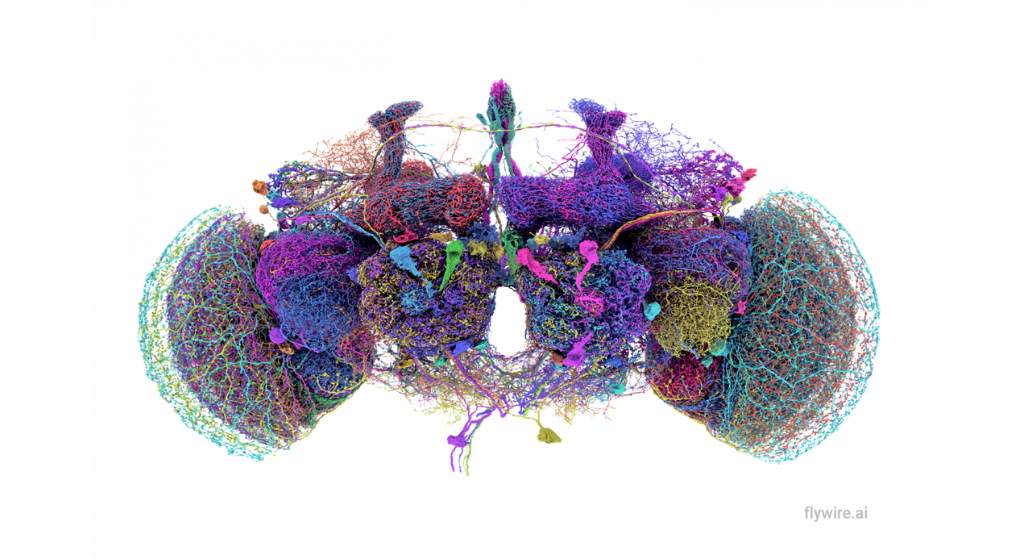
Neuroscience is beginning to reconstruct the brain as a complex network of connections, progressing from very simple organisms like the fruit fly to mammals like the mouse. However, as the map expands, so does the evidence that understanding its workings requires much more than simply drawing it.
For the past two decades, various researchers have attempted to reconstruct and understand how the nervous system of a living being is organized as a whole. In 2005, the concept of the 'connectome' was coined – proposed by the neuroscientist Olaf Sporns along with his collaborators - to refer to the complete map of connections between neurons, something like the wiring diagram that shows how the brain is structured inside.
The first major milestone in this field was establishing the complete connectome of simple organisms, such as the worm. C. eleganswhich had already been partially mapped in the 1980s and subsequently refined. This one only has about 302 neurons and about 7,000 synapses.
However, the real leap in scale came with insects like the fruit fly (Drosophila melanogaster). For the first time, it was possible to reconstruct a complete nervous system at the scale of individual neurons in an organism with complex behaviors.
Its brain, with around 130,000 neurons and some 50 million synapses, occupies a particularly valuable middle ground, as it is simple enough to be approachable with current technology, yet sophisticated enough to generate rich and well-defined behaviors.
Furthermore, his behavior is very well documented in laboratoryThis allows for a precise comparison of what a real fly does versus a simulation based on that connection map.
In recent years, the project FlyWire He has published a virtually complete reconstruction of the adult brain connectome of this species. This has allowed researchers to move from studying specific neurons or regions to beginning to understand the system as a global network of circuits.
From there, what some groups have done—like Eon Systems In his recent experiments—he goes a step further, turning those neural connections into a dynamic system capable of “running” on a computer.
The result of this approach, according to the company, is that to attach that simulated brain to a virtual body By allowing it to interact with a physical environment, basic insect behaviors could emerge. The network architecture, when activated, could generate responses that resemble real-life behaviors, such as moving, reacting to stimuli, or performing simple actions.
The connections are not sufficient.
Among the most critical voices regarding claims about a possible functional emulation of the brain using connectomes is Ken hayworth, president of the Brain Preservation Foundation and one of the leading advocates of brain preservation as a path to a future digital reconstruction of the nervous system.
Hayworth acknowledges that recent advances in connectomics are extraordinary, but warns that some companies like Eon Systems are transmitting an overly optimistic image of the true state of neuroscience. In his words, they are “making us believe that we are much more advanced in neuroscience than we actually are.”
His main argument is that a connectome only describes the map of connections between neurons, but doesn't allow us to understand how that system works. He explains that the brain is composed of tens of thousands of different neuronal types, each with specific biophysical properties, and many of the mechanisms that determine their behavior remain unknown. Therefore, he believes that connectomes They are a fundamental advance as a research tool, but still insufficient to faithfully reconstruct or simulate a brain.
From their perspective, the challenge is not only to map the connections, but to preserve all the biological information that could be relevant to their function. This includes not only synapses, but also proteins, receptors, ion channels, glial cells, and the microscopic architecture of brain tissue. Their reasoning is deliberately conservativeSince we do not yet know which elements are essential, the only way to avoid losing critical information would be to preserve as much biological structure as possible.
From there, Hayworth proposes a future scenario in which sufficiently complete preservation would allow for the reconstruction of a system with a one-to-one correspondence to the original brain. In that case, it would not be a simple behavioral imitation, but a recreation of the same causal processes that occur in biological tissue.
Under that hypothesis, he argues that a faithful emulation It should generate the same mental states as the original system, something very different —in his view— from current artificial intelligence models which, in his opinion, “only imitate language patterns without replicating their internal structure.”
The brain is dynamic, not static
Another major difficulty in achieving complete emulation is that the brain is not a fixed system, but a dynamic one.neuronal activity It changes continuously based on experience, learning, and the environment. Although virtual models can now be created and trained with real-world information, these systems are still heavily guided and controlled by the data we provide them, and therefore do not have the same autonomy as a biological brain.
Javier Morante, Group Leader at the Institute of Neurosciences - a joint center of the Higher Council for Scientific Research (CSIC) and the Miguel Hernández University (UMH) - comments that in addition to this, the brain changes according to the life stage and biological conditions.
The researcher points out in conversations with SINC that a developing brain is not the same as an adult or an aging brain, nor is it the same for different sexes or for those affected by neurodegenerative diseases. All of these introduce variations that we still don't know how to model well. That's why he insists that "many diseases are probably caused by different brains," and that we still don't understand how they fit into a single general theory.
“In the fruit fly, we're already talking about thousands of ultrathin brain slices and then reconstructing all that information with computers. The problem isn't just creating the images, but moving and processing enormous amounts of data between machines, something that requires hours of computing time, supercomputers, and a lot of energy. And even then, this is in a small organism: when you try to scale it up to something like the mouse"Where the brain is much larger and more complex, the difficulty multiplies exponentially," he concludes.
Climbing to mammals
The next milestone in the field of connectomics is the study of mammals. While the fruit fly has around 130,000 neurons, the mouse has tens of millions. That is, the brain of this rodent has several hundred times more neurons than that of the fruit fly. His work is precisely dedicated to this objective. Moritz Helmstaedter, director of the Department of Neuroscience at the Max Planck Institute for Brain Research.
“We have reached the stage where the entire process can be fully automated“We don’t need human annotation to analyze the data,” the researcher explains. “In the laboratory, we don’t need human annotation to analyze the data,” he points out, referring to the technological leap that allows for the processing of increasingly larger volumes of brain tissue.
This advance in automation is key. The team is currently working with volumes of several cubic millimeters, around 20 mm³, but the goal is much larger. “We want to reach 500 mm³, which would be a complete mouse connectome,” Helmstaedter points out.
The leap into different species isn't limited to this rodent. The group is also exploring other mammalian brains to understand how neuronal organization changes with scale. "We've already worked with primates like the marmoset and the macaque, and we're also looking at elephants," he explains. "We want to understand whether brain size or intelligence is the determining factor."
Regarding timelines, the researcher is cautious about biology, but much more optimistic about engineering. A complete mouse connectome within this decade is, in his opinion, an achievable goal. The case of the human brain, however, operates on a completely different scale.
"With the usual pace of scientific funding, it would be towards the end of the century. But with serious investment, it could be done in 10 years. I estimate that between 10 billion and 20 billion dollars "or euros to achieve the complete connectome of the human brain in a decade," he calculates.
Morante shares this view and is convinced that in the future it will be possible to map the entire human brain, although "it won't be done by scientists or biologists" dependent on public funding, but by "large technology companies, comor Google or OpenAI"I believe that these types of projects will be led by private consortia with a lot of money," he adds.
Source: SINC Agency





