
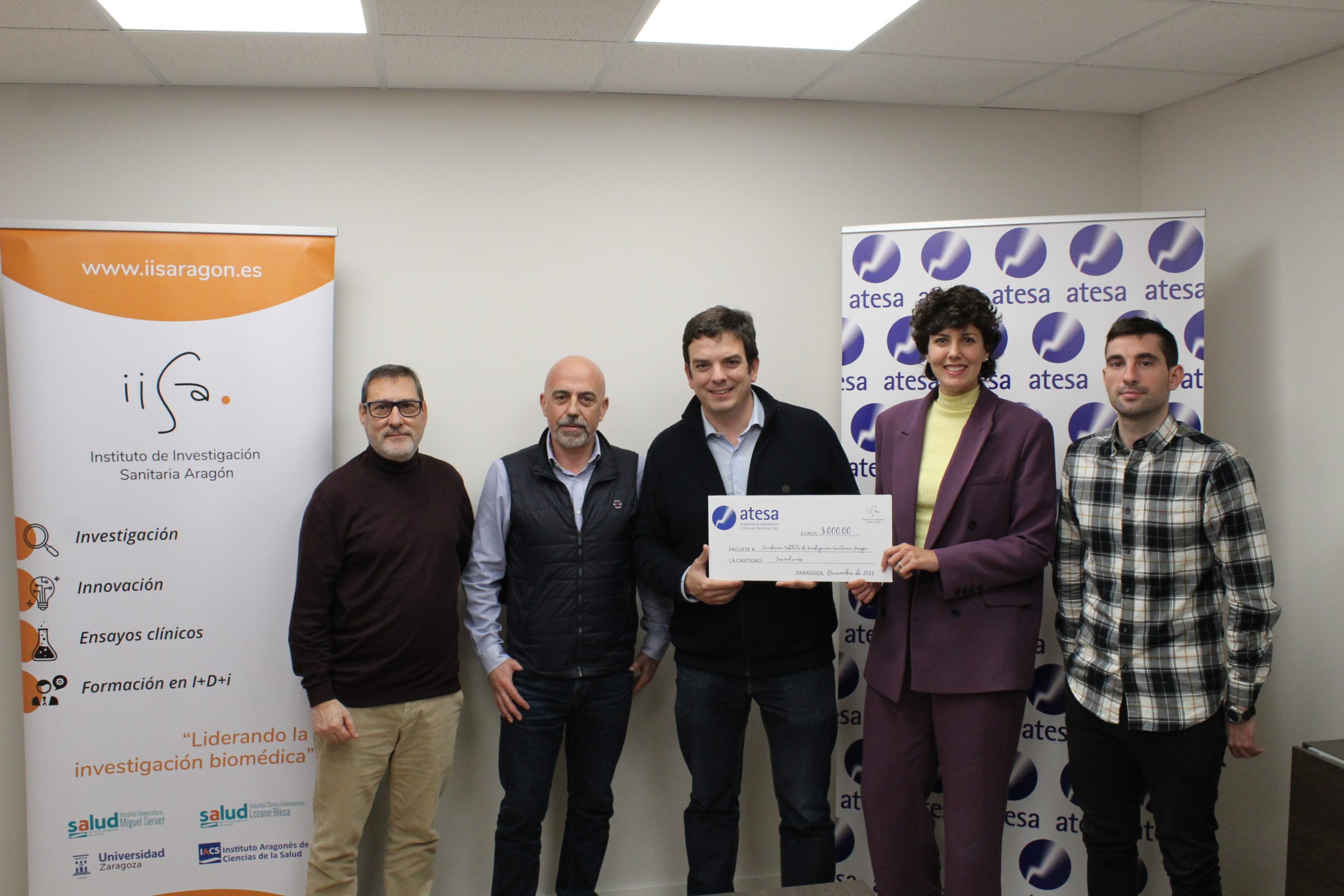
ATESA once again supports the investigations of the IIS Aragón
19 January 2023
Neuroplasticity: the extraordinary power of our brain to transform and repair itself
20 January 2023
Organ transplantation allows patients with organ failure to receive a healthy organ from a donor. This procedure can help prolong and improve the lives of recipients, and is often the only hope for people who need a transplant.
Unfortunately, there are not enough organs available for all patients who need them. In the European Union, although 36 patients received a transplant in 000, 2021 patients died each day while waiting for an organ.
Are consent laws the key to increasing organ donation?
One strategy to address the shortage of transplantable organs is to increase the number of potential donors by modifying the consent system. There are two main consent policies for deceased organ donation worldwide:
- the opt-in model system, in which people must give active consent to become organ donors after their death;
- the opt-out model system, in which people are considered to have given their consent to organ donation unless they have expressly chosen to refuse (which currently exists in Spain).
In recent years, several European countries have changed their laws from opt-in to opt-out, including Greece, Iceland, the Netherlands, Switzerland and the United Kingdom. More European countries are considering it, such as Germany, Denmark and Romania.
The rationale for this change is that opt-out systems could increase organ procurement rates, since by default it is assumed that the person is willing to donate. This eliminates the need for people to actively register as organ donors, which can be a significant barrier for some.
The role of the family in the decision-making process
Although several studies have been conducted to evaluate the actual impact of consent policies on organ procurement rates, their results are conflicting.
In general, the evidence tends to show that opt-out systems are associated with higher rates of organ procurement. However, it is unclear whether and to what extent the introduction of an opt-out system alone causes such an increase.
In our study, we try to answer this specific question. To exclude the influence of other factors, we focus on how individuals' preferences and decisions, or lack thereof, directly determine the outcome, that is, whether organs can be recovered or not.
At first glance, it seems simple, because doctors always respect people's preferences, regardless of the system. If the deceased wanted to be a donor, the doctors proceed. If the deceased did not want to donate, the doctors do not proceed. Therefore, the difference between both systems is only relevant when the deceased has not expressed any preference. In these circumstances, under the law, organs can be harvested under opt-out but not under opt-in.
However, the family also has a role to play in the decision-making process. In most countries, both systems, the family is consulted about organ donation. Therefore, instead of whether or not to recover organs by default, doctors usually follow the family's decision.
Now, what happens when the decision cannot be delegated to the family (for example, when the deceased had no living relatives, or they could not be located in time by the medical team, or the family is too distraught to consider the organ donation)?
What we show in the article, first of all, is that only in this specific circumstance, when neither the deceased nor the family have expressed any preference, can the chosen system – in this case, opt-out – make a difference.
Consent Only Rarely Makes a Difference
How often does this circumstance really occur? Most experts in the field know that it is rare, but this is too vague a statement. Therefore, to answer this question, we searched for data in both scientific articles and institutional reports from around the world.
Based on data from more than 20 countries, we have discovered that this circumstance is truly rare. In general, it occurs in less than 5% of cases. In Germany, Denmark, Finland, Spain and the United Kingdom, statistics show that it ranges from 0 to 2% of all potential organ donor cases.
Therefore, according to our analysis, changing the consent system in any of these countries, other things being equal, would have a very limited direct impact on organ donation rates.
However, this does not necessarily mean that the move from inclusion to exclusion is ineffective, as it may have indirect consequences. For example, increased coverage of the issue of donation in the press could raise public awareness about the organ shortage and reduce the number of individuals and families who are opposed.
What our research shows is that institutions and the general population should perhaps focus less on changing donation consent policies and more on the modifiable factors that influence families' decision-making, such as building trust by providing appropriate care. of high quality to the potential donor and adequate information about the process of obtaining organs, and using professionals well trained in the approach.
Read the article on the original website, clicking on the button below this text
Source: The Conversation. Authorship:
Alberto Molina Perez
Postdoctoral researcher in ethics and epistemology of medicine, Institute of Advanced Social Studies (IESA – CSIC)
David Rodríguez-Arias
Professor of Bioethics, University of Granada
Janet Delgado
Research Assistant in Department of Philosophy I, University of Granada
Featured Image: Source Pexels.com, Photo by MARCH PRODUCTION





