
The flu as a “trainer” to fight cancer
3 March, 2023
Military and civil health workers improve techniques for care in conflicts
7 March, 2023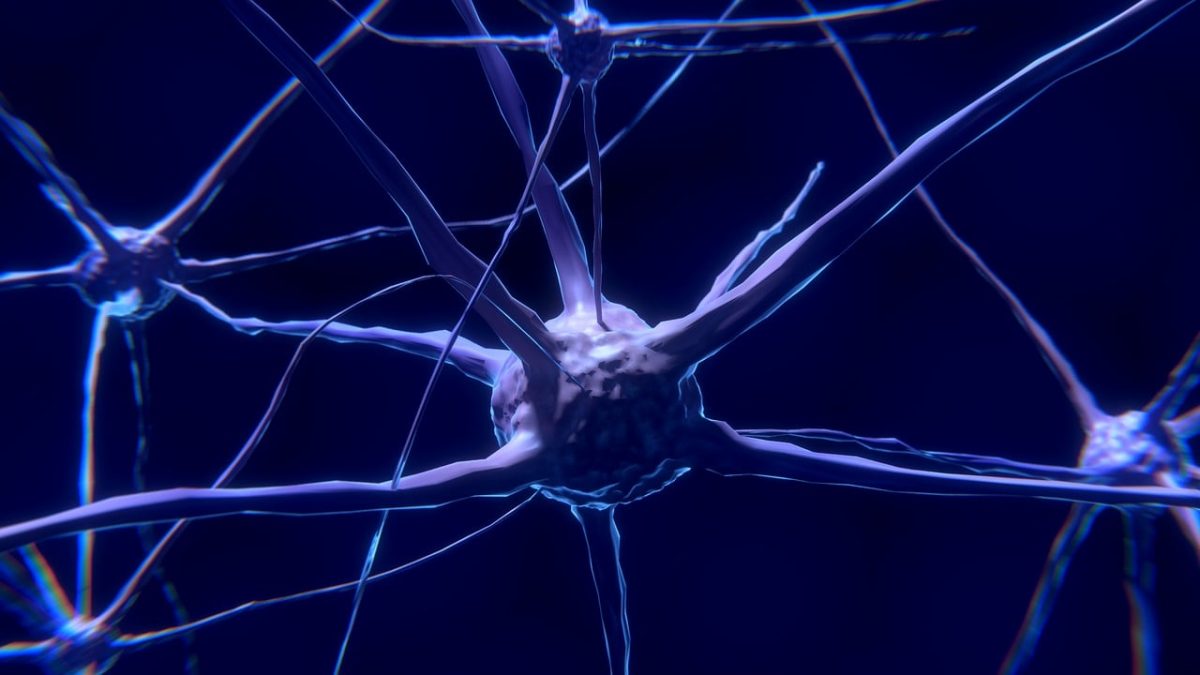
It is a widely recognized truth that the brain is the most complex organ in the human body. Therefore, to talk about it we usually resort to simplifications and focus on the parts that make it up: the hippocampus, the cerebellum, the cortex, etc.
But these simplifications are not entirely accurate. To begin with, the brain does not function like watertight drawers, restricting memories and memory to the “drawer” of the hippocampus, nor everything related to eating to the hypothalamus. In fact, if we think about it deeply, when an animal is hungry (appetite) it also has to remember (memory) where there was food to find it efficiently and not compromise its survival. Everything is, therefore, interconnected. The different parts of the brain need to constantly communicate with each other for this organ to fulfill its functions.
Neurons do not work individually either: the transmission of information is their reason for existence. These cells continually receive information through dendrites, and transmit it to others through axons.
These axons, which can be very long, function like cables that connect different brain regions, giving rise to what we call neuronal circuits. Through this wiring the functions of the nervous system are carried out.
Untangle cables with light
If the brain is complex, its study method requires the same complexity. Understanding how neural circuits work helps to understand how the brain acts, and when something goes wrong. To achieve this, refined techniques have recently been created to study them, including optogenetics.
Developed by researchers Karl Deisseroth, Ed Boyden and Gero Miesenböck, optogenetics is considered such an important step forward that it would not be surprising if they were awarded, sooner rather than later, a Nobel Prize.
Conceptually elegant, and technically simpler than it may seem a priori, it consists of using proteins (opsins) capable of reacting to light of a certain frequency. This allows the specific cells in which they are expressed to be activated or inhibited simply by using a beam of light.
When applied to the brain, this technique, which moves between genetic engineering and optical physics, allows us to activate or silence specific groups of neurons. That is, we acquired precise and immediate control that other techniques used until now did not allow. In this way we manage to carefully separate and discriminate the jumble of neurons within each circuit. In other words, untangle the cables and test what each one does.
Among other things, thanks to optogenetics we have been able to better understand how sleep works, highlighting the work that the Spanish neuroscientist Luis de Lecea carries out in his Stanford laboratory. It has also been used to investigate decision-making processes, or delve deeper into the formation of memories. In addition to understanding the mechanisms of diseases such as epilepsy or Parkinson's disease.
Fiber optic photometry
Another technique for the study of neural circuits that many of us are staunch fans of is fiber optic photometry. Technically somewhat more complex, it allows signals of neuronal activity to be recorded in vivo.
As? Every time a neuron is activated, there is an increase in calcium inside it. If we manage to measure these calcium variations within neurons, we can relate the neuronal activity of each specific population with a certain function. For this, calcium indicators called GCaMP are used, which emit fluorescent light proportional to these calcium changes and which is captured by optical fibers.
By applying this technique it is possible to visualize the activity of genetically specified neuronal populations, with high temporal resolution (that is, almost in real time), and for longer times than techniques such as conventional electrophysiological recordings.
By identifying the specific wires that are activated, photometry is helping to make great strides in understanding how the brain works. Among other things, clarifying the neural mechanisms behind the brain's reward circuit will help understand problems such as addiction.
Likewise, using this technique to understand the neural circuits that control pain processing will allow progress in the search for new analgesics.
It also helps to better understand the mechanisms behind the effects of therapies such as Deep Brain Stimulation (DBS) in alleviating depression, a social medical problem that affects millions of people.
Understanding fundamental behaviors with chemogenetics
Another method worth highlighting would be chemogenetics, which with great precision allows us to study the function of specific neurons within a circuit. In this case, light is not used, but rather an inert drug or ligand that activates or inhibits a group of receptors called DREADDs. As with optogenetics or photometry, this technique is extremely precise.
Using these techniques mentioned here, I would like to highlight the work that neuroscientist David Anderson is doing at CalTech to understand the neurobiology of emotion, revolutionizing what we know about fear, animal aggression and mating. Studying the circuits that govern behaviors such as aggression can have important repercussions on our society.
Without a doubt, all these techniques (optogenetics, photometry and chemogenetics) pave the way towards the main objective of neuroscience: understanding the way in which the activity of our neurons determines our behavior and functionality, and how their failures give rise to pathologies. An objective that can only be achieved if we untangle the cables of the neural circuits, identify their function one by one, and can repair them in a precise way when one shorts out.
Read the article on the original website, clicking on the button below this text.
Source: The Conversation. Authorship:
C Garau
Research in Neurosciences – IUNICS, University of the Balearic Islands