
9th Call for Gilead Scholarships for Biomedical Research
2 June, 2022
Overweight boys and girls improve their physical fitness and health thanks to active video games
3 June, 2022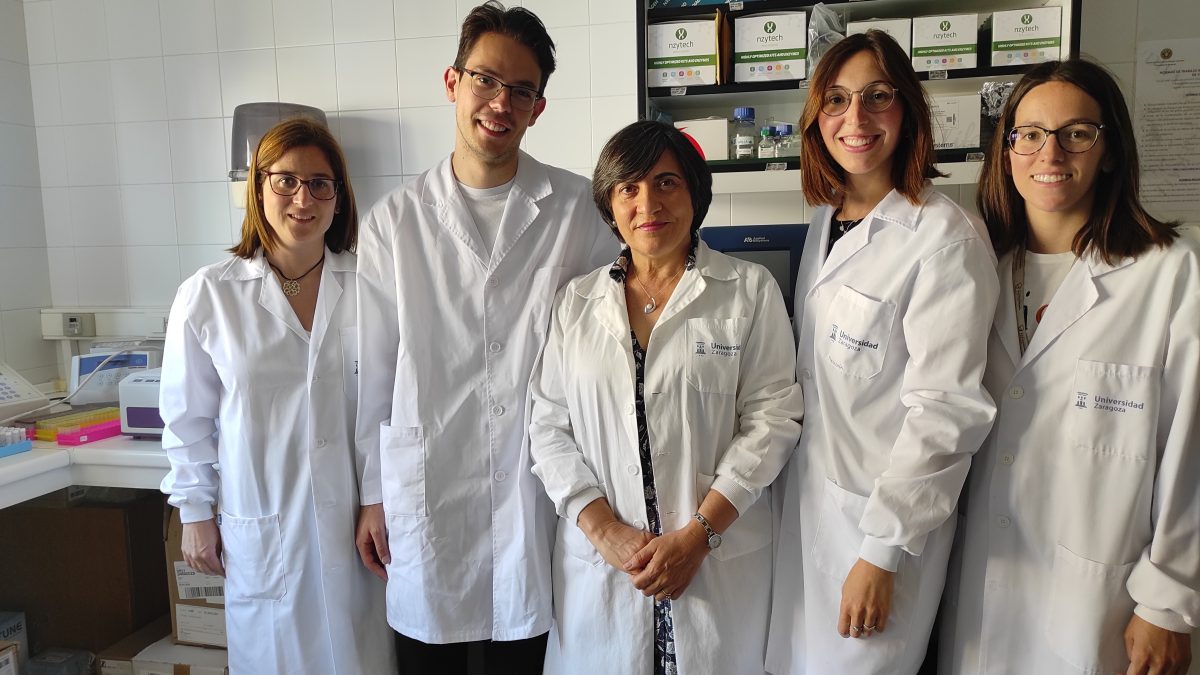
Lactoferrin, a bovine milk protein, positively modulates the microbiota and the immune system
The finding, the first analysis of its kind, opens the door to the use of this protein in functional foods to regulate the microbiota
The study, led by Mª Lourdes Sánchez and Laura Grasa, professors at the University of Zaragoza, has been recently published in Food and Function, one of the scientific publications with the greatest impact in its field.
Researchers from the research group “The effect of Technological Food Processing on Digestive and Allergic Pathologies” (ALIPAT) - attached to the Agri-Food Institute of Aragon (IA2, joint UNIZAR-CITA center) - have discovered that a milk protein improves intestinal health after taking antibiotics. Specifically, they have found that in situations of intestinal dysbiosis -alteration in the composition of the microbiota- caused by taking antibiotics, lactoferrin, a bovine milk protein, improves intestinal health, by positively modulating the microbiota and the immune system, so it could be used in functional foods.
This is the first study in which the positive effects of lactoferrin on the intestinal microbiota are demonstrated in an animal model of intestinal dysbiosis induced by antibiotics.
As is known, in the intestine there is an extensive microbiota that has very important functions for homeostasis or intestinal balance, such as protection against pathogens or the development of the immune system. The composition of this microbiota depends on many factors, including diet and antibiotic intake. Specific, antibiotics induce alterations in the microbiota and intestinal functions. In this context, the use of functional foods that contain prebiotics that can modulate the microbiota and the immune system is currently a research focus of great interest to improve intestinal health.
Some previous studies had already described that lactoferrin could modulate the intestinal microbiota in animal models of obesity or colitis. However, It was completely unknown how lactoferrin could modulate the gut microbiota in antibiotic-induced dysbiosis.. To investigate this, the authors of the work led by Mª Lourdes Sánchez Paniagua and Laura Grasa López, professors at the University of Zaragoza, studied the ability of lactoferrin to modulate the intestinal microbiota and immune system in an animal model of clindamycin-induced dysbiosis.
Amongst the main results from this study recently published by the journal Food and Function -one of the scientific publications with the greatest impact in its field-, is that lactoferrin was able to reverse the effects of clindamycin, antibiotic that had reduced the levels of bacteria with anti-inflammatory properties Bacteriodaceae, Prevotelaceae y Rikenellaceae. Furthermore, lactoferrin could also restore the levels of TLR2, TLR8 and TLR9, receptors of the immune system that recognize components of bacteria and initiate an immune response.
Authors of the work
The work has been led by the Drs. Mª Lourdes Sánchez Paniagua (Professor of Food Technology) and Laura Grasa López (Senior Professor of Physiology), and Andrea Bellés Mirallés (Predoctoral researcher at the Government of Aragon), Inés Abad Chamorro (Predoctoral researcher at the Government of Aragon) and Diego Aguirre Ramírez (Contracted predoctoral researcher), all members of the Group, have participated. Research “The effect of Technological Food Processing on Digestive and Allergic Pathologies” (ALIPAT), and financed by the project of the Ministry of Economy and Competitiveness “Effect of technological treatments on the activity of proteins and milk fractions on intestinal functionality : potential for its application in functional foods (AGL2017-82987-R)”.
In addition, the work has had the collaboration of Dr. Marcos Parras-Moltó, from the University of Gothenburg (Sweden).
Reference:
Andrea Bellés, Diego Aguirre-Ramírez, Inés Abad, Marcos Parras-Moltó, Lourdes Sánchez, Laura Grasa. Lactoferrin modulates gut microbiota and Toll-like receptors (TLRs) in mice with dysbiosis induced by antibiotics. Food and Function, 2022, 13, 5854. DOI: 10.1039/d2fo00287f
Source: University of Zaragoza





