
CALL FOR TRAVEL GRANTS FOR 4-MONTH STAYS
7 April 20259th Young Researcher Awards and Honorary Award for Excellence in Scientific Career. AstraZeneca Foundation
8 April 2025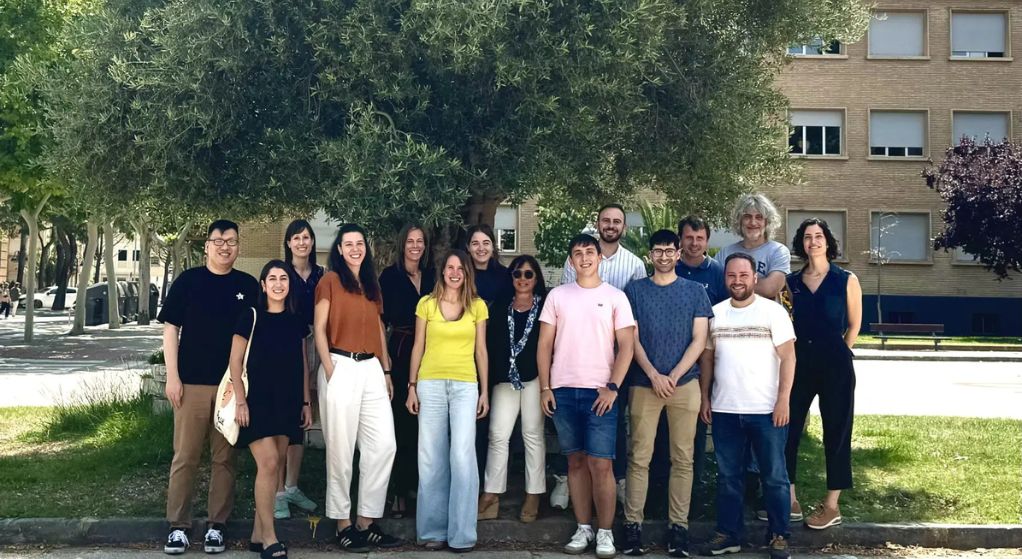
The 'DIVE Medical' team, which has specialists in ophthalmology and optometry from the IIS Aragón and the IACS, is working to bring its eye-tracking tool to hospitals to facilitate diagnoses in children
Vision screening in newborns or people with cognitive problems is one of the main concerns of ophthalmologists. Their inability to communicate makes it difficult to identify the cause of a potential eye problem, which leads to problems completing medical examinations and to specify exactly any possible visual correction.
This is what they focused on more than a decade ago. a team of engineers and ophthalmologists from the University of Zaragoza, who, from their laboratories, began to design a tool capable of exploring vision in any patient, even in six-month-old babies. To do this, they used the eye-tracking technology, launching 'DIVE Medical', with the help of Aragon Health Research Institute (IIS Aragón) and the Aragonese Institute of Health Sciences (IACS).
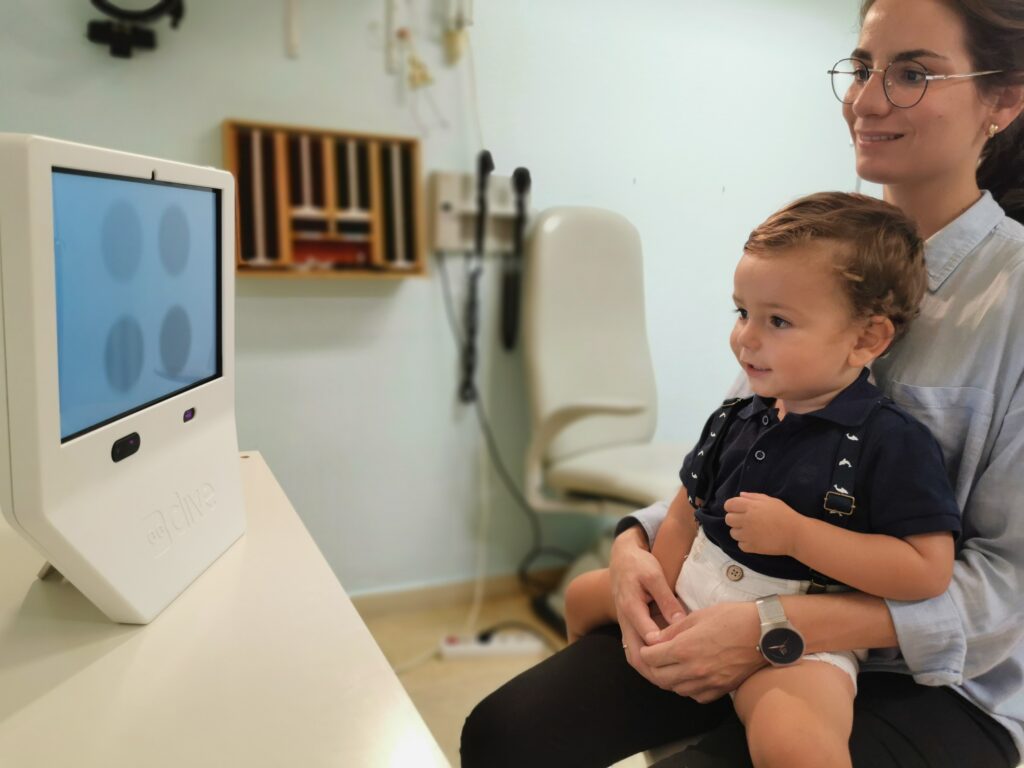
Using this technology, also known as 'gaze tracking,' doctors can see where a patient is looking and how they respond to what appears on a screen.We show stimuli, such as drawings or animals on a TV, and we very precisely record the points where the baby is looking."We can measure visual acuity, eye movement, or color perception," explains Marta Ortín, co-founder of 'DIVE Medical,' along with engineer Diego Gutiérrez and pediatric ophthalmologist Victoria Pueyo.
After seeing the benefits of this system, they formed a company in 2020, currently employing 12 people and based in San Sebastián as a strategic move.We saw a very good reception among professionals and they encouraged us to benefit from it in their practice."We've continued to do a lot of R&D and are beginning to commercialize and regulate. We're still a startup, but we've reached significant milestones," Ortín notes.
Among these recognitions is the award they received two weeks ago at the "The Wave" conference for Best Startup Seed, receiving an investment ticket of up to €25.000, subject to the final evaluation of their respective projects. "It was incredible. Beyond the award, it is the biggest place where we have had the opportunity to tell it"That already means it reaches a lot of people, with investment assistance that's very significant given the current situation. Just being there was already very positive," emphasizes one of the project's co-founders.
For years, 'DIVE Medical' began collaborating with Huawei to do Visual screening for boys and girls in countries such as Mexico, Vietnam, China, Hong Kong and Russia, along with other regions of the country. All of this has allowed them to obtain a comprehensive database and reinforce all the research work that has been carried out since they began operating in the laboratories of the University of Zaragoza.
The next step is to incorporate artificial intelligence into data analysis and problem detection, while exploring its potential neurological implications.We are incorporating new visual tests, such as visual field tests or strabismus tests."But we're also moving into neurological issues. There's something that can be assessed and captured with this eye-tracking technology," Ortín emphasizes.
With this, DIVE Medical is already working on internationalization, with the United States as a "very clear objective" for this year, but without setting a deadline. "There is a very significant market in the healthcare sector. The health regulations are very specific, and I hope they don't come up with new taxes along the way.", highlights Ortín, who also has his eye on Germany, Switzerland, the United Kingdom and France.
Source: The Spanish of Aragon
Main Image: Dive Medical Team





