

Aragonese healthcare repeats again as one of the best in the country
August 29, 2019
Record of organ donations and transplants
September 2, 2019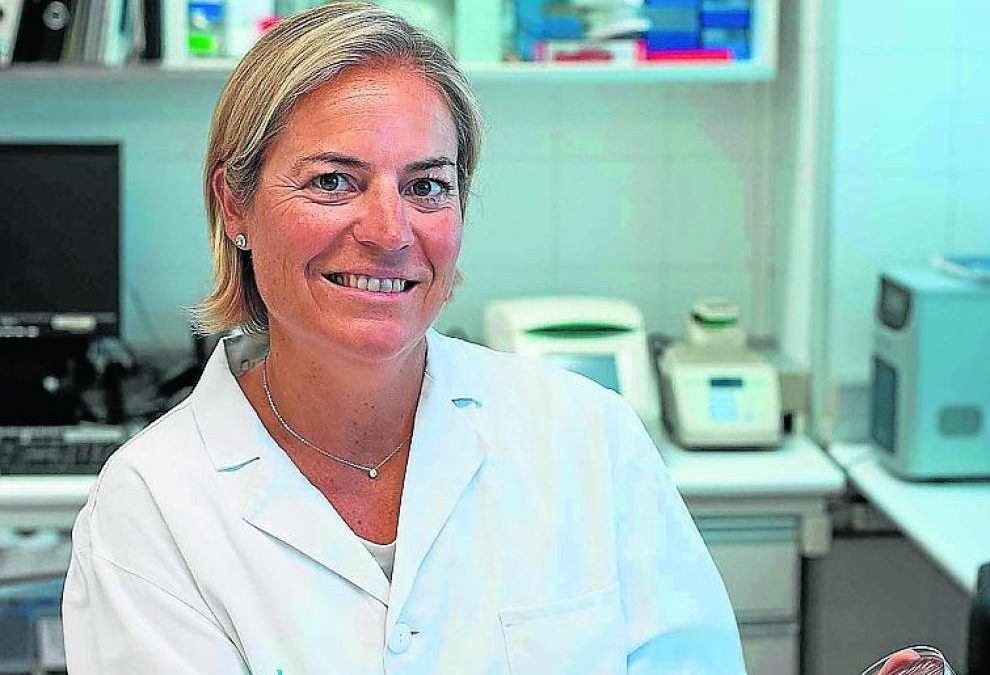
The professor of Microbiology at the Faculty of Zaragoza provides serenity in the stir of listeriosis
Dr. Seral, I feel a little uneasy in this laboratory at the Lozano Blesa hospital... The sign on the door says parasitology stool cultures...
Don't worry. In the laboratory we have bacteria, not diseases.
In his hand I see a culture of Listeria, that bacteria that appears so much on TV now...
Right, from Listeria. But Listeria is the bacteria; listeriosis is the infection. It is different. A bacteria is not the same as the pathological process it can generate.
When does it multiply?
The bacteria grow when incubated under appropriate conditions. You have to be careful with contaminated water, prepared meats... It grows better without oxygen and at refrigerator temperature, around four degrees.
In other words, the ideal context for the outbreak of shredded meat…
Indeed. But the bacteria must already be present in the packaged food for it to continue multiplying.
A lot of commotion has been created...
Listeriosis is generally a mild infection in a healthy patient, so mild that it is not routinely studied. For example, in patients who only suffer from gastroenteritis, other enteropathogens are looked for, such as Salmonella, Shigella, Campylobacter... The problem is whether it generates a serious infection due to bacteremia, which is Listeria in the blood, or meningitis. In these two cases, the bacteria are looked for in blood cultures and cerebrospinal fluid, respectively. And the result must be reported as quickly as possible. Listeria monocytogenes is not the worst bacteria, but it has virulence factors that can cross the intestinal, blood-brain and placental barriers thanks to proteins called internalins.
Damn internalines!
Calm down, I reiterate that it is only high risk in pregnant women and in people with a weakened immune system or of extreme ages, such as the elderly or children. In these cases, opportunistic pathogens attack.
Inopportune opportunist...
Listeria is an opportunistic pathogen. Worse are strict pathogens, such as Neisseria meningitis, diphtheria, tetanus, whooping cough... They have the property of producing disease in normal hosts. There is a vaccine for many of them now. Opportunistic pathogens produce disease if the normal ecological conditions of the host are modified. This is the case of the latest outbreak.
In the case of the latest outbreak... Isn't there a chance that I could get infected in this laboratory, here surrounded by cultures...?
No, man, no (smiles)... It is not spread from person to person, except from mother to fetus. Microbiologists are alert 365 days a year. We never let our guard down. We are the ones who detect the cases. More than two rare or unexpected cases are considered an outbreak and we alert the authorities. Bacteria are living beings, and they don't go on vacation. In Aragon there is one microbiologically confirmed case.
Exciting fight against millions and millions of bacteria...
Infinite. There are bacteria in the environment, in our own body: in the intestine, on the skin, in the mouth. They are called commensals, and do not cause harm. Not all bacteria cause infection.
Is Aragon prepared for this outbreak?
Of course. There is a very good school in Aragón, inherited from Professor Gómez-Lus, who founded the first laboratory in 1956. We enjoy very solid references, such as professors Carlos Martín Montañés and Javier Castillo García. Before, Carmen Rubio Calvo.
And you, as a professor of Microbiology.
I don't like to talk too much about myself. I studied Pharmacy in Pamplona, I did my thesis in Zaragoza and my post doc in Brussels. And I feel proud to have trained in Zaragoza, to work at the Lozano Blesa hospital. And a special mention for Professor Seral, professor at this university, to whom I dedicate my vocation.





