

People with metabolic syndrome have a higher risk of suffering a stroke
August 18, 2020
Hydroxychloroquine, ineffective in preventing covid-19 in lupus or arthritis
August 19, 2020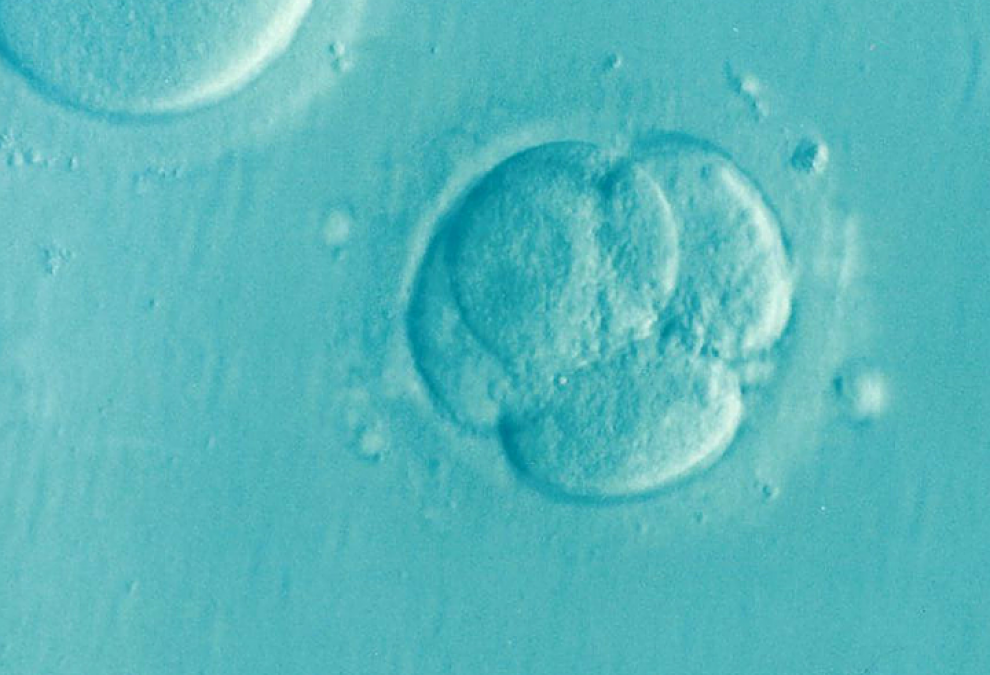
The research team has already achieved the birth of 11 children through the 'children of three parents' technique.
The research team at the MARGen Clinic in Granada, led by Dr. Jan Tesarik and Dr. Raquel Mendoza-Tesarik, is collaborating with a group of researchers from kyiv (Ukraine) in the creation of artificial eggs from stem cells. This team has already achieved the birth of 11 children through the 'children of three parents' technique (nuclear transfer from one egg to the other), created in early 2000 by Dr. Tesarik and Dr. Carmen Mendoza. And now they want to go, together with the Spanish, further, towards artificial eggs (nuclear transfer from a stem cell to the egg).
In 2001, Spanish researchers achieved, for the first time in the world, human embryos derived from the fertilization of "'artificial eggs' obtained from enucleated eggs from a donor and genetic material derived from somatic cells from a patient. The team Spanish and Ukrainian will carry out preliminary research using stem cells derived from different organs, to verify their safety and efficiency. Unlike the 'children of 3 parents' technique, the creation of artificial eggs is much more complicated because of the genetic material. of the patient does not come from her eggs, but from a cell derived from a somatic cell of some non-reproductive organ in the body.
Recently, the 'children of three parents' technique developed by the Tesarik-Mendoza team was successfully used in Mexico to prevent the transmission to the child of a cytoplasmic anomaly from the biological mother and conserve, at the same time, its genetic information. . Likewise, Granada scientists unsuccessfully requested two years ago from the Spanish authorities for authorization to use this technique in Spain, which allows the transmission of certain diseases to children by maintaining the mother's genetic material.
After this refusal, the Spanish team plans to resume both the application of the 'children of three parents' technique abroad, interrupted by the covid-19 crisis, and the artificial egg research program.
How are eggs made from stem cells?
The first step is to prepare stem cells from tissue extracted from bone marrow or abdominal adipose tissue. The tissue is disintegrated and the cell suspension is maintained in culture for several days or weeks. To obtain pluripotent (induced) stem cells, and subsequently egg precursor cells (oogonia), it is necessary to first add a mixture of growth factors (induction of pluripotency), and then other types of factors necessary to transform the pluripotent stem cells into egg precursor cells. This entire process can take up to 4 months. The desired cells are isolated using specific methods that recognize their cell markers and can be frozen.
In the second phase, cellular micromanipulation identical to that of 'children of 3 parents' is used to mechanically remove its genetic material from the donor's egg and introduce the nuclei of egg precursor cells - obtained from the patient's stem cells. - to complete its development within its natural environment. The only, but important, difference with the "classical three-parent technique" is the type of cells of maternal origin that serve as the source of the genetic material of the future reconstructed egg.
The classic 'three parents' technique has been used with young patients with different cytoplasmic problems in their eggs, which could affect the health of their children. For its part, the artificial egg technique would be more suitable for older women who either do not have eggs or they are not suitable for the transfer of their genetic material to the donor's egg. This material would be provided from your stem cells. In these cases, older women without eggs could have children with their own genetic material.





