
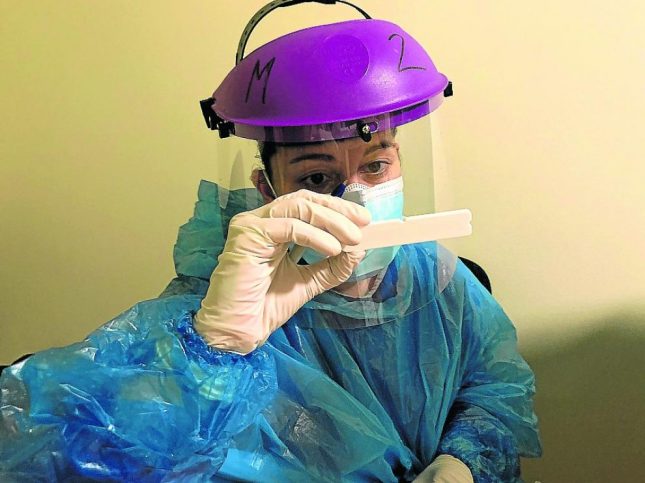
40% of the participants in Aragón in the seroprevalence study have been called and 15% attended
5 May 2020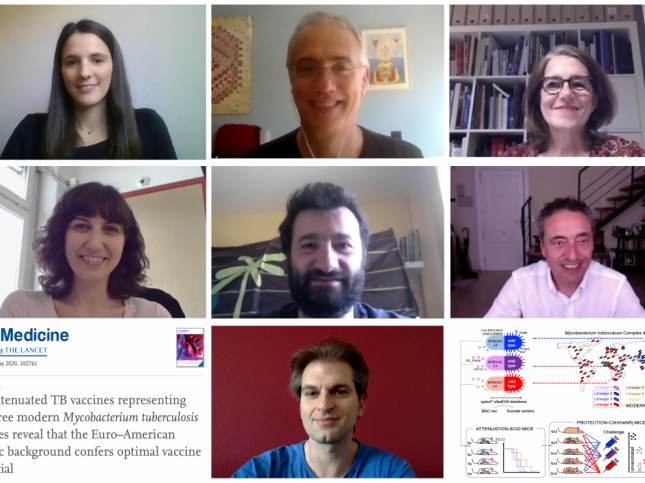
The UZ tuberculosis vaccine protects against most strains that cause the disease
5 May 2020
The Group of experts of the Spanish Society of Infectious Diseases and Clinical Microbiology (SEIMC) for the analysis of the microbiological diagnosis of the covid-19 disease presents in a document the conclusions after analyzing the patients.
The Spanish Society of Infectious Diseases and Clinical Microbiology (SEIMC) Group of experts for the analysis of the microbiological diagnosis of the covid-19 disease states in a document that, after knowing the first studies carried out in patients, "there is scientific evidence to think that a "A high number of patients with covid-19 develop protective antibodies," specifically they point out that it could be approximately 70 percent.
"This is still an estimate, it is a disease that we have known about for four months and the information on the production of antibodies is very scarce," explains Dr. Esther Calbo, spokesperson for the SEIMC, to Europa Press, who recalls that the information that currently available on covid-19 is "dynamic", and, therefore, it must be "contextualized" taking into account the data that exists.
In any case, if some patients develop protective antibodies, not all will have the same immunity against this coronavirus. "Immunity will depend on several factors," explains Dr. Calbo, who highlights that the ability of the subject suffering from the infection to mount an immune response depends, among other factors, on their age, their previous pathologies or the type of infection.
"It is not homogeneous, not all of us have the same ability to mount an immune response. There are asymptomatic patients who have suffered the infection without developing symptoms and in this group no one has yet looked at what their response is," warns the expert.
So, to the question of whether people with antibodies against SARS-CoV-2 are immunized, "the information we have suggests that it is most likely that the antibodies are neutralizing, that is, they really prevent infection," He points out, emphasizing that it is nothing more than his opinion, since multiple factors still need to be analyzed and little information is currently available.
The same SEIMC document warns that the possibility of immunization in patients must be taken with caution when it is transferred to the general population and different groups, including health professionals. Mainly, it is in that of health professionals where they understand that they must be more "prudent", especially when it comes to recommending the location of professionals based on the results of the serological tests and, therefore, it is advisable to maintain the principle of the use of PPE and infection control for all its members despite the results of the serological tests.
The SEIMC estimate is based on two studies. The first, published in 'Nature', where sequential serum samples were obtained from 9 patients after two weeks from the onset of symptoms, all showed neutralizing antibodies, with titers that did not suggest any correlation with the clinical course. A second study, still in the preliminary phase, has observed that seventy percent of the patients analyzed - out of a total of 175 - showed high titers of neutralizing antibodies (AcN).
With the scientific evidence currently available, the expert cautiously points out, the studies point to the figure of 70 percent of patients with protective antibodies, but, he adds, "when studies are done with thousands of patients we will be able to give that percentage that we all want." know".
Why is protection against reinfection believed?
Developing immunity to a pathogen through natural infection is a multi-step process that typically takes place over 1-2 weeks. The body responds to a viral infection immediately with a non-specific innate response in which macrophages, neutrophils, and dendritic cells slow the progress of the virus and may even prevent it from causing symptoms.
This non-specific response is followed by an adaptive response where the body produces antibodies that specifically bind to the virus. These antibodies are proteins called immunoglobulins. The body also produces T cells that recognize and eliminate other cells infected with the virus. This is called cellular immunity. This combined adaptive response can clear the virus from the body and, if the response is strong enough, can prevent progression to severe disease or reinfection by the same virus.
It must be taken into account that the immune system can neutralize viruses by blocking the penetration or decapsidation of the virus or by adding virus particles. These processes prevent subsequent infection but do not eliminate the nucleic acid, which degrades slowly over time.
If IgG antibodies are detected when performing a test, what is indicated is that there is a T lymphocyte response (which are the ones that co-stimulate B lymphocytes in the production of antibodies). "This T lymphocyte response is accompanied so far in all viruses of the SARSCoV-2 family by a cytotoxic response on their part," which could be a first support for the possibility that there are protective antibodies.
Immunity passport, yes or no?
Some governments, and in the case of Spain, some Autonomous Communities, have suggested that the detection of antibodies against SARS-CoV-2 could serve as the basis for an 'immunity passport' or 'risk-free certificate' that would allow people travel or return to work assuming they are protected from reinfection.
However, currently, as pointed out by the SEIMC and international organizations such as the World Health Organization (WHO), there is no evidence that people who have recovered from COVID-19 and have antibodies are protected from a second infection. And if there is no clear evidence, the problem is that if people assume that they are immune to a second infection because they have received a positive result, they may ignore public health advice. Therefore, as the WHO points out, "the use of such certificates may increase the risks of continued transmission."
The doctor admits that at this moment there are two schools of thought, one in favor of the 'immunological card' and another against, within which she positions herself. Theirs is a "slightly more cautious" current that supports greater knowledge of serological tests before "pontificating" that a positive patient is an immunized patient. "The specificity and sensitivity of each method must be very well determined before firm conclusions can be reached regarding particular individuals," she says.
"Given that the tests are being validated today, we do not fully know their sensitivity, since it is giving false negatives, nor their specificity, which refers to giving false positives. Their specificity is little known because we have not done studies with sera from patients with other endemic coronaviruses that circulate in winter and cause the common cold. It may be that a positive result translates into exposure to another coronavirus. We have not studied this, which is biologically possible," the expert explains.
The SEIMC, in collaboration with the National Center for Microbiology, is collecting information on the validations that have been carried out in the various clinical microbiology laboratories of Spanish hospitals with the aim of having a repository with easily accessible information on sensitivity and specificity data. of various antibody detection kits.





