
Protection at a 'click'
6 July 20203rd Edition of CASER FOUNDATION Grants for Socio-Health Research
6 July 2020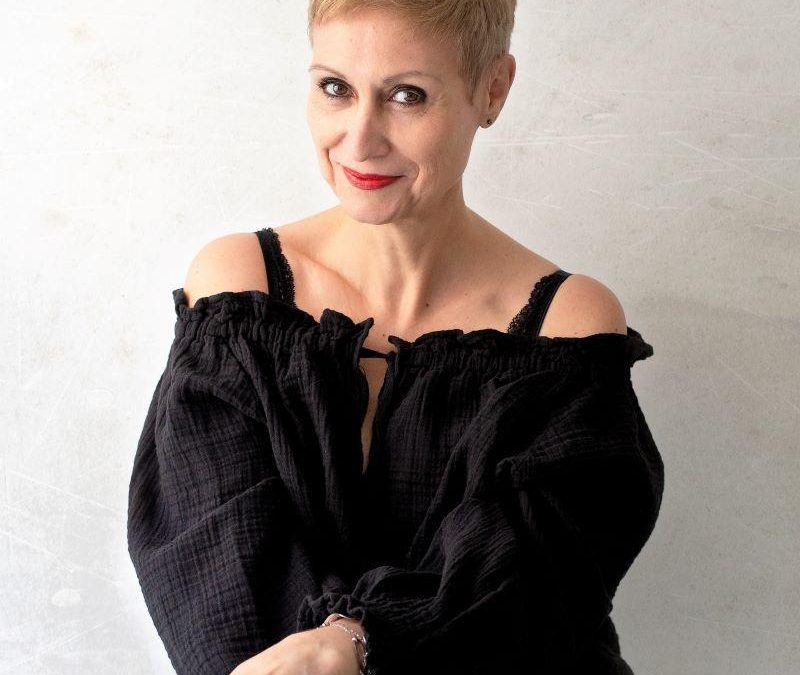
Carmen García Rodríguez Alonso is a nursing assistant and writer from Segovia. Part of the proceeds from her latest book, What Happens in the Kitchen While I Die? It is intended for the Investigate Covid-19 campaign, of the Aragon Health Research Institute (IISA). She has already raised 2.000 euros.
—'What happens in the kitchen while I die?' It is a striking title.
—It's very suggestive. That is the question asked by the protagonist, who is terminally ill. She is so bad that she cannot move but even though she is physically in the maximum situation of dependency, her senses are very heightened. She perceives things because that kitchen is very special to her because she has designed it the way she wanted. It is the room of the house that belongs to you. She has designed it with a skylight that makes the voices of people when they stand below it reverberate in a special way and she recognizes that the sounds come from her kitchen.
—And what happens then?
—The novel has two parts. The first is very hard and in the second the erotic part comes in, because it is still a novel with an important erotic charge, and there has to be a contrast, just as the protagonist has a very big change. Well, there has to be a contrast and there is being a dependent person and seeing how it evolves as a result of a series of experiences that she has. It is a fantasy novel.
—What could be a 'thriller', based on those voices, what led you to eroticism?
—I consider it an erotic novel. If eroticism does not have a justification, without a story to back it up, for me I think it is tiring. From her situation of dependence, the protagonist meets another being, let's call him that, someone who visits her at midnight and she doesn't know if it is a consequence of the medication she is taking or if it is something real. That being gives her clues until she is convinced that it is real. She makes him see that her life is not what she thought it was and what the people she has around her are like. And at the same time that she discovers what others are like, she also discovers what she is like and is the first to be surprised. This is the plot until the final part, which she has to analyze and choose. The ending is a little open, but well finished. The ending is one of the strong points of the novel. It is a novel that, due to the theme it presents, and because of people who have read and experienced similar situations, such as facing cancer, because they have seen reflected what a person feels and the first part can be hard, but then it opens the fan of fantasy and it is quite liking it. And if you like the genre of unconventional erotica.
—Does it have a moral?
—Yes, on the one hand, the fact of thinking that we can always choose whatever our circumstances are and the fact of overcoming yourself and the preconceived ideas that the people around us are extensions of us when they have their own life independently of us. ours. We never know the person next to us, even if we think we do. That arrogance that we have, of thinking that we have everything under control and that is not the case. I think there is love in the novel, I think there is an important lesson in love, although not a traditional pink love, nothing to do with romantic love.
--The history of the publication also has its crumb.
—This novel was going to be published by a publisher this summer, but with this coronavirus, small publishers have reduced publications and returned it to me. Since I am a healthcare worker, the publication of the novel mattered little to me because other things mattered to me because I was isolated, far from my family. And one day speaking with my editor, who had already published my previous novel, we came up with the idea of publishing it to support those fighting against the coronavirus; The crisis stopped him and so did I. We thought about it and within five weeks he was out.
--And he chose the Aragon Health Research Institute to donate a large part of the cost of the book.
—There are entities that have a lot of support but searching through the networks, I found the IISA and reading their research, I understood them and that is important. In addition, they also take care of the toilets... they are looking to adapt masks for use as PPE, so that there is no shortage, as has happened to us. I empathize with what they do. I have a colleague who works at Servet, and I got in touch with her and following the thread I met Ángel Lanas and Óscar López Lorente, who are general director and executive director of the IISA, I spoke with them and they are close, simple people, good communicators, with whom I connected perfectly. And I want the proceeds, whatever it is, to go to them to support their work.
—How much has been raised?
—We have sent 2.000 euros so far and every two or three months we will see the shipments, so that it is an important amount. I think our hope is research, because researchers are the ones who are going to get us out of this and we must support them.
—You are a healthcare worker. Will what he experienced be enough for a novel?
—My island is writing and I have been alone at home. I filled pages and pages but I think it's going to be a rehearsal. It's going to be a mix of psychology, what this personal and professional experience has been like. It has been very hard but there has been learning. People show what we are when we face a major crisis. I think so, that something will come out but not a novel, not a fiction because it has been so real that right now I couldn't turn it into fiction. Maybe in a few years, when I see it with some perspective, but not now. Furthermore, I have already given it a title, Twenty Twenty, the year we all grew up and giving it a title forces you to continue. Over time I would like to write something about it, with the greatest of respect and already having a conclusion in hand, when there is, if not a remedy, a small solution that relieves the pain we have had, because it has been tremendous.





