
Fernando Sarráis: "What makes a person positive is affectivity"
September 12, 2022
Osteoarthritis: the disease without a cure that affects the joints of 500 million people
September 12, 2022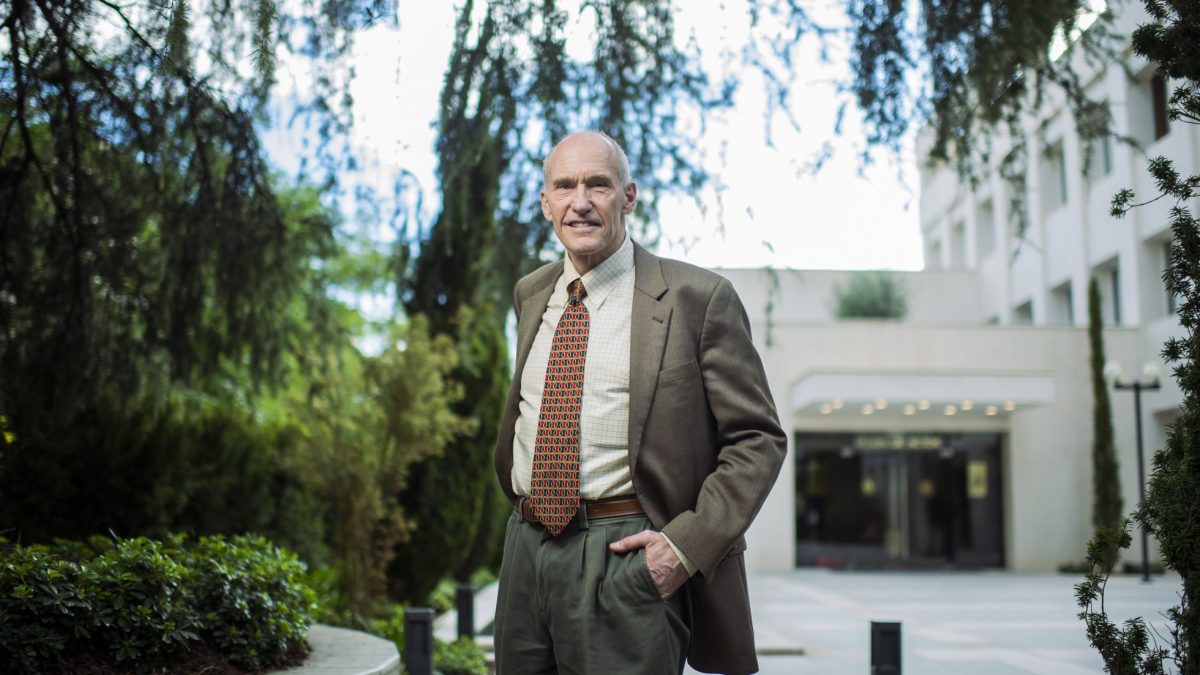
The father of the revolutionary CAR-T treatments compares some of their results with biblical resurrections and regrets the current price of more than 300.000 euros per person
The immunologist Carl June has started a revolution in medicine. He himself speaks of resurrections “like that of Lazarus,” the man who died and was miraculously revived by Jesus Christ in the biblical story. June, born in Denver (United States) 69 years ago, is the father of CAR-T treatments, a thriving strategy that consists of extracting blood from cancer patients, capturing their white blood cells and redesigning them in the laboratory through genetic engineering to multiply their ability to annihilate cancer cells. The complete referrals of blood tumors - leukemias, lymphomas and myelomas - already number in the hundreds.
The researcher remembers his first case, that of Bill Ludwig, a 65-year-old prison officer who in August 2010 was about to die from leukemia. “He was Catholic and they gave him last rites,” recalls June, director of the Center for Cellular Immunotherapies at the University of Pennsylvania. The patient had about three kilos of tumor in his body but, 20 days after a single infusion of CAR-T cells, no trace of his cancer was found. The challenge now is to reduce the exorbitant price of the treatment—pharmaceutical companies charge more than 300.000 euros for each patient—and ensure that it also works in solid tumors, such as those of the pancreas and brain, explains June, passing through Madrid to give a talk at the Ramón Areces Foundation.
Question. You use the word “cures.”
Reply. At 10 years old, yes. Our first two patients already They spent 10 years free of leukemia, so we can talk about healing. They were cases like that of Lazarus. They thought they were going to die and they both had similar reactions. When Bill Ludwig was told that he no longer had leukemia, he bought a motorhome and toured the country with his wife, enjoying the vacation they had never had. The second patient Doug Olson, is a scientist. When they told him that he no longer had leukemia, he bought a sailboat. They both thought they were going to die and started a new life.
P. Compare these cases with that of Lazarus, the man who died and was resurrected by Jesus Christ in the Bible.
R. They thought they were going to die. Bill Ludwig had already paid for his funeral. The only time I have seen something similar in medicine was between 1997 and 2000, during the AIDS epidemic. Since there were no drugs, everyone who had AIDS died. Until effective medications arrived. I saw it with AIDS and I see it now with these cancer patients who thought they were already dead and suddenly, boom: they are cured.
P. Do you know how many lives CAR-T treatments have saved?
R. We know that more than 10.000 people in the world have received the therapy. And many others are being treated with experimental protocols. Right now there are about a thousand clinical trials with CAR-T cells in the world.
P. You were the driving force behind the first authorized CAR-T therapy, called Kymriah. In Spain, the pharmaceutical company Novartis has set the price of Kymriah at 320.000 euros per patient. Do you think it's a fair price? [Carl June acknowledges a conflict of interest, since it owns the intellectual property of patents licensed to Novartis]
R. When talking about a fair price, it varies depending on the country. It's a bit horrible, but insurance companies in the United States are willing to pay $130.000 a year [a figure similar to the exchange rate in euros] for anything that will make you live another year healthy. The value of a person can be reduced to euros or dollars. And in the United States and Europe it is about $100.000 a year. They have seen that CAR-T cells offer very long survival. And they have also studied the therapies currently used: other myeloma treatments, not CAR-T, cost a million dollars per patient and, on top of that, most of them die. In reality, CAR-T treatment is cheaper than what is done now, even if they charge 300.000 euros. That said, it's still expensive. The cost has to be reduced.
P. How?
R. The most expensive part of the CAR-T is the human work: highly specialized scientists produce the cells on a case-by-case basis. If robots could do it, it would be much cheaper. It has already happened with many other new technologies, which in the end become cheaper thanks to large-scale manufacturing. Computers were also very expensive in the beginning. What will happen to CAR-T cells in 10 years? I am sure that, instead of people producing them in a process that requires two weeks in manufacturing centers, there will be a machine in the hospital itself in which the patient's blood will be put and CAR-T cells will come out automatically. I think in 10 years they will cost a tenth of what they cost now.
I think that in 10 years CAR-T treatments will cost a tenth of what they cost now
P. A Spanish public hospital, the Barcelona Clinic, has developed its own CAR-T treatments against acute lymphoblastic leukemia and multiple myeloma. The price of these public CAR-Ts is 90.000 euros per patient. It seems that Novartis and other big pharma are making a huge profit margin.
R. Well, the data so far shows that none of these large companies are making money with these cell therapies. Novartis makes a much larger profit on the other drugs it sells. The cost directly attributable to production in a standard drug can be 5% of the sales price. In the case of the CAR-T it is much higher. They make much less money selling CAR-T cells than they do selling aspirin, for example. Manel Juan [Head of Immunology at Hospital Clínic] spent about three months with us to learn how to make CAR-T cells and he is a great person. He has achieved a very efficient process, but the pharmaceutical industry has many more expenses. Different companies will have to improve and make it cheaper, because that is how innovation and competition work. Unfortunately, it will probably take 10 years to solve this problem.
Fuente: El País





