
Doctors demand a clear development of the Euthanasia Law in Aragon: "It sounds strong, but we do not know how they want us to end the lives of the applicants"
13 December, 2021
The first contact with SARS-CoV-2 determines the immune response
14 December, 2021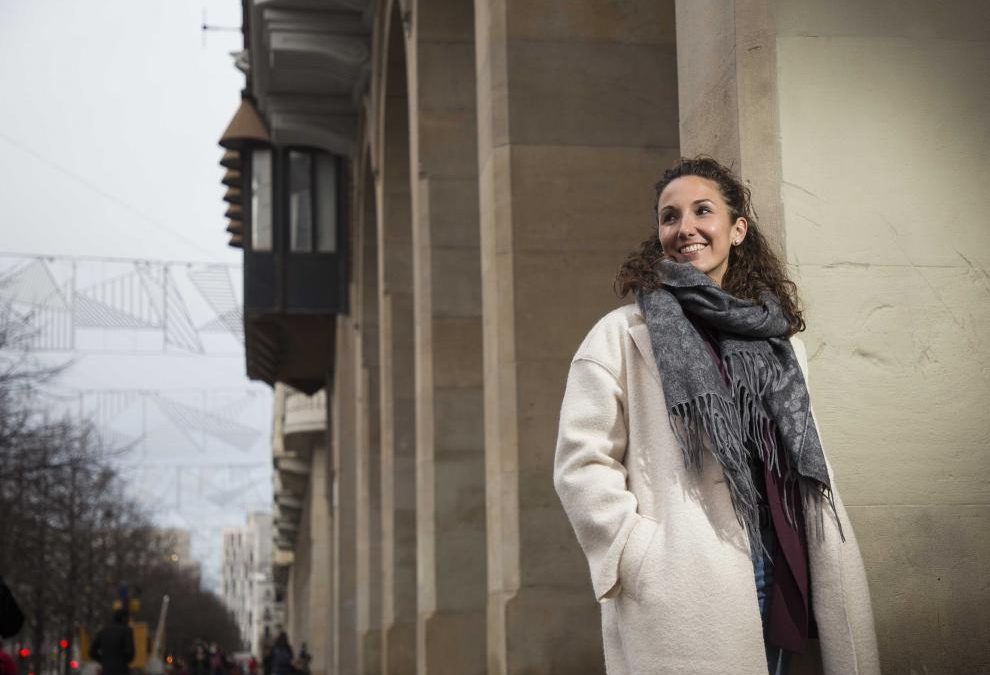
Beatriz Parejo Alonso (Barcelona, 1987) has just obtained another year of contract in the Metabolism and Cancer Stem Cells group of the Health Research Institute of Aragon, led by Dr. Patricia Sancho. She also belongs to the national softball team.
The research has gone from the silence of the laboratory to being a 'trending topic' on social networks. How has it been seen from the inside?
The truth is that it is very encouraging that people know what a PCR is, before all I could do about five a day, for example. Now people are interested in science, and see its importance. The spotlight, however, has been taken away by the pandemic and that has been able to undermine other areas, such as cancer. I believe that scientists and governments have a duty, which is to bring science closer to citizens so that they see that it is necessary.
Investigate the pancreas, what is this disease like?
What does your job consist of specifically?
We work to counterattack a very aggressive cell population within the tumor, cancer stem cells; They are usually resistant to conventional therapy. With chemotherapy the tumor seems to shrink, but these cells stay and reproduce again. In the pancreas, it is something pioneering, because until now the drugs we work with have been used in the lung.
Does research give hope to patients and families?
Always. To investigate is to know a disease; If it is known, it can be attacked. Without research, we do not know what can work, nor do we know the basic mechanisms of how these cells work.
Last summer he had to crowdfund to get another year of research.
It was a very intense experience because we were there for three months. Pancreatic cancer is not well known, and it was necessary to raise awareness and disseminate information. You cannot wait for the money to come in, but you have to raise awareness and bring science closer to people. Furthermore, pancreatic cancer is not well known. We did a lot of information campaign with the Precipita platform, dependent on the Ministry of Science and Innovation, and we managed to exceed the objective. We are very happy with the result because we managed to exceed the goal of 21.500 euros and achieved more than 26.000.
What does it mean for citizens to get involved in this way?
It is received like May water. It is received like May water. It is difficult to investigate, because personnel is the first thing to be cut. For example, there may be money for reagents, but a lack of hands to investigate because many times the budget cannot be changed. That's why we had to do crowdfunding, because at that time there was money in the group, but no staff.
And this year he had to apply for a call.
The pandemic has penalized us a lot because we were not producing science, there is much left to know about pancreatic cancer and we cannot stop researching. That is why the contract we have obtained, financed by the Apadrina la Ciencia Association and Ford Motor Company, is so important, since it will allow me to study the chemoresistance part. It was a respite. It is key that people collaborate with associations like these; A little effort means months and even years of research. I feel very grateful to all the people involved with our campaign.
What a gymkhana it is to investigate…
Science is like a long-distance race. When we got this year's funding we were already thinking about what to organize if it hadn't been enough.
What would have happened if I had not achieved this call?
My thesis would have been finished where it is now, without the chemoresistance part.
What does your project consist of?
Now it focuses on a protein, a membrane receptor, that we have seen is more active in pancreatic cancer stem cells. This is very good because it becomes a specific therapeutic target against these cells. A part of my thesis has been based on seeing the role that this protein has in pancreatic cancer and now the last part, which is related to this contract that I have obtained, is to prove that we can really counteract this chemoresistance associated with these cells. It involves testing drugs that are currently used in the clinic to treat another type of tumor, specifically lung cancer. It is an inhibitor that also inhibits this protein, but we are testing it because nothing has been described about it yet in pancreatic cancer.
So it's something pioneering?
In pancreatic cancer yes.
What does it feel like to be part of a project like this?
It is very exciting in the sense that you know that you are helping, that in the future this could translate into a new therapy for these patients. A little hope for these patients because only 10% of them survive one year after being diagnosed, that is, more than 90% die before one year. And the fact that we work with drugs that are used for other cancers reduces costs because you do not have to go through clinical trials of safety or side effects because it is already done and everything is also faster because you directly go to the clinical trial to test efficacy in pancreatic cancer patients. In case it could lead to a clinical trial.
Does working on an investigation that can be stopped at any moment, where continuity hangs by a thread, undermine your spirit?
A little bit, you are not thinking all the time because otherwise you would live in a vicious circle of worry, although you are not completely calm. You are more likely not to continue than yes. In fact, in this case we were in the worst.
With this year the thesis ends. Look back, what do you feel when you see the path you have traveled?
I am satisfied because I have learned a lot because I have grown as a scientist but you always think that it is not enough that you want more, that you need more, that you want to contribute more. As the situation stands, I don't know what will happen when this contract ends. I hope I can continue researching in this group or somewhere else. I think that scientists should be better valued.
Always speak in the plural, is science also a team effort?
Of course, I alone without my colleagues would be nothing, but not only in my group, but in other groups that are working on the same thing and, in the end, unity is strength.
He knows teamwork well. She is also a player on the national softball team, how does she apply that to research?
Everything that sport has given me during all these years, I transfer to my personal and professional life. I believe that sport provides values that are useful for everything: perseverance, dedication, responsibility, teamwork...
What is the recipe for combining professional sports with your scientific work?
You have to rely on family. Now I have had a baby and my intention is to play again, although it may be more complicated, but everyone succeeds. I'm not the first to be a mother.
What do researcher Beatriz and athlete Beatriz have in common?
Both in sport and in science you have to fight. Don't tell me I can't achieve something, whether on the softball diamond or the lab. In those two places I am happy, because I do what I like most.





