
Research and Innovation actions supporting the global health EDCTP3 Joint Undertaking – Open calls
18 May 2022
Valeria Grazú, selected to participate in the advisory program of the European Innovation Council EIC WOMEN
20 May 2022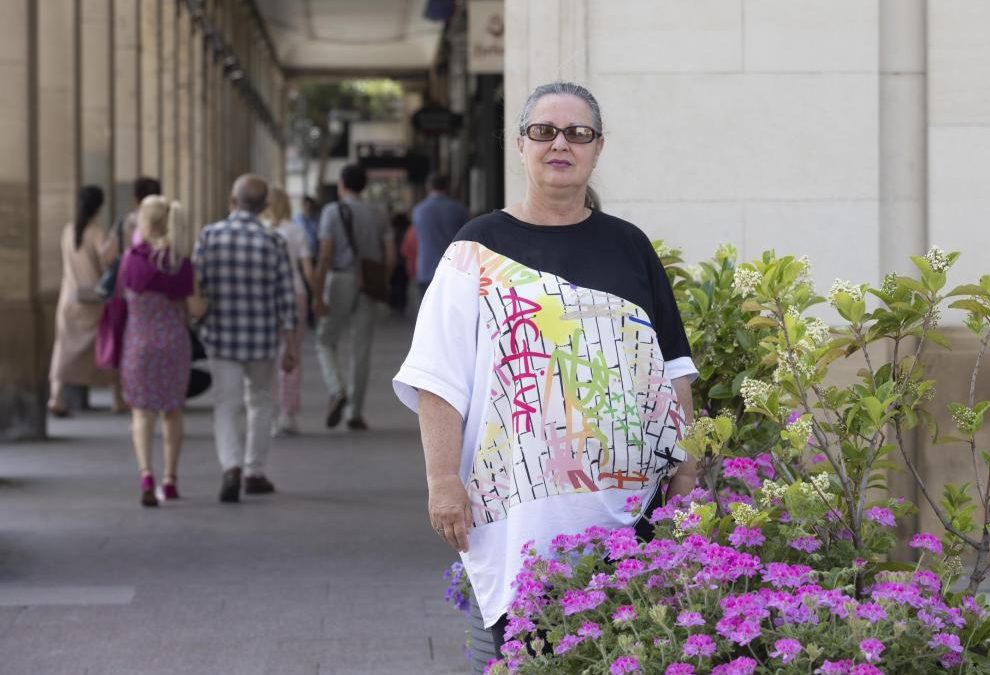
The Association of Aragonese women with genital and breast cancer celebrates its VII March for health this Sunday, which returns after two years of hiatus due to covid and a pandemic that compromised its survival.
There are those who, in these two years of the pandemic, have gone through much more than a confinement that forced everything to come to a standstill in the hardest months of the year. coronavirus. For non-profit organizations and entities, such as Amac-Gema, galas and mass events which they resumed last weekend with their traditional swimsuit parade and the return this Sunday of the VII March for health, were not only a way to support patients with genital and breast cancer but also an important "sustenance" to guarantee the future of the association.
"It's been a tough period, like for everyone. We have been there for two years, because we had won a bit of a lottery, if not maybe we have to close this", confesses María José Rivas, president of the Association of of Aragonese genital and breast cancer (Amac-Gema) when taking stock of these last two years of confinements, fears and uncertainty due to covid-19.
The outbreak of the health crisis surprised this Aragonese association in the midst of renovating its headquarters to support of with this pathology. "We renovated it with that little bit of luck. We had just finished the renovation in 2019 and it came just right to paralyze everything... We wanted that money to ensure a minimum 15-year contract, but we have had to spend it during the pandemic. Without galas, races or solidarity events, we have only had income from the administration, which is not much, from some private company and the membership fees. However, he has come out to give us money. Here We have three professionals who are self-employed and the expenses are always there, with and without a pandemic.", they confess.
This Sunday, the return to the Parque Grande de Zaragoza of the VII March for Health, which had not been held for two years, is a breath of fresh air for all of them. The hope that life goes on, despite these difficult moments, and their commitment to continue by the side of these patients, for the most part of, who are going through a process of this type. "Even if there is covid, the cancer It hasn't stopped and we have to continue giving them support. As always in these events, apart from being a way to support the association, what we do is raise awareness and show solidarity. 'I move by' It's not I move through Amacgema, I am moved by my sister who left us in 2010, by my friend who is here now and has debuted with metastasis, for those patients who have had it worse, for a friend, for an acquaintance... For all those who are now in the process and for those who left us'", underlines María José Rivas, who was diagnosed with the disease in 2010, just three months after losing her sister to the disease. cancer. In his case, he points out, it was detected "a little late," but they gave him a treatment that worked. He was 44 years old, and this week he celebrated his 56th birthday alongside his nonagenarian mother, eager to move forward, as he did shortly after recovering.
"As soon as I was a little better, after all the treatments, I approached the association to see if I could lend a hand and help. I had surgery in 2011 and arrived at Amac-gema in 2012. I was feeling fine. I first experienced my sister's illness, which lasted two and a half years. And, obviously, each person goes through it in a different way, but after seeing that suffering and degeneration, I experienced mine really differently. Emotionally, I was feeling good and in good spirits, so I said: I'm going to try to spread the positivity that I have to someone, and here I am.", he says with a smile.
The desire to return to "normality" and other future plans
Although the virus is still present and this pandemic cannot be ended, María José Rivas and the rest of the members and volunteers of Amac-gema wanted to move forward with the celebration of this march as a song to life. The seventh call for 'I move for', which will be held this Sunday in the Parque Grande with a Zumba class at 10.00:XNUMX followed by the three-kilometer journey through this lung of Zaragoza, it is resumed two years later with some nerves but above all enthusiasm. "In the end it is a way for us all to meet again and feel supported again, because here in the association we come and go, but not all of us get together nor are there so many moments to bring together those around us," they point out.
In addition to the "opportunity to have a great day" and raise "a little money" for the association, Rivas emphasizes This activity is very good to promote physical exercise in these patients. "Years ago, doctors recommended that we not gain weight, not exert ourselves, not move too much... But for at least 7 years now they have been advising us otherwise; that we do some physical activity and we, what they tell us, do it and We try to promote it in all patients with this pathology," they explain.
Despite the improvement of this health crisis, she assures that many women who have gone through a process of this type are still finding it difficult to overcome fear. "He coronavirus In reality it is still here, and unless we are in treatment we are not really considered at risk, but it is not like we have had cancer, is that the treatments produce consequences and those who do not have sugar have sugar and hypertension; the one that doesn't, a respiratory failure due to the radio or a heart problem... They took the cancer away from us but we have consequences, and that's why people have been more afraid of being in environments with people," confesses Rivas.
Even so, adaptation has also been key for these women who have not given up supporting each other or continuing to raise awareness about this disease. "We have had coffees and instead of with 15 people we have gone with 4... always with mask. As we could, adapting. Now we hope to finish the year with the events that correspond to us, to be able to hold the conferences, the Breast Cancer Day event, on October 19, our gala in November… We want to get everything back on track and get back to normal as best we can."says Rivas.
This complete agenda that they are progressively recovering also includes the volunteering in hospitals and talks at schools. "We have not completely returned, but with caution, we are noticing movement. The volunteers who went to the hospital were paralyzed by the covid, and they have been able to go since last September. They are doing it one by one, but now we are to let two in. We go once they are operated on to give them a little hope and for them to see themselves in us as if it were a mirror.. Whether you want it or not, seeing a person who has overcome it or who is still here after years of suffering or suffering from the pathology is hopeful," confesses Rivas, who was precisely with this activity as he discovered the Amac-gema association at the time.
For them, doing this work is also "very rewarding", as is going to colleges and professional nursing or midwifery associations to raise awareness among the population and offer another point of view. "We also give talks to teenagers with the help of the City Council to make them aware of the existence of the disease and how to support a patient with this pathology and their fears. The program is called 'Contigo' and we take it to 20 centers. What we have experienced, and you tend to see that when you suffer it, is that human beings tend to protect their environment. We act strong, that's why everyone says "how brave"… And the only thing you do is try to avoid the suffering that you are experiencing in your flesh. Therefore, it is very important that we know and become aware that what the patient needs is for you to be by his side, that you support him and let him freely express his emotions," he adds.
Prevention
Also through this March, these of They pursue a double objective: on the one hand, to promote physical activity for the well-being of these patients, and on the other, to raise awareness about the disease and how to prevent it. The months of strict confinement admit that they were complicated in this regard. "Our treatments were there and our check-ups have been done, but The screening was a little late. Not only on the part of the health system, but also because of the person's fear of going to the centers, which is where the virus was," adds the president of Amac-Gema, but not before launching a plea in defense of the Health public. "I would like to raise a flag for all the health workers, who have given it their all. We believe that they always give it, but of course at cancer patient they have not left us, they even made "green corridors" so that we could continue with our treatments and not mix with the rest of the hospital," explains Rivas.
In his memory of the doctors who treated them, he also mentions the Aragonese doctor Miguel Ángel Ruiz Conde, who died last year at the age of 62 and treated "thousands" of these patients.
"To us He told us: 'Please take care of them, because they keep dying.' He collaborated with us and always asked us not to leave his girls alone, that we had to fight for them, especially due to ovarian and genital cancer, which is the most silent"warns Rivas.
The symptoms in these cases are confused with a bloated period or belly., there is apathy to eat and a series of signs that, according to this volunteer, "is something that can happen to us once a month, when we are ovulating, but if these symptoms remain fixed it is in our hands, of the of, realizing and recognizing them".
"Here we want to be with quality of life, not in any way. Therefore, our preventive advice is always that: listen to your own body because With prevention we save lives and we can save ours".





