
Reinforcement of childhood cancer treatment and research with the hiring of a fifth female doctor
4 February, 2021
Doubts about the coronavirus vaccine in allergic patients: history, serious reactions and risk cases
4 February, 2021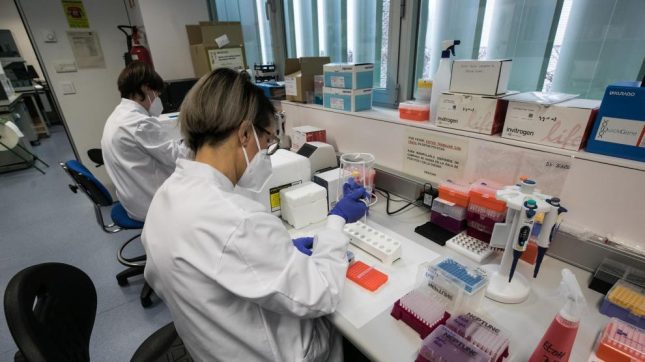
Their technology could find others, such as the South African or Brazilian one, and even sequence the entire virus.
The CIBA satellite laboratory has the capacity to detect not only cases of the British strain, but variants such as the South African one – of which a second case was confirmed nationwide yesterday – or the Brazilian one. "The work carried out here is very artisanal, it is not a process that can be tackled in all hospitals on a routine basis. We could even sequence the entire virus, there is technology to do so," defended its manager, Javier Gómez-Arrue.
Although we are currently working with the British company as it is "the one of most concern", once the system was installed, all those variants that were considered of interest could be monitored. "The British company has gained a lot of popularity, but it does not imply changes at the patient level. Nor does it imply variations when it comes to approaching treatment," recalled the person in charge of the satellite laboratory.
The intention is to be able to have everything ready to carry out epidemiological monitoring when other variants appear that have greater clinical implications. "Thus, when a strain comes along that is different enough to cause a problem of these characteristics, whether because the treatment is different or for any other reason, we will be ready to identify it," said Gómez-Arrue.
According to what he indicated, this year an increase in staff has been authorized that will allow the laboratory to remain open and provide this service to Health. Nine people currently work there in two shifts from Monday to Friday. "Before, they were working in the different research support services, which they have practically had to close to dedicate themselves to this. We are going to increase the staff by eight more people. The latter will be dedicated solely and exclusively to supporting covid diagnosis, either for monitoring new variants or to do PCR if necessary," he indicated.
The idea is that the nine people who were already working are released but remain 'on alert' to return as soon as it is considered necessary. "Then they could do 1.200 tests a day again," he added.





