
Open Calls for TRANSVAC2 Vaccine Development Services and Trainings
November 19, 2021
Another healthy ingredient is born in the food industry: persimmon flour
November 22, 2021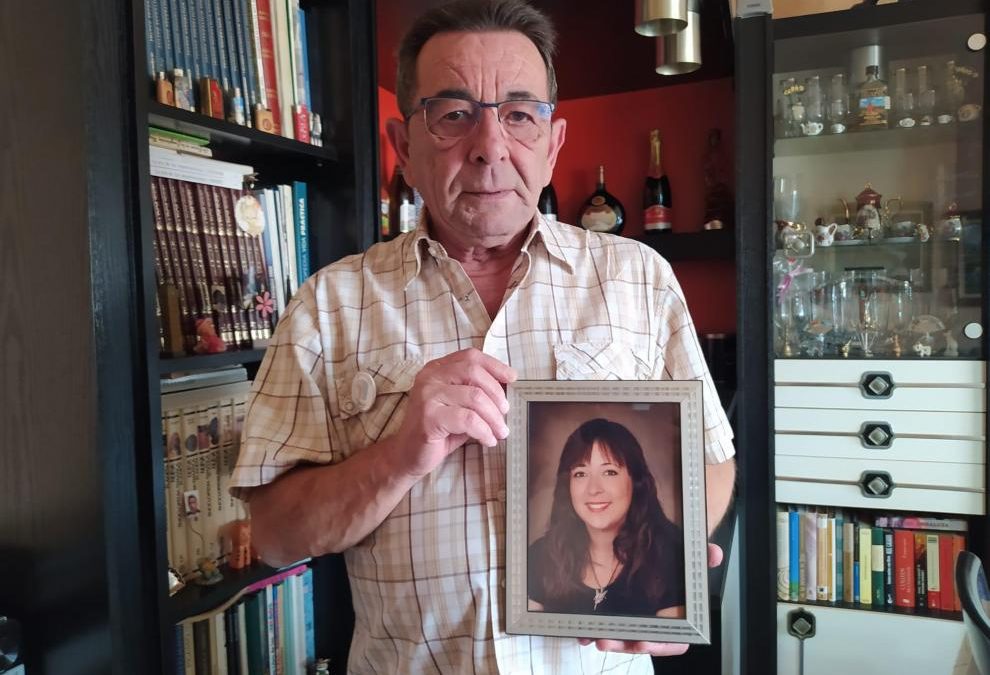
Today, November 20, is International Suicide Survivor Day.
Every third Saturday of the month of November, International Suicide Survivor Day is celebrated, a term that refers to the family, friends and relatives of people who have lost their lives by suicide. According to data from the World Health Organization (WHO), it is estimated that About 6 people around the person who took his life will be directly affected by this event. In Aragón, a diptych has been presented aimed at those who have been affected by this loss.
When this happens, emptiness, anger, guilt and fear settle in the lives of those who have to face this loss. “You wonder where you have failed, if you could have done something, it is torment,” says Antonio Muñoz Ortega (65). A native of Los Barrios, Cádiz, he has resided in the Aragonese capital for more than 40 years where he worked, until his retirement, at General Motors. “Now I could be enjoying it, but after what we have experienced, everything is disrupted,” he acknowledges.
Pain and suffering can be seen in his eyes. Feelings that are impossible to hide after having experienced one of the hardest situations of her life: the loss of his daughter, Eva, just over a year ago. The cause? Suicide. A word that is still difficult to pronounce but that needs to be heard and shared more than ever. “People make up the reason, they say it was a heart attack or an accident. We do not. We say what happened because it is what has happened. We have to talk about it because those of us who live through it have it deep inside us, and that is wrong,” she says.
For this reason, the Mutual Aid Group 'Step by step Aragón' was born, which brings together a good part of these known as survivors.. A meeting point, meeting point, accompaniment and reflection: “Something like this can never be overcome. It integrates. It is internalized and you simply continue. In my case, I am trying to help change things.”
Eva Muñoz was born in 1982 in Zaragoza. She was a girl of 10 in studies, “too much of a perfectionist,” says her father. After passing her selectivity, she moved to Cuenca to study Fine Arts. There she began to consume narcotic substances, something that triggered a psychotic break. “When she returned home we noticed changes in her. She slept all the time, at night she got up, she was in her room all day, she didn't speak. “She was a stranger,” she says. That is until one day, Antonio and her son, Abel, decided to take her to the doctor. There she would begin a journey of income until she collected money from the Rey Ardid Foundation.
“They managed to stabilize her and she resumed her life. “She studied ceramics, English, and even made her own guitar by hand,” she recalls. In 2018 she started working as a receptionist: “The confinement disrupted everything. He lost his job again and had another outbreak.". It was October 18, 2020. They were at home, like a normal day: “What happened during the following moments has faded. He had taken his life".
Today, one year, one month and one day after this tragic moment, Antonio continues to fight every day to make his daughter's story known. “38 seconds are to blame. I have told them many times. It is better to lose a friend than a life. I continue more for her than for myself, and I know that if she were here I would be happy with her. Hopefully with this I can save one of her lives since I couldn't do it with her,” he concludes.
Death and suicide, two words that should not be afraid to pronounce
According to the latest data, In Aragon there is a suicide every three days, a reality that affects people of all ages, being three times more common in men than in women. A trend that, after several years, seems to have begun to change. In 2020, suicides have been reduced by more than 10% in Aragon compared to the data recorded in 2019., going from 120 to 102, while in Spain they have increased by more than 20%. This is how Isabel Irigoyen, psychiatrist and coordinator of the Strategy against Suicide in Aragon, explains it: “The main danger with suicide is thinking that, if we talk to someone who is thinking about it, we are going to induce or provoke it. “Silence is much more dangerous.”.
As the expert explains, we all have a responsibility in this matter. “If someone around you expresses this to you, spend some time with them, talk to them, try to accompany them. And, if you are not capable, take him to an assistance service,” she adds. What is clear is that looking the other way is the worst option. And here, that of Mental Health professionals is a fundamental role.
There are more and more entities that work on this reality, such as the Aragonese Association for the Prevention of Suicide and Self-Harmful Behavior, LIANA. “Griefs are very different depending on the causes. Those of suicide are the most terrible there are. It is a devastating process that can generate trauma. Accompanying those who suffer from it is essential”explains María José Ochoa, psychologist who is a member of this entity.
This group remembers that improving care and promoting prevention is essential: “The pandemic has shown that it is necessary to increase the number of professionals in mental health services”. And, above all, we must end the implicit agreement that requires not talking about this issue. “It is important that we are aware that we can all have a mental disorder at a given moment in our lives and we have to be prepared to face it,” adds Ochoa.
Postvention: what happens after suicide
This Friday, November 19, the diptych 'After the death of a loved one by suicide' was presented at the Professional College of Psychology of Aragon (COPPA). A postvention document that offers a series of tools for those who have suffered a loss due to this cause.
But what is this postvention? It is understood as the set of professional or mutual aid actions aimed at people who maintained significant ties with the person who died by suicide, with the aim of facilitating their recovery and minimizing the psychological consequences that may occur.
A document framed in the Suicide Prevention Strategy in Aragon in which Paso a Paso Aragón, the Association of Depressive Disorders of Aragon (AFDA), the Aragonese Association for Mental Health (ASAPME), the Aragonese Association for Suicide Prevention have collaborated. and self-injurious behavior (LIANA), the Professional College of Psychology of Aragon (COPPA) and the public Mental Health Care Network.
(All health and emergency services are always available to help people of any age improve their mental health and can intervene to support and prevent risk situations.
Esperanza Aragón Telephone 976 23 28 28
Telephone of Hope (crisis care) 717 003 717
112 Aragon: emergencies
061 Aragón: emergencies and health emergencies)





